


Teaching Someone To Fish: The False Dichotomy Of Relief And Development
PROFESSOR MARK SHRIME
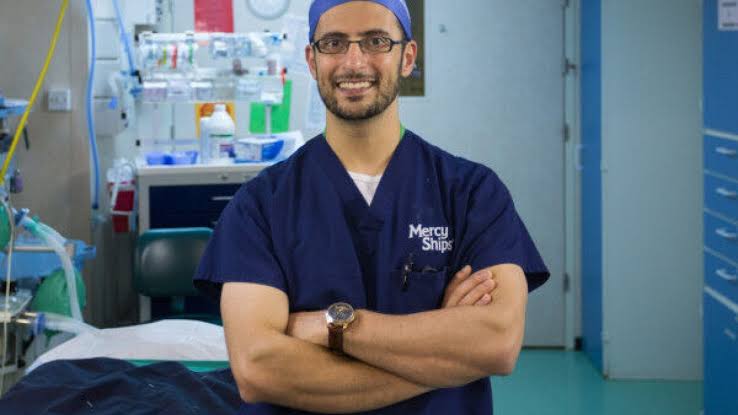
You know that phrase, “Give a man a fish, you feed him for a day; teach a man to fish, you feed him for life”?
Yeah, I hate that phrase; it creates a false dichotomy. Why not do both? After all, it’s easier to learn when you’re not hungry.
We often construct a similar dichotomy in global health, pitting relief against development, and assuming only one should happen. For many valid reasons, that one is development. It’s a reductionistic view of global health, and it can leave patients behind. Yes, systems must develop, for sure, but in the meantime, what happens to patients while they’re developing?
One person dies every two seconds from a surgically treatable disease. Over two-thirds of the world’s population doesn’t have access to safe, affordable, and timely surgical care, and nearly half the world’s population would face financial ruin if they accessed surgical care today. Strengthening surgical systems is a complex problem with significant health and economic effects: the lack of surgical access, for example, is estimated to decrease the gross domestic product of low- and middle-income countries by as much as 2%.
It can be tempting to approach this complex problem with a well-intentioned, if narrow, focus: say, building new infrastructure or training new providers. But, like any complex problem, this one resists simple solutions. The late Dr. Paul Farmer used to say that true access to care requires four things: space, stuff, staff, and systems—all of which are interlinked. New anesthetic machines, for example, are useless without people who know how to operate them, an operating theater in which they can work, and a public health system that acknowledges the need for surgery. Without all four things, improving surgical systems with surgical precision is bound to fail.
And then, to make it even more complex, all that interconnectedness also has to be close to the patient. Surgical care is unlike, say, a Covid-19 vaccine. As this pandemic taught us, the research, development, and production for the vaccine could be centralized. That is, once the vaccine was created, approved, and produced in large factories, the health system was only left with a logistical problem to solve: cold chains to maintain or delivery networks to bolster.
Not so in surgery. The entire means of production—the staff, the space, the stuff, and the system; the people, the electricity, the suction, the water, the infrastructure, the education, the oxygen—all of that has to be brought closer to the patient. Surgery can’t be packaged into a pill, can’t be boxed up into the back of refrigerated trucks. The entire surgical ecosystem, and the people that work in it, must exist near where patients live, or it might as well not even exist for them.
In my mind, that’s what makes surgical system strengthening such a fascinating—and sometimes frustrating—endeavor. It’s complex, it’s exciting, and it’s why I love working in this field. Transformative change is slow. It balks at short-term investment. It can only happen in partnership. For those of us who work in the NGO space in particular, it means coming alongside a country’s health system to accompany it along its own path. In other words, it means not just about “teaching a man to fish,” but fishing together, in the same river.
And it means relief. It means resisting false dichotomies. It means both working alongside health systems in their development—and helping shoulder the surgical burden while we’re at it.
It means fishing, while learning how to fish.
By Professor Mark Shrime, Mercy Ships International Chief Medical Officer (www.MercyShips.Africa).
Related posts