

Dangote Shares Secret Of Backward Integration With Investors In London
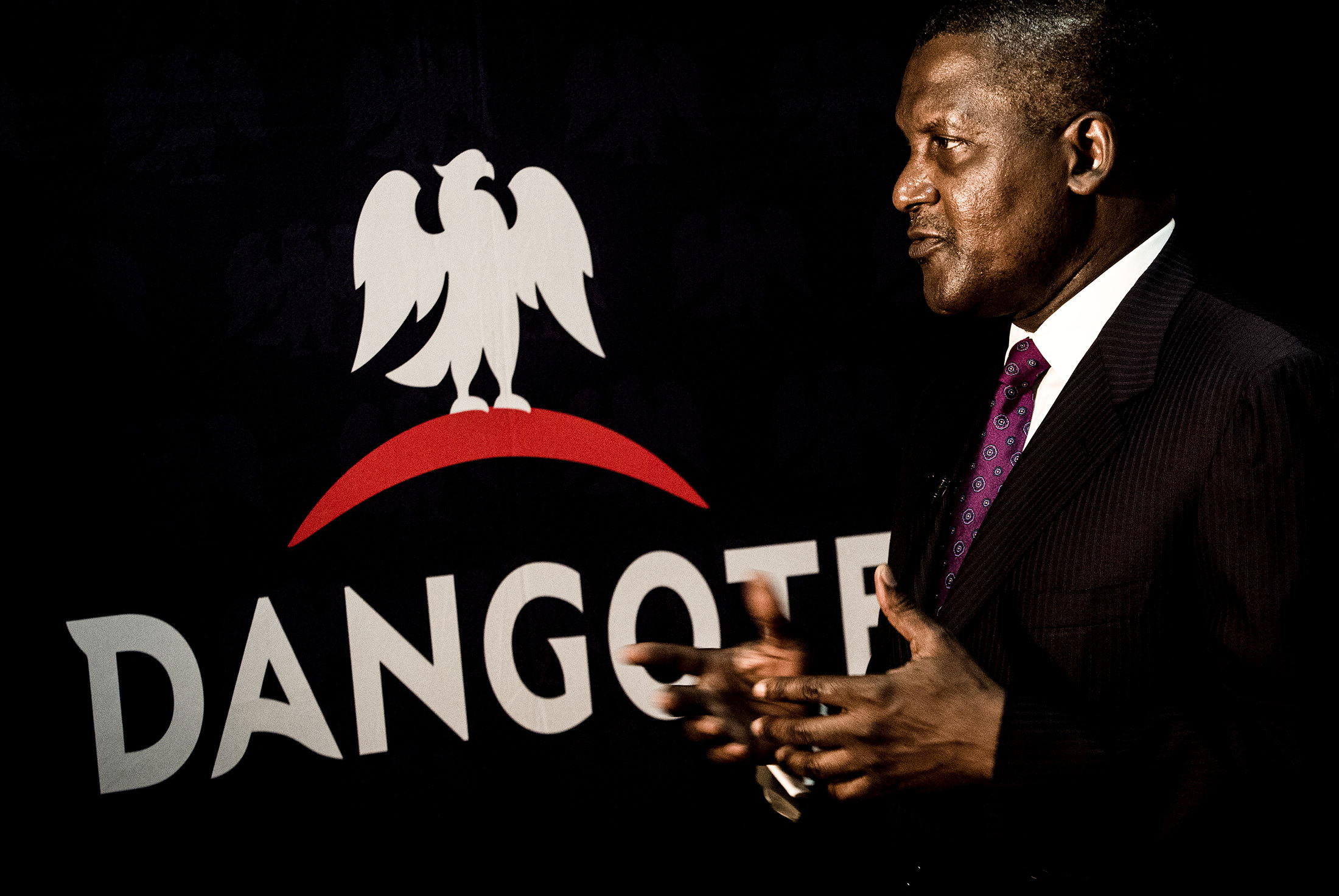
At the Financial Times’ 4th annual Africa Summit at Claridges in London, editor in chief Lionel Barber conducted an extraordinarily candid public conversation with Nigerian Aliko Dangote, Africa’s most successful business leader, in the presence of Nigerian vice-president Professor Yemi Osingajo, Congolese presidential hopeful Moise Katumbi, and about 300 business leaders.
Mastering detailed production statistics and highly-compelling demographics on promising sectors of the African economy, Dangote outlined the key to his success: self-sufficiency and backward integration, a manufacturing strategy that extracts value from entire processes. “We are not going to import anything any longer,” he said. “In Nigeria we are learning how to produce the entire value chain.” Once a heavy importer of fertilizer, Nigeria is now gearing up to produce 3M tonnes of locally manufactured fertilizer, transforming the nation into one of the largest fertilizer exporters in Africa.
In 2007 Nigeria was the second largest importer of cement after the US, Dangote reminded the audience of business elites. “Today, we have not only satisfied domestic needs; we have become a leading exporter of 6-7M tonnes of cement,” he added.
Diversifying into agriculture, Dangote has eyes on the dairy industry motivated by the fact that “98% of all milk consumed in Nigeria is imported.” Same for rice. Dangote Group has invested heavily in rice production by investing in local farmers and then offering to buy back the 1M tonnes at open market prices that they are growing. “Soon we will be able to feed not only Nigeria but the entire 320M large West African market.”
Dangote’s business accumen was on rare exhibition as FT editor Lionel Barber himself seemed impressed with the business mogul’s quick familiarity with the nuts and bolts of his businesses. “Are we going to continue to import everything?” Dangote asked. “Freight rates are now cheap but they will go up soon. A population of over 200M cannot continue to import basic needs on a daily basis,” he answered himself.
By 2100 Dangote stated Africa will represent 49% of the world’s population, up from 30% today. “If you don’t think big we won’t grow at all,” he said. “In Africa you have to play long-term.”
Aside from Nigeria, which African nations do you think are good growth opportunities? Barber asked Dangote. “Aside from Nigeria?” the business leader repeated and smiled. “I’d have to pick Nigeria. I am a big fan of Nigeria. We are only using 8% of our land.”
Related posts