


Public-Private Partnerships Needed To Bridge Africa’s Infrastructure Development Gap
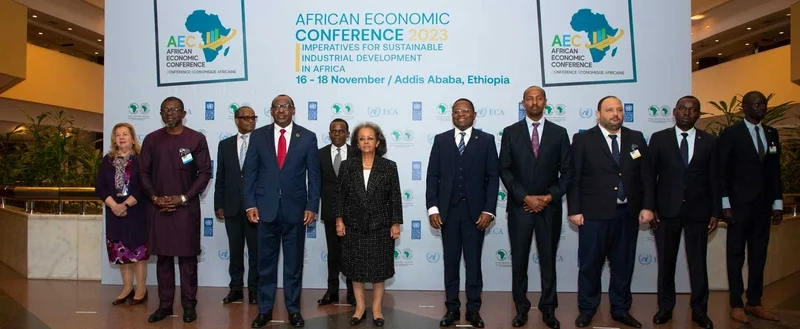
Public-private partnerships (PPPs) are crucial to closing the financing gap for infrastructure development in Africa, and governments and the private sector should work together to create effective PPPs, said Dr Robert Lisinge, Acting Director of the Private Sector Development and Finance Division at the UN Economic Commission for Africa (ECA).
He was speaking on Thursday at a plenary session of the African Economic Conference 2023 on Public-Private Partnerships to catalyse infrastructure development and innovative financing for industrialization in Africa.
“Financing Africa’s infrastructure is still a big challenge faced by many countries on the continent. To bridge the infrastructure gap, public-private partnerships are essential for infrastructure development in Africa,” said Dr Lisinge.
He noted that the African Development Bank estimates that between $130 and $170 billion is needed for infrastructure development every year, leaving a substantial financing gap of $68 to $108 billion.
Traditionally, African governments and international partners like China have been primary investors in infrastructure. However, due to financial constraints, there is a growing need to explore public-private partnerships. These can harness private investment, technology and expertise, improving service delivery efficiency and cost-effectiveness.
According to Dr Lisinge, the PPP experience varies across countries due to GDP differences, capital market size and depth. The ECA has been working with African countries to enhance their PPPs for infrastructure development, undertaking capacity building and helping them mobilize resources for infrastructure development.
Ms Eniye Ogbebor, a Legal Expert at the World Association of PPP Units & Professionals (WAPPP-Africa) said infrastructure development is critical for sustainable development in various sectors, including green energy, clean water and sanitation, in order to achieve the Sustainable Development Goals (SDGs).
“The infrastructure financing gap in Africa is around $100 billion. To bridge the infrastructure gap there is a need to bring in the private sector,” said Ms Ogbebor, noting that PPPs provide options to financing, and leverage risk-sharing, including financial and technical risks.
Dr Arsene Honore Gideon Nkama, a PPP Expert at the Faculty of Economics, University of Yaoundé II, and Consultant on the UNECA project Yaoundé, Cameroon, said Cameroon, despite its many problems, has an economy that is still resilient enough to promote PPPs.
However, the current business environment should be improved to promote more PPPs, while capacity building is also necessary to help mobilize funds.
Mr Getahun Moges, an Energy Sector Expert and retired Power Sector Regulator in Ethiopia, said there is an urgent need to address the infrastructure financing gap in Africa. “In Ethiopia’s case, the pace of development and engaging the private sector has been slow and sometimes results in unnecessary delays. Also, there is a big challenge of understanding the regulatory frameworks for PPPs, feasibility, and procurement regimes in the country,” he said.
Mr Moges noted that development partners support aspects of PPP development in Ethiopia through finance mobilization, technology transfer and capacity building.
The plenary session was held at the three-day African Economic Conference taking place in Addis Ababa, Ethiopia. Experts discussed how to attract private-sector investment to PPPs, promote collaboration among stakeholders, identify necessary legal reforms, build PPP competencies, and establish knowledge platforms for sustained support.
Related posts