


Local Government Administration In Nigeria

For one reason or the other, many Nigerians have visited their Local Government office. However, if asked to describe their Local Government, many would likely use the word “ineffective”.
Although Nigeria operates under a democratic system, not all state governments practice democracy fully, as local government administrations are often led by caretaker chairmen appointed rather than elected.
But let’s not delve into that for now.
Because youths and many Nigerians overlook the importance of Local Government Administrations, which are the leadership closest to the people, the federal and state governments often take all the blame for everything wrong in the country. We seldom point the finger at the local government. But do you know that if local governments pulled their weight and carried out their duties more effectively, the title “Giant of Africa” might no longer seem ironic?
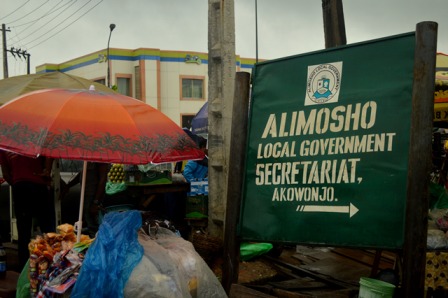
The system of government Nigeria practices is federalism, which means power is shared among different levels of government: federal, state, and local. Nigeria has 774 Local Government Areas (LGAs), each sub-divided into a minimum of 10 wards and a maximum of 15 wards. Due to population increases and the development of new communities, more wards have been created, resulting in some LGAs having more than 15 wards. Each LGA is headed by a Chairman and Vice-Chairman, and each ward is led by an elected Councillor.
You might wonder why we have so many LGAs. The local government, also known as the grassroots government, is the primary medium for bringing democracy closer to the people. It allows for people’s participation in politics, builds trust between the government and citizens, and ensures the implementation and effectiveness of government policies.
The fourth schedule of the Nigerian Constitution spells out the functions of the local government, including the construction and maintenance of roads, gardens, street lights, drains, public highways, and parks.
If state and federal officials received a penny for every time they were blamed for a bad streetlight or drainage, they probably wouldn’t need to misappropriate government funds.

However, unknown to many, these responsibilities fall under the local government’s jurisdiction, and for some reason, they are not held accountable.
Let’s all open our eyes and focus on the LGA administration, ask questions and make all your findings known to the public.
Elevate Ethics Foundation
X: @Elevateethics
Related posts