
Wealth, Power, And The Peril of Public Outbursts
BY FESTUS OKUNOLA
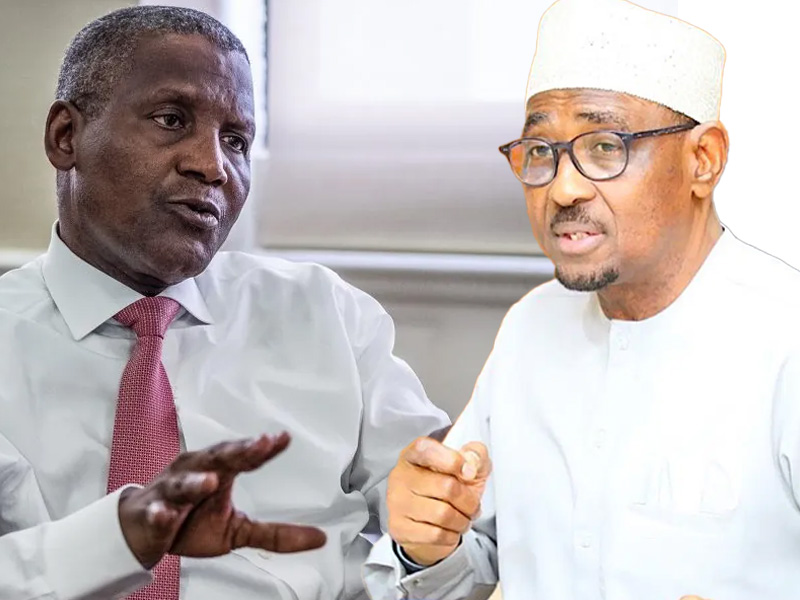
When the wealthiest African in the world publicly turns his fire on a Nigerian civil servant and head of a regulating agency, it is never just a personal dispute. It is a stress test for the country’s institutions.
Last week, that test arrived loudly. In a series of blistering public accusations, Aliko Dangote launched an extraordinary attack on Farouk Ahmed, the chief executive of the Nigerian Midstream and Downstream Petroleum Regulatory Authority. The language was sharp, personal, and unrestrained. The venue was global. The implications were national.
What followed was not merely another clash between capital and the state. It became a referendum on power. Who holds it, and how it is exercised. And whether Nigeria’s regulatory institutions can withstand the pressure exerted by extreme wealth and public influence.
This moment matters because it exposes a fault line that many democracies fear but rarely confront so openly. At what point does legitimate criticism slide into intimidation? And what happens when the loudest voice in the room belongs to the richest man in the country?
When Wealth Speaks, the System Shakes
Disagreements between business leaders and regulators are neither novel nor scandalous. They are part of the friction that keeps markets honest. But this episode crossed a line.
This is not merely a challenge based on policy alone; he questioned the integrity of the regulator itself. He alleged corruption; children were mentioned. He personalised the dispute. And he did so in a manner that clearly blurred the line between accountability and pressure.
That matters because words from someone of his stature do not fall gently. They move markets. They shape public opinion. They can delegitimise institutions before facts have time to surface.
In response, the NMDPRA chief offered a rare and revealing defence. According to multiple media reports, Mr Ahmed publicly explained that funds used for his children’s education came from long-term savings, including a scholarship scheme and personal investments, not public resources. He denied wrongdoing outright. He invited scrutiny and rejected the insinuation that his office had acted outside the law.
This exchange should have remained within the bounds of evidence, process, and law. Instead, it played out as a spectacle.
The Policy Beneath the Fury
The confrontation did not emerge in a vacuum. It is also unfolding against an intense policy debate over a proposed 15% import duty on refined petroleum products. Analysts and industry observers have warned that such a measure could disadvantage smaller players and limit competition. Reports indicate that the NMDPRA opposed the proposal on regulatory grounds.
If a regulator is publicly attacked for resisting a policy perceived to favour a dominant private interest, the implications go far beyond one man or one agency. It suggests a system vulnerable to pressure from those with the loudest megaphones and the deepest pockets.
That is how regulatory independence erodes. Not quietly, but under glare and noise.
Public institutions do not collapse only through corruption. They also collapse through fear. When regulators begin to anticipate retaliation, whether through public vilification, political pressure, or reputational assault, decision making shifts. Caution replaces judgment. Silence replaces courage. Oversight becomes performative.
This is the danger Nigeria must confront honestly. A billionaire attacking a regulator is not merely expressing free speech. He is signalling power. And when that power appears to be wielded in response to unfavourable decisions, the signal becomes chilling.
Nigeria cannot afford a regulatory culture where officials must choose between enforcing the law and preserving their personal reputations.
Truth Is Not Optional
Equally troubling are the factual disputes embedded in the accusations. Public records and official explanations contradict several of the claims made against the NMDPRA leadership. Allegations of misconduct, now reportedly referred to anti-corruption authorities, remain unproven. In a society already strained by distrust, allegations carry weight even when evidence does not.
For public figures of global stature, accuracy is not optional. It is a duty.
The viral age rewards outrage. But governance depends on facts. When influential voices trade evidence for insinuation, truth becomes collateral damage.
Nigeria needs investors. It needs ambition. It needs an industrial scale. But it also needs boundaries. Wealth does not confer moral immunity. Success does not place anyone above institutional scrutiny. The test of leadership, public or private, is restraint when power is challenged.
For every industrialist who believes a regulator has erred, the avenues are clear. Engagement. Review. The courts. What weakens democracy is not disagreement, but degradation.
The Standard That Must Hold
The NMDPRA will not always be popular. Regulators rarely are. But their legitimacy rests on process, law, and evidence, not on who is displeased.
This is no longer about one businessman or one regulator. It is about whether Nigeria can defend the idea that institutions matter more than individuals. Nigeria’s progress will not be measured by how loudly its most powerful citizens speak, but by how firmly its institutions stand when challenged.
When wealth forgets restraint, governance falters. When power rejects humility, trust erodes. Nigeria’s progress depends not on the might of billionaires but on the strength of its institutions, the truthfulness of its debates, and the restraint of those who wield disproportionate influence. It is time, therefore, for all who shape Nigeria’s future to remember that the measure of greatness lies not in how loudly one speaks, but in how responsibly one uses one’s voice.
-Festus Okunola (Esq.) is a barrister and entrepreneur in Lagos
Related posts