


FG Outlines Key Policies and Priorities in 2026 To Accelerate Economic Growth, Job creation and Investment
BY DORIS UZOKA-ANITE
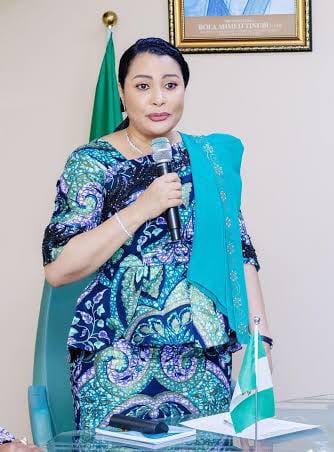
In 2026, the Federal Government of Nigeria (FGN) will focus on key policies and priorities to accelerate economic growth, create jobs and mobilize investments to build a prosperous Nigerian economy.
The Federal Ministry of Finance (FMF) will anchor a comprehensive Growth Acceleration and Investment Mobilization Strategy aimed at strengthening macroeconomic stability, and positioning Nigeria as a premier destination for long-term foreign direct investment (FDI).
Building on foundational reforms implemented over the past 24 months, including exchange rate unification, energy market restructuring, and fiscal consolidation, the Tinubu Administration is advancing into a second wave of reforms focused squarely on unleashing accelerated GDP growth, productivity, and capital formation.
In 2026, Nigeria’s economy will enter a transition phase from stabilization to expansion. Going forward, the Government’s focus will be to scale output, deepen domestic value creation, and place the economy on a credible path toward a US$1 trillion GDP by 2036.
That aspiration will be achieved by domesticating key supply chains to use raw materials, a workforce, and intellectual property sourced competitively from Nigeria in line with the Nigeria First Policy launched by President Bola Ahmed Tinubu, and building an open, export-oriented economy with strong domestic aggregate demand.
Our focus is to move decisively from stabilization to growth. The reforms underway are designed to lower risk, unlock private capital, and ensure that Nigeria delivers sustainable returns for investors while expanding opportunity for our citizens. Outlined below are the steps to be taken to deliver that outcome.
Strategic Framework: Stability, Scale, and Returns
The 2026 economic resurgence strategy is anchored on three principles critical to investor confidence
1. Macroeconomic Predictability: A stable and transparent economic environment where inflation, exchange rates, and fiscal policies are consistent enough to reduce uncertainty for investors and businesses.
2. Clear Sectoral Investment Pathways: Well-defined priority sectors with articulated strategies, incentives, and regulations that guide investors on where and how to deploy capital effectively.
3. Disciplined Policy Execution: Consistent and timely implementation of policies as designed, without abrupt reversals or weak enforcement, to build credibility and trust.
These principles will guide the Government’s reform and investment priorities.
Key Policy and Investment Priorities for 2026
1. Policy Coordination to Anchor Stability and Lower Risk Premiums
FMF will maintain close, institutionalized coordination with the Central Bank of Nigeria (CBN) to support disinflation, exchange rate stability, and orderly credit conditions. Fiscal and monetary alignment will remain central to reducing macroeconomic volatility and restoring Nigeria’s investment-grade fundamentals over the medium term. FMF accepts as a baseline the macroeconomic forecast published by CBN on December 30, 2025, regarding the Nigeria Economy Outlook.
The Government’s objective is to lower inflation expectations, compress sovereign risk premiums, and reduce the cost of capital for both public and private investment. The coordinated approach is entailed in the Disinflation and Growth Acceleration Strategy (DGAS) document co-sponsored by the CBN, the Federal Ministry of Finance and the FIRS (now NRS).
2. Sector-Led Growth Strategy to Unlock Private Capital
Nigeria will pursue a sector driven growth model that combines export expansion with rising domestic demand. Our work will focus on dismantling various barriers to growth and infusing a “willing buyer / willing seller” philosophy in sectoral policy frameworks and regulations. Price controls and restraints on volume or market access will be stripped away to enable the full potential of these sectors to emerge, and entrepreneurial capital to flourish. Priority sectors are catalytic anchors which include:
● Energy and gas-based industrialization, including associated infrastructure
● Agribusiness and food value chains
● Manufacturing and light industry
● Housing and urban infrastructure
● Healthcare and life sciences
● Digital services and technology-enabled trade
● Creative and Tourism industry
● Logistics networks and distribution infrastructure to enable export trade
● Solid minerals and critical metals
Federal ministries, states, and development partners will align around a common investment thesis: policy clarity, bankable projects, and rapid removal of regulatory barriers. Sector-specific working groups will fast-track reforms and investment pipelines capable of absorbing large-scale domestic and foreign capital. For example, in partnership with key stakeholders, public and private, Nigeria will work to rebuild its cocoa growing, processing and export capabilities, allowing us to sharply boost non-oil commodity income while meeting end market requirements e.g., European Union rules over the coming years.
3. Capital Formation
The Federal Government will advance targeted reforms to deepen Nigeria’s capital and insurance markets as engines of long-term investment and risk mitigation. Priority actions include expanding long-tenor local currency instruments, improving market liquidity and transparency, and strengthening investor protections to support infrastructure, housing, and productive sector financing. Emphasis will also be placed on expanding retail capital mobilization via growth in investment accounts to both draw in capital and ensure citizens participate in market upsides we anticipate will emerge. Regulatory reforms will encourage greater participation by pension funds, insurance companies, and institutional investors in capital markets.
In parallel, insurance market reforms will focus on recapitalization, improved supervision, and expanded coverage to better manage economic and climate-related risks. A stronger insurance sector will enhance creditworthiness, reduce project risk, and improve the overall investment climate by providing reliable risk transfer mechanisms for domestic and foreign investors.
Capital formation is central to Nigeria’s growth acceleration strategy and its ability to achieve the desired GDP growth in 2026. The Federal Government’s approach is focused on expanding the supply of long-term, patient capital, reducing investment risk, and ensuring efficient allocation to productive sectors of the economy.
Also, deploying blended finance instruments, credit enhancements, and first-loss capital working in partnership with bilateral and multilateral development finance institutions to lower project risk and improve bankability. These mechanisms are designed to crowd in domestic institutional investors and foreign direct investment by aligning public capital with private return expectations.
4. Increase Access to Finance and Financial Inclusion
To ensure that growth is broad-based and that capital reaches the last mile of the economy, the Federal Government will prioritize the expansion of consumer credit and financial inclusion as a core pillar of its growth strategy. Deepening access to affordable credit for households, microenterprises, and informal sector participants will support domestic demand, improve productivity, and translate macroeconomic reforms into tangible welfare gains.
We will deepen product design, regulatory and go to market partnerships with CBN, commercial banks, microfinance institutions, fintechs, and credit guarantee schemes. That will enable the market to deploy innovative, targeted risk-sharing instruments, wholesale funding lines, and digital credit infrastructure to expand responsible consumer lending on an industrial scale. Emphasis will be placed on enabling, qualifying and supporting responsible use of credit among first-time borrowers, women- and youth-led enterprises, and underserved communities. In partnership with well-regulated market participants, we will seek to build a non-inflationary, repayable rising tide.
5. Strategic Role of Development Finance Institutions (DFIs)
The Federal Ministry of Finance will take over the development finance quasi-fiscal responsibility of the CBN and will develop a comprehensive guideline for implementing a “go forward” development finance strategy. Development Finance Institutions (DFIs) will play a critical and catalytic role in the successful execution of Nigeria’s Growth Acceleration and Investment Mobilization Strategy.
Given the scale of Nigeria’s growth ambition and the need to crowd in long-term, patient capital estimated at ~ ₦246 trillion through 2036, the Federal Government recognizes DFIs as essential partners in de-risking priority sectors, anchoring private sector investor confidence, and mobilizing large volumes of private capital at scale.
DFIs bring a unique combination of long-tenor financing, concessional instruments, technical expertise, and risk-sharing capacity that is critical to unlocking investment in sectors where market failures persist despite strong fundamentals. These include infrastructure, energy transition, agribusiness value chains, healthcare, climate-resilient industries, and digital public infrastructure.
Strengthening Nigeria’s domestic development financial institutions will signal the country’s capacity and seriousness to investors. Domestic DFIs, including Bank of Industry (BOI) and Nigerian Export-Import Bank (NEXIM), will anchor financing and risk sharing frameworks across priority sectors and act as policy execution tools.
Four ways in which we can strengthen them:
• Improved Capitalization and balance sheet strength: This increases the ability to write larger ticket transactions and longer tenors. This can be achieved via several mechanisms including recapitalizations, new equity infusions, and negotiated credit lines with 3rd party countries for select capital good imports.
• Improved mandate and governance reforms: Stronger boards with performance linked KPIs.
• Risk sharing and credit enhancement powers: The ability to give guarantees, first loss tranches and have a co-lending right.
• Alignment with the Ministry of Finance: This gives them treasury support, sovereign guarantees where applicable and policy backed lending.
The FMF will continue to work in close partnership with bilateral, multilateral, and regional Development Finance Institutions to:
● Deploy risk-mitigating and investment-enabling capital that improves project bankability and accelerates financial close
● Mobilize domestic and international private capital through blended finance, guarantees, and co-investment structures
● Support project preparation, structuring, and pipeline development to shorten time-to-execution and improve investment readiness
● Strengthen institutional and delivery capacity across ministries, departments, agencies, and sub-national governments
● Align financing with climate resilience, financial inclusion, and sustainability objectives, consistent with global development standards
Nigeria’s reform momentum, policy clarity, and execution discipline provides a credible platform for DFIs to deploy capital at scale, with confidence, and measurable impact.
The Federal Government affirms its full support for DFI-led and DFI-supported initiatives aligned with national priorities and commits to maintaining the policy consistency, institutional coordination, and implementation focus required for successful delivery.
4. Revenue Mobilization and Fiscal Transparency
To support fiscal sustainability without distorting growth, the FGN will strengthen non-oil revenue performance through improved compliance, digital revenue systems, and enhanced transparency across federal agencies.
a) The FMF will continue to review efforts to boost revenue generation in 2026 from a mix of sources. We are optimistic that with the new Federal Tax Laws, effective as of January 1, 2026, royalties, taxes, tariffs, fees, and related line items will be vigorously collected and remitted to the Treasury Single Account.
b) Enabling this effort will be the new federal Revenue Optimization Platform (RevOps) which will be rolled out across the federation and MDAs starting January 1, 2026. The system integrates across all revenue generating, and related mechanisms of the FGN. Integrated into RevOps platform are additional instruments such as the use of Electronic Receipts, which will now become the sole acceptable proof of payment for all federal services and products. From railway tickets to birth certificates to customs duties, only the electronic receipt template is legal as of January 1, 2026. As such, FMF expects sharper visibility on daily revenue collection, uses of cash, and overall effectiveness in managing federal resources.
For better oil and gas revenue assurance and fiscal transparency, we will deepen our coordination with NNPC and NUPRC/NMDPRA to strengthen revenue mobilization, transparency and fiscal accountability across the oil and gas value chain. This collaboration will be anchored on a clear institutional framework that respects the autonomy of NNPC Ltd and the regulatory independence of NUPRC/NMDPRA, while reinforcing the FMF’s role as fiscal owner responsible for revenue assurance, cash visibility, and remittance discipline.
FMF will also work with the line MDAs to review key constraints to further growth in oil and gas, including pricing and domestic supply obligations that are acting as restraints to capital expansion in gas supply. The fundamental principle of “willing buyer / willing seller” will guide our deliberations and policy stance.
5. Disciplined Cash Management and Domestic Debt Optimization to Free Capital for growth
To deliver on this objective several key steps will be adopted and implemented including but not limited to:
1. Disciplined cash management and liquidity control will reinforce fiscal credibility and improve budget execution. FMF will strengthen centralized cash management across all ministries, departments, and agencies. Through the Treasury Single Account (TSA) and the rollout of an integrated revenue and cash management platform, the Government will achieve real-time visibility into cash balances, inflows, and commitments across the federation. Working closely with the DMO, Budget Office, BPP, this framework will support improved cash forecasting, tighter commitment controls, and more predictable releases aligned with approved budgets and debt servicing priorities.
2. Enhanced liquidity coordination between the FMF and the Central Bank of Nigeria will also reduce idle balances, limit unplanned borrowing, and lower overall financing costs, ensuring that public resources are deployed efficiently and transparently in support of growth and macroeconomic stability.
3. Nigeria will restructure its domestic debt profile to reduce short-term interest burdens and extend maturities where applicable. This strategy is designed to crowd in private investment, ease pressure on financial markets, and redirect capital toward productive sectors of the economy. Lower debt servicing costs will create fiscal space for infrastructure, human capital development, and catalytic investments aligned with national growth priorities.
4.Public Sector Productivity and Execution Capacity
Recognizing that execution is as critical as policy design, the Government is accelerating the digitization of public sector workflows and investment approvals. Streamlined processes, clearer accountability, and faster decision-making will reduce transaction costs and improve Nigeria’s competitiveness as an investment destination.
The quality and speed of public sector service delivery across all federal MDAs and enterprises will be a priority. To be delivered in partnership with the Office of the Head of Service, this transformative step is designed to boost transparency of workflow, improve accountability, and shift federal decision making to a fast track consistent with our prosperity agenda.
5. Promote Nigeria as an investment destination of choice
Nigeria offers investors a compelling combination of scale, reform momentum, and long-term demand fundamentals:
● Africa’s largest population, a well-trained labor force, and consumer market at 237 million
● Deep natural resources and energy endowment including 210 TCF of gas reserves enabling production of low cost, energy efficient output
● Superb geographic location with deep water harbors and logistics connections to key global end markets, United States, Latin America and European Union
● Network of trade agreements enabling expanding regional and global trade access including with Gulf Cooperation markets for agricultural commodities and meat
● Strong partnership framework with global and domestic Development Finance Institutions, lenders, investors, and capital markets to catalyze private investment and scale impact
● Improved credit score and stable financial system, with growing currency stability and ease of capital export rules
● A reformist administration with a clear growth mandate, and a focus on delivering results.
The 2026 agenda is designed to convert these fundamentals into predictable returns, bankable projects, and durable partnerships with global investors.
Next Steps – Implementing The Prosperity Agenda
Beginning in early 2026, the Government will intensify engagement with domestic and international investors, Development Finance Institutions, and multilateral partners through structured investment dialogues, co-financing platforms, and sector-specific initiatives.
The private sector, domestic and global, will be at the heart of our transformation; government’s role is to catalyze and solve problems.
To deepen investor confidence, improve transparency, and ensure sustained engagement with domestic and international capital providers, the Federal Government will establish a central investor desk housed within FMF.
This will serve as a single and coordinated interface between the government, existing and prospective investors, DFIs, credit rating agencies and market analysts. The core function will be to ensure consistent communication, timely disclosure and proactive engagement around the country’s macroeconomic outlook, policy reforms, investment priorities and execution progress.
These engagements will focus on building robust investment pipelines, deploying blended finance solutions, and accelerating the execution of bankable projects across priority sectors.
That desk will also coordinate closely with the DGAS team that is implementing our central investment thesis to build a private sector-led economy. We will operationalize DGAS implementation and launch the development finance strategy with the CBN and other partners in Q1 2026, to give greater clarity to the policy implementation pathways.
This administration understands that leadership is measured by courage to reform and capacity to deliver results. Under the leadership of President Bola Ahmed Tinubu, Nigeria has chosen the path of difficult but necessary reforms to secure lasting economic stability and shared prosperity.
In line with the Renewed Hope Agenda, these reforms are not ends in themselves, they are tools to expand opportunity, restore confidence, and improve the everyday lives of Nigerians.
As investment is mobilized, jobs created, and growth broad-based, the Government remains accountable to the Nigerian people, confident that consistent delivery, transparent governance, and inclusive progress are the true foundations of democratic trust.
This is the work of renewal, and it is being pursued with resolve, discipline, and an unwavering commitment to Nigeria’s future.
Dr. Doris Uzoka-Anite, CFA is Nigeria’s Honorable Minister of State for Finance
Related posts