

Afrobeats vs Afrobeat: The Wizkid-Fela Debate
BAMIDELE JOHNSON
The internet did what it does best when presented with controversy. It erupted. That was its response after Afrobeats star Wizkid replied to Afrobeat legend’s son, Seun Kuti, with the unseemly “I big pass your papa”. After that, it did what the internet always does next. It created opportunities for screenshots, memes and neatly split users into camps.
One camp, filled with greying men, called the claim blasphemy and stopped just short of declaring a fatwa. Another camp, crawling with earring-wearing, bling-loving, dreadlocked men with a fondness for the hip-hop hand gesture or something like that, shrugged and said, “Numbers don’t lie.”
Of course, there is a camp that does not give a toss and whose members simply ordered Fearless and some alcoholic bitter, put their feet up and are waiting to see who gets beaten between Afrobeats and Afrobeat. The names of the two genres remind me of Evan and Evans. Older folks will remember.
At the heart of the storm is an easily skippable question of what “bigger” means. Bigger in what sense? Cultural reach? Political impact? Global streams? Concerts sold? The ability to irritate the powers that be with lyrics, sax riffs, a smirk and glowing marijuana?
I know very little of Wizkid because I am no fan of his music. The whole Afrobeat genre, actually. I guess I infected my kids with that, as none of them is interested, even remotely. My lack of interest ensured that I was laughed at when visiting Mauritius in 2016. A native, on discovering I was Nigerian, wanted to chat with me about Flavour and Wizkid. He thought he was talking to a gee. I knew zilch about both. Flavour was actually in the same hotel where we were having the conversation, but I did not know. I did not even know who he was. So pardon me if there are a few inaccuracies.
Wizkid, I think, is the product, and probably an architect, of Afrobeats’ global moment. His songs rack up billions of streams. He headlines major shows from London to Los Angeles to Kingston. He collaborates with pop royalty and sits comfortably on playlists around the world. By modern fame metrics (algorithms, charts, endorsements), Wizkid is ginormous.
I follow many Caribbean handles on Facebook and I am astonished by how much Jamaicans, Barbadians, Trinidadians, and others in that axis know about him and Burna Boy. It may be because I am a know-nothing. Or maybe not.
He also represents a Nigeria exporting mirth rather than crisis, wrapped in sunlit hooks and diasporic cool. In an ecosystem where visibility equals viability, Wizkid is a master of the current grammar of success. If “bigger” means reach, revenue, and recognition, his claim is not illogical.
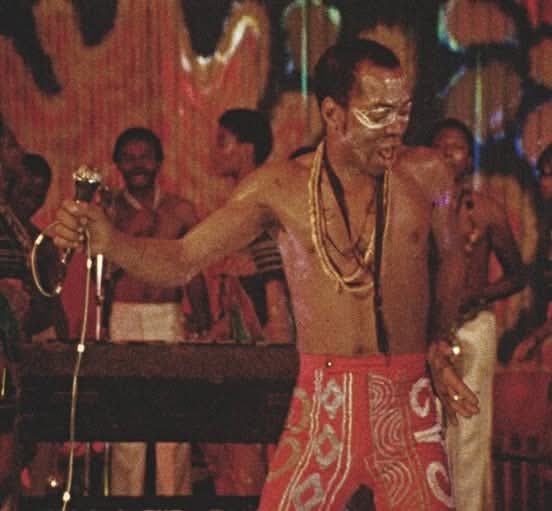
The fella known as Fela, however, was not built for the charts or did not build himself for them. He built himself for collision. His music was not content. It was confrontation, the type that duly delivered carnage. Afrobeat, as created by Fela, welded sound to struggle, taking in colonial hangovers, military brutality, and civic hypocrisy.
Fela’s influence is not just audible, but structural. His mission was not solely to entertain. He politicised as much as he entertained, if not more. He created a cultural institution, paid for it with raids and beatings, and kept going. There is no fighter’s accolade he does not deserve. Decades later, his music still fuels protests, scholarship aplenty and a tradition of speaking truth to power. That sort of “bigness” does not trend. It endures.
So, the friction comes from comparing two different games. Wizkid plays in a borderless pop economy where success is measured in scale. Fela played in a hostile national arena where success was measured in consequence. One thrives on circulation, while the other does so on disruption.
There is also a generational tell, as I said to my friend, Kingsley Obom-Egbulem, this morning. Younger audiences, by my reckoning, read legacy through relevance today. Older listeners read relevance through legacy tomorrow. Neither is an invalid lens. Neither cancels the other.
So, who’s bigger? If “bigger” means global stardom right now, Wizkid has a credible case. If it means cultural and political weight across time, Fela remains peerless. One dominates the present, while the other refuses to leave the future alone.
The smartest answer, I think, is the one with the least chance of virality. Wizkid is bigger than anyone in his lane. Fela is bigger than lanes. One can move crowds, while the other moves history. The sky is roomy enough for both without the need to play qualifying games.
This should not have been a feud, but a reminder that greatness wears different sizes, depending on who is taking the measurement and why.
Related posts