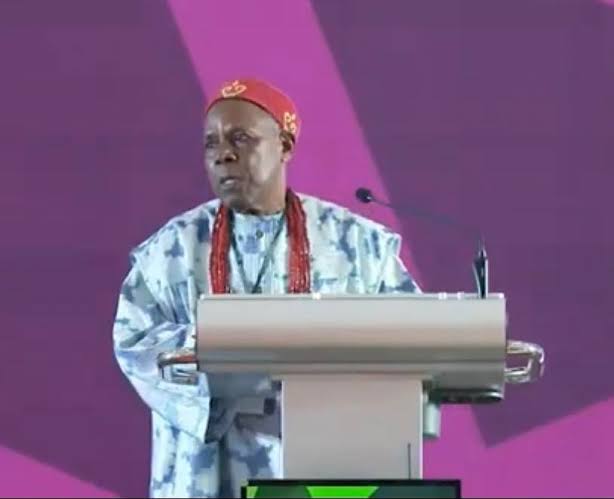
When traditional institutions speak, a nation ought to listen. The recent statement by HRM Igwe Lawrence Aguzubu of Ezema Olo Kingdom in Ezeagu, Enugu State, demanding the release of Nnamdi Kanu, reflects not only the voice of a royal father but the deep frustrations of many citizens across Nigeria. At the heart of this matter lies a fundamental question: What does justice mean in a democracy?
Nnamdi Kanu, leader of the Indigenous People of Biafra (IPOB), has remained in detention despite repeated legal and political debates surrounding his case. Whatever one’s views on his rhetoric or political ideology, it is difficult to ignore the broader principles at stake: rule of law, fairness, and national reconciliation. President Bola Ahmed Tinubu has repeatedly spoken of unity and renewed hope. Granting Kanu’s release, whether through political solution, clemency, or lawful judicial conclusion, would be a powerful demonstration of statesmanship. It would signal that Nigeria is strong enough to resolve dissent through dialogue rather than prolonged detention.
Across the country, Nigerians have witnessed disturbing contradictions. Individuals accused of heinous crimes, kidnappers who terrorize highways, bandits who sack villages, and even self-confessed insurgents, have, at various times, benefited from rehabilitation programs, negotiated settlements, or outright release in the name of peace-building. While security strategies may justify such decisions, the optics are troubling: violent actors appear to receive pathways to freedom, yet a political agitator, remains behind bars.
This perceived imbalance fuels resentment. It sends a message, rightly or wrongly, that speaking against injustice attracts harsher consequences than committing violent crimes. Such a narrative deepens distrust in institutions and widens regional wounds.
The Igwe of Ezema Olo Kingdom has framed his demand not as a threat but as an appeal. An appeal for equity, healing, and national stability. Traditional rulers occupy a unique moral space in Nigerian society. They are custodians of culture, mediators in conflict, and stabilizing forces in times of tension. When they call for reconciliation, it is often because they sense rising discontent at the grassroots.
Releasing Kanu would not mean endorsing separatism. It would mean choosing dialogue over detention. It would create room for engagement, reduce tensions in the Southeast, and demonstrate that the Nigerian state does not fear dissenting voices but can absorb and address them within constitutional frameworks. History teaches that political conflicts are rarely solved in courtrooms alone. They are resolved through courage, compromise, and visionary leadership. President Tinubu has an opportunity to write his name in that chapter of history, as a leader who prioritized unity through magnanimity.
Nigeria stands at a crossroads. Economic hardship bites. Security challenges persist. National cohesion is fragile. In such a climate, symbolic acts of justice carry enormous weight. The call by HRM Igwe Lawrence Aguzubu should not be dismissed as regional sentiment. It is a reminder that justice must not only be done but must be seen to be done fairly, consistently, and without prejudice.
If kidnappers and terrorists can be offered rehabilitation in the interest of peace, then surely a political agitator deserves a lawful and humane resolution in the interest of national unity. The time for a political solution is now.
#FreeNnamdiKanuNow.
– Ambassador Ezewele Cyril Abionanojie is the author of the book ‘The Enemy Called Corruption’ an award winner of Best Columnist of the year 2020, Giant in Security Support, Statesmanship Integrity & Productivity Award Among others. He is the President of Peace Ambassador Global.