

Powering Nigeria’s Future: A Historical Review of Federal Power Ministers Since 1999 And The Reform Agenda of Today
BY ADEDAYO OLOWONIYI
Since the return to democratic governance in Nigeria in 1999, the Ministry of Power has remained one of the most consequential portfolios in the federal cabinet.
Electricity is the backbone of economic growth, industrial productivity, and national development. Over the past two and a half decades, several distinguished leaders have steered the sector through complex reforms, infrastructure deficits, and evolving market realities.
Among those who held the mantle are respected figures such as Bola Ige, Barth Nnaji, Liyel Imoke, and Babatunde Raji Fashola. Each brought unique perspectives and reforms to the sector, laying the groundwork for the transformation Nigeria continues to pursue today.
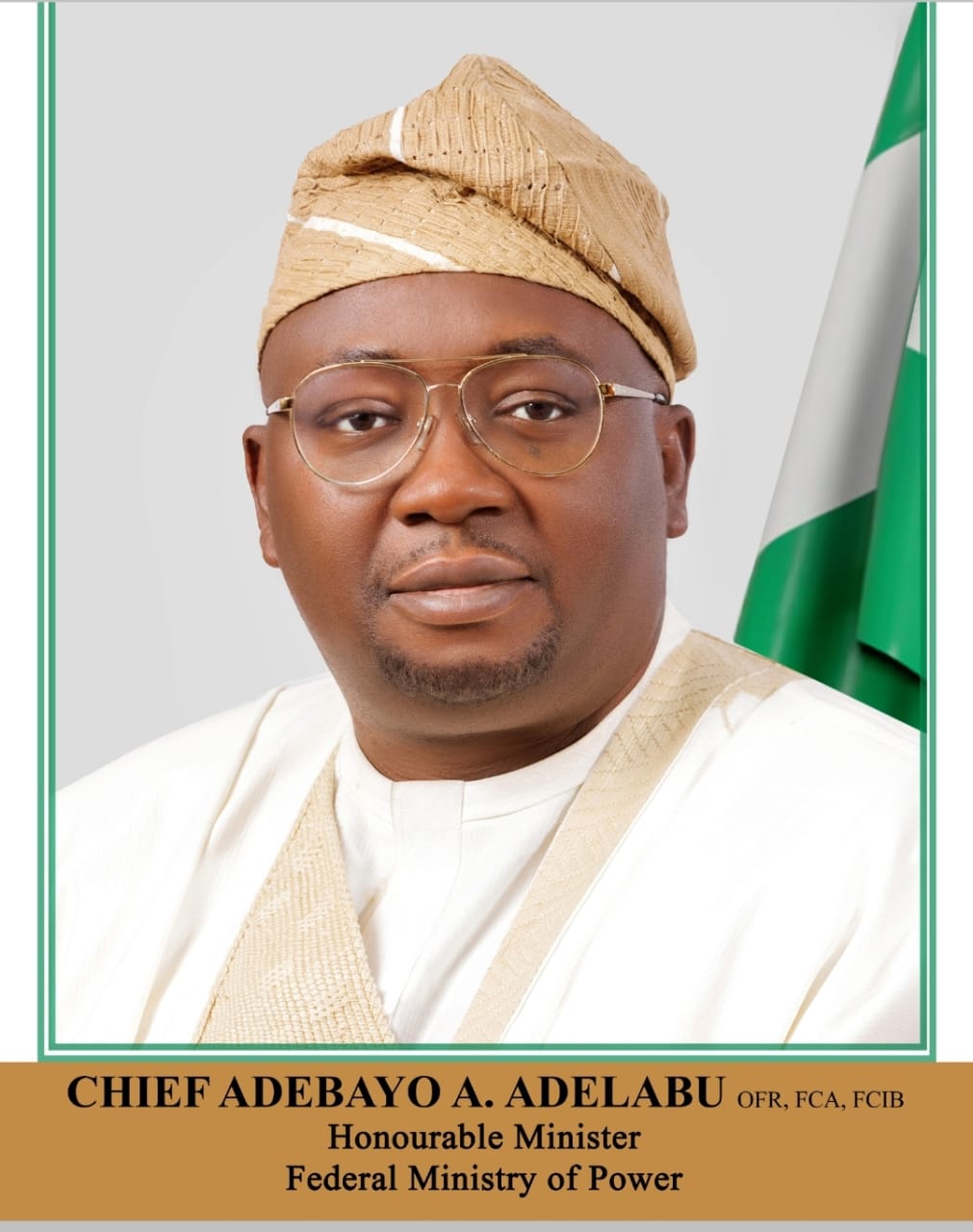
Today, the sector is being steered by the current Minister of Power, Adebayo Adelabu, whose reform-driven approach has sparked fresh conversations about the future of electricity in Africa’s largest economy.
A Look Back: The Reform Efforts of Past Power Ministers
The Visionary Beginnings: Bola Ige
The late Chief Bola Ige served as one of the earliest Ministers of Power in the Fourth Republic. His tenure focused largely on restoring public confidence in a power system that had deteriorated after years of military rule. Although his time in office was tragically cut short, he helped initiate discussions around restructuring the electricity sector and modernizing the national grid.
The Reform Architect: Barth Nnaji
Professor Barth Nnaji played a pivotal role during one of the most defining periods of the power sector. As minister, he helped drive the privatization process of the generation and distribution companies that emerged from the unbundling of the Power Holding Company of Nigeria (PHCN). His work helped establish the foundation for Nigeria’s current electricity market structure.
Administrative Stabilization: Liyel Imoke
During his time overseeing the sector before becoming governor, Liyel Imoke focused on administrative coordination and project supervision. His leadership contributed to stabilizing ongoing generation projects and reinforcing federal oversight during a period of policy transition.
Infrastructure and Market Coordination: Babatunde Raji Fashola
Former Lagos governor Babatunde Raji Fashola served as Minister of Power, Works and Housing during a period of integrated infrastructure management. His tenure emphasized transmission expansion, financial interventions for distribution companies, and coordination between electricity supply and broader national infrastructure projects.
While these ministers made notable contributions, the Nigerian power sector has remained a work in progress, requiring continuous reform, investment, and policy innovation.
The Adelabu Era: A New Reform Momentum
Under the leadership of Adebayo Adelabu, the ministry has pursued a broad and multidimensional reform strategy aimed at addressing long-standing structural issues in the electricity ecosystem.
Observers of the sector note several areas where the current administration’s efforts have expanded beyond previous frameworks.
1. Legislative and Policy Reforms
One of the defining features of the current minister’s tenure has been the acceleration of legislative alignment with Nigeria’s evolving electricity market. Working within the framework of the Electricity Act and related policies, the ministry has promoted greater decentralization, enabling states and private investors to participate more actively in electricity generation and distribution.
This policy direction is widely viewed as a turning point toward a more competitive and flexible power market.
2. Market and Tariff Reforms
Another major focus has been tariff restructuring aimed at improving cost recovery while protecting vulnerable consumers. By promoting a more transparent tariff system tied to service delivery, the ministry seeks to attract investment and reduce the financial fragility that has long plagued the electricity market.
While tariff reforms often generate public debate, industry analysts acknowledge that sustainable electricity systems require financially viable market structures.
3. Transmission and Distribution Infrastructure Expansion
A significant component of the minister’s agenda has been the strengthening of Nigeria’s transmission and distribution backbone.
Transmission capacity expansion, grid modernization initiatives, and improved coordination with distribution companies have all been prioritized. These efforts aim to reduce bottlenecks that have historically prevented generated electricity from reaching consumers.
4. Energy Transition and Renewable Expansion
In line with global energy trends, the ministry has also increased focus on renewable energy and energy transition strategies. Through collaborations with agencies such as the Rural Electrification Agency, distributed solar systems and mini-grid solutions are being deployed to electrify underserved rural communities.
This distributed energy model has the potential to bring electricity to millions who remain outside the national grid.
5. Human Capacity Development
Human capital development has also emerged as a key priority. The ministry has placed renewed emphasis on strengthening training programs at the National Power Training Institute of Nigeria (NAPTIN), ensuring that engineers, technicians, and power sector professionals possess the skills required for modern electricity systems.
A stronger technical workforce is essential to sustaining long-term reforms.
6. Local Content and Manufacturing Development
Another notable initiative has been the push for local manufacturing within the renewable energy ecosystem. The minister has promoted policies encouraging domestic production of solar panels, batteries, and electricity meters.
This strategy not only supports energy access but also stimulates industrial development and job creation within Nigeria.
Navigating Political Headwinds
In recent months, the minister has faced waves of criticism in sections of the media and political space. However, supporters argue that much of the negative publicity may be connected to emerging political dynamics ahead of the 2027 electoral cycle.
With increasing speculation about his political ambitions in Oyo State, analysts note that both internal party rivals and opposition figures may seek to shape public narratives around his performance.
In political environments where reform policies—especially tariff adjustments—can be unpopular in the short term, ministers often face criticism despite long-term strategic goals.
A Possible Future Beyond the Power Ministry
Looking ahead to the 2027 elections, many political observers believe that Adebayo Adelabu possesses several attributes that could position him strongly should he pursue the governorship of Oyo State.
Several factors stand out:
1. Technocratic Leadership Experience
His stewardship of one of the most complex federal ministries has required navigating policy, economics, infrastructure management, and stakeholder negotiations.
2. Reform-Oriented Governance
His emphasis on structural reforms—legislative, market, and infrastructural—reflects a governance style focused on long-term solutions rather than short-term political gains.
3. Economic Development Perspective
Energy reform is deeply connected to economic growth. Experience in managing such a critical sector provides insights valuable for state-level industrial development.
4. Institutional Capacity Building
His focus on human capacity development and local manufacturing demonstrates an appreciation for sustainable development through skills and industry.
5. Strategic Vision for Energy and Industrialization
A leader who understands the link between electricity access and economic productivity can play a transformative role at the state level.
Conclusion: Powering Reform, Shaping the Future
The story of Nigeria’s electricity sector since 1999 is one of gradual reform, evolving policy frameworks, and persistent challenges.
From the early reform visions of leaders like Bola Ige to the privatization era driven by Barth Nnaji and the infrastructural coordination efforts of Babatunde Raji Fashola, each administration has contributed to shaping the sector.
Today, under Adebayo Adelabu, the ministry is pursuing an ambitious mix of market reform, infrastructure investment, renewable energy expansion, and human capital development.
While the full impact of these reforms will unfold over time, one reality is increasingly clear: Nigeria’s energy future will depend on sustained leadership, policy continuity, and bold structural transformation.
And for leaders willing to navigate that challenge, the opportunity to shape both national infrastructure and political legacy remains immense.
-Olowoniyi, the Chief Technical Adviser to the Minister of Power, Chief Adebayo Adelabu writes from Abuja
Related posts