
Yayi: The Lagos-Ogun Boundary Belt Can Wait No Longer
BAMIDELE JOHNSON
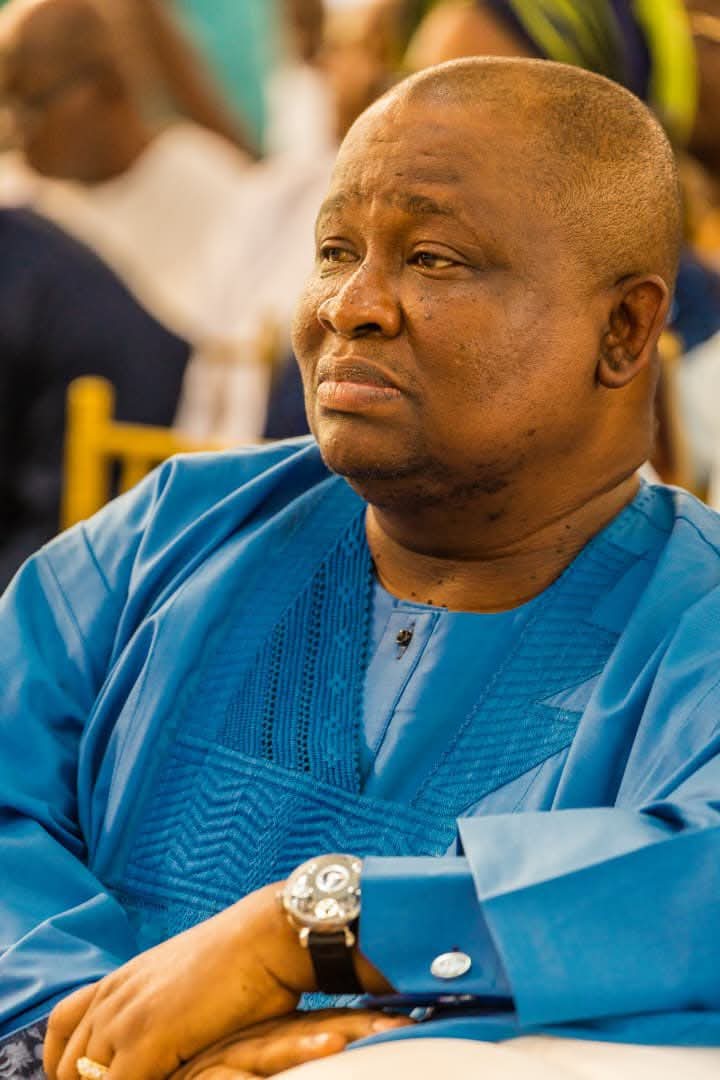
There is a certain electricity in the air when a candidacy feels less like an imposition and more like a collective choice. The emergence of Solomon Olamilekan Adeola (Yayi) as the APC governorship candidate carries that charge. It has not been greeted with the usual grumbling compliance, but has been met, in many quarters, with something closer to relief, even expectation.
The reaction to his emergence is not accidental. It is something rooted in memory. In places where yawning gaps in infrastructure make government a rumour or folklore, people remember who intervened tangibly. While representing Lagos West, Yayi built a reputation for not treating constituencies like abstract map points.
In Obawole, in Ifako-Ijaiye Local Government Area where I live, he installed a 500KVA transformer in my CDA. He followed that up by tarring seven streets, complete with drainage. Five years on, those roads have held their shape with a dignity that shames many newer projects. In a country where roads do not last longer than lettuce, that kind of durability becomes a political argument.
Those seven roads are inner street affairs that are the responsibility of Ifako-Ijaiye Local Government Area. The Chairman at the time, the now deceased and formidably useless Toba Oke, had his house in the vicinity in which the roads were built. He could not build them. Even the one on which his house stands remained under construction till his two terms ended. It was completed by his successor.
Multiply what Yayi did in my hood across communities that have felt his interventions and you begin to understand the groundswell. For many, this is not about the party platform, but about a man whose record suggests that he understands needs, especially of the very desperate variety. It is not certain that he will win the election, but he looks the out-and-out favourite.
For his candidacy to mean anything beyond comfort for those already touched, I think, it must become something harder, sharper and more consequential. The truth is that just beyond the pockets of progress lie whole belts of abandonment.
You want to know? Akute, Lambe, Oke Aro, Agbado, Matogun, Osere, Maidan, Legun, Adiyan, Ijoko, Mowe, Ofada, Ibafo et al. These are not obscure hamlets, but dense, energetic and economically-alive corridors sitting on the Lagos boundary that have been condemned f to exist as afterthoughts for 27 years of civil rule.
In these communities, there are no roads worth the name, no functional schools that can carry the weight of their swelling populations and no hospital worth the description. The nearest fire station to Lambe, for example, is 24 kilometres away. A few years ago, a tanker fire licked many buildings, including a Celestial Church parish on Matogun Road. Fire trucks could not have arrived timeously because the fire station is far away and because the surface of the moon is smoother than the road leading to the scene of the accident.
In these areas, neglect is not an abstract policy failure. It is a daily assault gleefully carried out by successive administrations, with the worst being that of Ibikunl3 Amosun. Businesses have been quietly strangled by inaccessibility. Those that survive do so on one leg, unable to expand, unable to employ and unable to breathe. Property values have collapsed, turning what should be family assets into liabilities. Health outcomes are worsening because distance and bad roads are often the difference between life and death. Beneath all of this is a more corrosive message that residents of those places do not matter.
Yayi’s emergence, for all the goodwill it has generated, must confront this history head-on, if he is elected. It cannot be another cycle of selective intervention, of islands of competence in a sea of disregard. The Lagos-Ogun boundary belt is asking for inclusion, not miracles. It has an agenda that suggests itself. It is clear and urgent.
First, roads. Not those ceremonial stretches built for social media. Those areas need a comprehensive grid that connects the communities internally and to economic hubs. They need roads that can carry commerce, not just okada and Keke NAPEP. Second, public services such as functional primary and secondary schools, properly equipped hospitals and fire stations positioned with intent.
Third, economic revival through support for small and medium enterprises and incentives that recognise the strategic location of these areas as spillover zones from Lagos. Fourth, planning. These communities have grown in spite of the state. They must now be integrated into a coherent urban vision that prevents chaos from becoming permanent. I should know. I lived in one for nine years and if you lived in one, you have lived in all.
Finally, dignity. Those areas need governance that signals, in policy and in presence, that the residents do not remain children of a lesser god. That is what they currently are.
The enthusiasm greeting Yayi today is a form of credit earned through past interventions. But credit, in politics, is perishable. It must be redeemed with a broader and bolder commitment, if and when he earns the mandate. He has shown he can fix streets. If he gets elected, he will be required to fix a pattern of exclusion that has endured for nearly three decades.
If he does, this moment of delight will harden into trust. If he does not, it will slip quietly into that long ledger of missed chances. There is reason for caution. Our history is crowded with false dawns. We have seen promise curdle into incompetence and self-described reformers turn arsonists, fanning the very neglect they swore to end. Those areas have had enough of that cycle.
Related posts