


The Obi Gambit: Why Sacrificing 2027 Is The Southeast’s Shortest Path To The Presidency
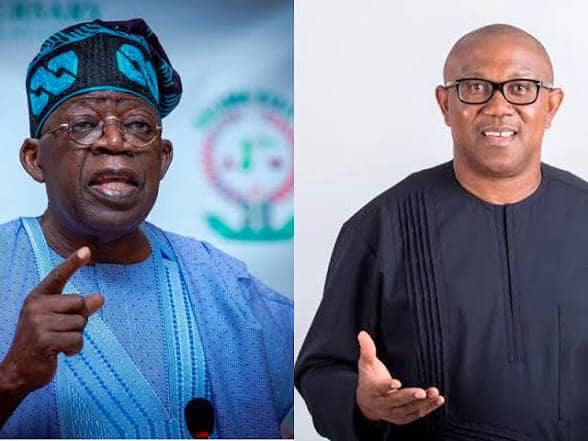
Nigeria’s political landscape is inherently transactional, a complex web of shifting alliances, consensus-building, and ethnic balancing. As the nation gradually steers toward the 2027 presidential election, the air is already thick with calculations, alignments, and re-alignments.A pivotal moment in this unfolding narrative occurred recently in Owerri, where the Southeast chapter of the Renewed Hope for Greater Nigeria (RHGN), led by Mazi Franklin Ngoforo, made a profound and calculated proposition. The group resolved to engage apex Igbo socio-cultural organization, Ohanaeze Ndigbo, under Senator John Azuta Mbata, alongside respected elder statesmen like Chief Emeka Anyaoku and Commodore Ebitu Ukiwe, to persuade former Anambra State governor and Nigerian Democratic Congress (NDC) leader, Mr. Peter Obi, to step down from the 2027 presidential race and back President Bola Ahmed Tinubu’s re-election bid.
On the surface, such a proposal might trigger instinctive resistance from fervent supporters, who view Peter Obi’s political journey as an uncompromisable crusade. However, a deeper, dispassionate analysis reveals that this proposition is not an attempt to diminish Obi’s undeniable stature or undermine the political aspirations of the Southeast. Instead, it is a masterstroke of pragmatic realpolitik—a call for the Igbo nation to look past the emotional allure of a single election cycle and focus on securing a guaranteed, uncontested path to the presidency in the near future.
To appreciate the wisdom embedded in the RHGN’s proposal, one must first come to terms with the constitutional realities governing Nigerian politics. If re-elected in 2027, President Bola Tinubu will be serving his second and final term. By 2031, power will constitutionally and conventionally shift back to the South, and the Southwest will be effectively out of the equation. This creates a critical window of opportunity. The fundamental question the Southeast must ask itself is simple: Is it more beneficial to wage an exhausting, highly polarized, and structurally disadvantaged battle for the presidency in 2027, or to build an unbreakable political compact with the Southwest today that yields uncontested regional backing tomorrow?
History has shown that the Nigerian presidency is rarely won by isolation or moral rectitude alone; it is secured through strategic partnerships, historical goodwill, and reciprocal obligations. The political trajectory of the Southwest itself offers a classic blueprint. Following the June 12, 1993 crisis, the region systematically accumulated political capital, built cross-regional alliances, and eventually secured a consensus in 1999 that produced Olusegun Obasanjo. Decades later, a strategic alliance between the Southwest and the North in 2015 laid the groundwork for the current dispensation. The Southeast must learn from this script.
By taking a step back in 2027, Peter Obi would not be ending his presidential journey; he would be elevating himself from a regional champion into a national statesman of unparalleled magnanimity. A voluntary deferment of his ambition for the sake of long-term regional and national stability would generate an immense, almost unpayable debt of political goodwill from the Southwest and other federating units. It would disarm detractors who unfairly characterize his movement as ethnically insular and replace that narrative with one of profound patriotism and strategic patience.
Furthermore, entering into a political compact with the ruling administration offers immediate, tangible dividends for the Southeast. Politics is the authoritative allocation of values. A strategic partnership with the Tinubu administration between 2027 and 2031 ensures that the Southeast sits prominently at the decision-making table. It guarantees aggressive infrastructural development, critical federal appointments, and economic integration for a region whose heartbeat is commerce. Rather than remaining in perpetual opposition—which often leads to political marginalization—the Southeast can leverage its support to extract concrete developmental commitments.
We must also confront the arithmetic of the ballot box. Winning a presidential election in Nigeria requires widespread national consensus and compliance with strict constitutional geographical spreads. As things stand, a fractured opposition facing an entrenched incumbent makes the 2027 race an incredibly steep hill to climb. Another bruising electoral defeat could induce political fatigue within the Southeast and further alienate the region from the centre. Conversely, by consciously choosing to hold the balance of power, the Southeast transforms itself from a desperate seeker of the presidency into the ultimate kingmaker, positioning itself as the natural heir to the throne when power shifts.
Mazi Franklin Ngoforo put it succinctly: “The issue is bigger than one election and bigger than one individual.” This is the crux of the matter. The collective destiny of Ndigbo cannot be tied to the immediacy of a four-year electoral calendar. It must be viewed through the lens of generational legacy. The leadership of Ohanaeze Ndigbo and elder statesmen like Anyaoku and Ukiwe possess the historical depth to understand that in politics, a temporary retreat is often the precursor to a total and decisive victory.
When these leaders eventually sit with Peter Obi, the conversation will not be about submission; it will be about strategy. It will be about transforming today’s deliberate alliances into tomorrow’s presidency. Deferring an ambition to the appropriate time is a mark of supreme leadership. For Peter Obi, the NDC, and the entire Southeast, embracing this strategic bargain in 2027 might just be the most direct, secure, and peaceful path to a Southeast presidency. It is time to trade emotional politics for structural diplomacy, ensuring that when the history of Nigeria’s political evolution is written, the Southeast is remembered not just for its participation, but for its ultimate triumph.
GOD bless Nigeria.
*Prince Ben AHANONU*
*Principal Partner,*
*Ben AHANONU and Associates.*
Email: benahanonu@gmail.com
Categorised as : Opinion
No Comments »
Related posts