


Governor Dauda Lawal And The New Zamfara State
BY EMMANUEL ADO
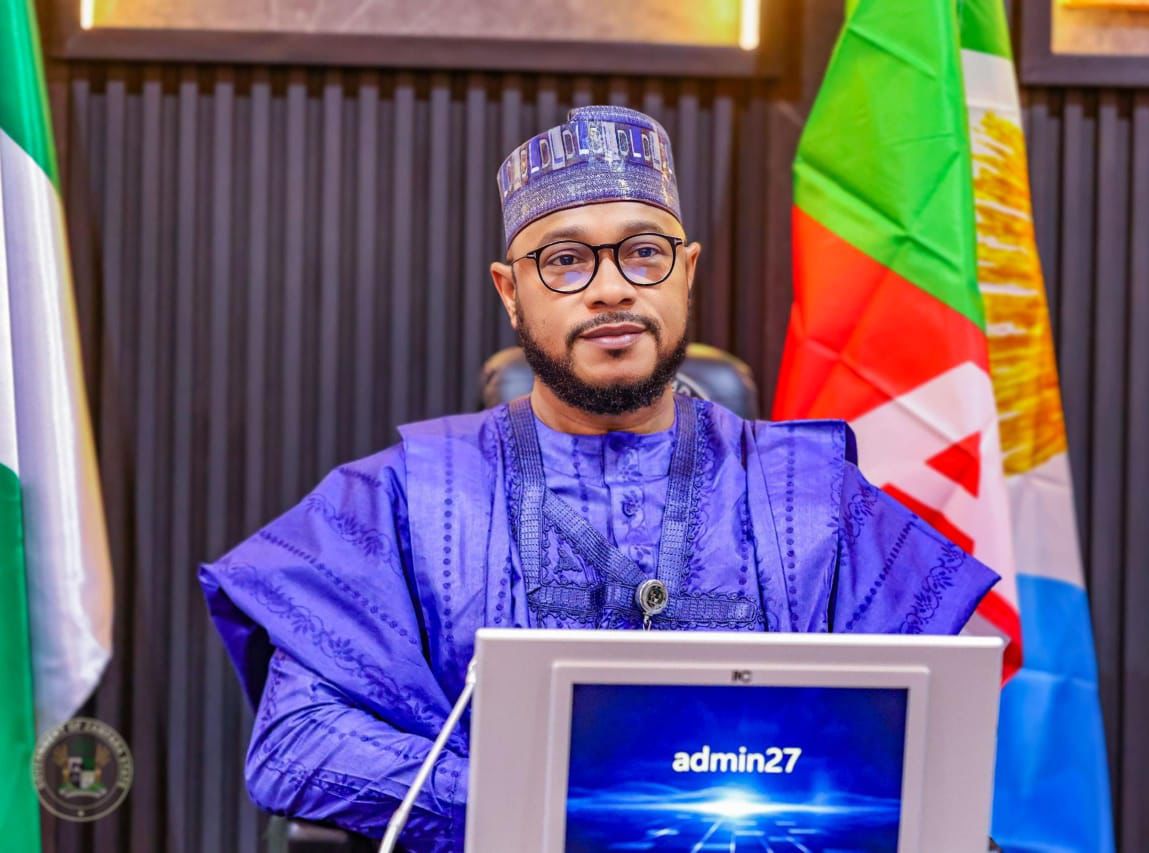
There is an Igbo African proverb that says, “A tree cannot make a forest.” At its core, the saying encourages people to work together as a team in pursuit of a shared communal goal.
Yet this timeless wisdom does not write off the fact that extraordinary individuals, with conviction and drive, can become the spark that makes a great difference. Throughout history, remarkable leaders like Governor Dauda Lawal, with vision, courage, and determination, have emerged and inspired others to make a fundamental difference. So, while a single tree may literally not make a forest, it can indeed make a forest.
Nowhere is this truth more vividly demonstrated than on the football pitch, where exceptional individuals like Lionel Messi have continued to make unimaginable impacts.
It is a statement of fact that Lionel Messi plays with ten teammates, a coach and substitutes, yet he has carried his club and country and single-handedly turned around the course of several matches. Messi possesses the rare ability to turn seemingly certain defeats into victories.
Governor Dauda Lawal is, in several respects, like Messi. He did not inherit an easy assignment, but through sheer determination and vision, he has made the huge difference that only an exceptional leader can make.
The story of Zamfara State under Lawal is the story of a determined leader providing the direction and confidence needed to change the ugly narrative of the state.
Governor Lawal has turned around Zamfara State because of the strength of his character, education, exposure and, most importantly, his vision. He inherited a state in 2023 that needed a leader who was prepared to challenge the status quo and fundamentally change the way government business was conducted—and he has risen to that challenge.
Zamfara State was facing serious challenges insecurity, institutional weaknesses and a development deficit all of which demanded decisive and purposeful leadership.
Like the gamji tree after which he is named deeply rooted, strong and capable of enduring the harshest conditions Lawal has confronted these challenges head-on and, in the process, inspired the people to believe that renewal is possible. In that sense, he is a tree that has made a forest, and the driving force behind the New Zamfara State.
There is no doubt that Governor Lawal came well prepared for the rescue mission and his anger about the condition of his dear state was evident.
To understand the significance of what is unfolding in Zamfara State today, this point is important. It raises an interesting question: the place of anger in governance? Can righteous anger, disciplined by vision and determination, be sufficient to push a leader to deliver?
In Zamfara State, Lawal’s exploits suggest that it can. Much of the transformation now taking shape has certainly been driven by anger and a stubborn resolve that the state must at all cost work. Let us examine the condition of the state before Governor Lawal assumed office.
For many years, Zamfara State had made headlines for all the wrong reasons.
Beyond the controversy that surrounded the introduction of the Sharia legal system, the state struggled with deep-rooted challenges in education, poor healthcare facilities and a dysfunctional public service.
Schools suffered from inadequate infrastructure and had poor learning conditions, while repeated industrial actions reflected government’s failure to meet its obligations to teachers and other public servants.
The health sector was not just distressed, with inadequate and dilapidated facilities it also suffered from acute shortages of personnel. Then came the darker years of banditry, terrorism and kidnapping, which displaced several communities, and destroyed livelihoods.
The cumulative effect was devastating, as it shattered the people’s confidence in the capacity of government to secure their lives and property, provide essential services and infrastructure, deliver quality education and healthcare, and create the economic opportunities needed for them to live decent lives. Despite the enormity of these challenges, the people of Zamfara State refused to be overwhelmed.
The people of Zamfara State deserve credit for the transformation now taking place. They understood that the scale of the state’s problems required a leader prepared to confront the wreckage head-on, rather than turn it into a permanent alibi for poor performance.
That understanding translated into unflinching support for Governor Lawal, whose emergence also broke a long-standing political pattern in the highly conservative state, which had historically voted in one direction.
His victory was particularly significant because it came after years of political dominance by one party, interrupted only briefly in 2019 when the PDP returned to power following a crisis within the APC.
Lawal’s victory, therefore, was more than an electoral upset; it represented the determination of the people to entrust their state to a leader they believed could change their fortunes.
It was against this difficult background that Governor Lawal administration began his rescue mission to rebuild Zamfara State from its very foundations. And he understood that it was a task that could not be accomplished through piecemeal interventions, but one that required a holistic approach that governance, security, infrastructure, education, healthcare and economic development are all interconnected.
That understanding shaped the administration’s approach to governance. Security, for instance, has not been treated simply as a matter of confronting terrorists, but as the necessary foundation upon which every other aspect of development must rest.
The establishment of the Community Protection Guards was conceived as a community-based security outfit, particularly for areas where conventional security forces face enormous challenges. Alongside this, the state government has continued to provide logistics and other forms of assistance to the security agencies in the war against the terrorists.
The objective is clear: the defeat of the terrorists. Governor Lawal has also been unequivocal that there will be no negotiation with them.
For the governor, victory over the bad guys is a displaced farmer returning to his farm. A child returning to school is a security victory. A market reopening after prolonged disruption is a security victory.
A community being able to conduct its social and religious activities without fear of attack is also a victory. In other words, the real test of improved security is not simply the number of successful operations conducted or the number of criminals neutralized, but on whether the ordinary people have reclaimed their lives.
And once people are able to move freely and live their normal lives, the question naturally becomes: what environment will they be returning to? This is where infrastructure becomes part of the larger rescue mission story. For years, poor roads and neglected urban infrastructure had told the story of a neglected state. The administration’s focus on road construction and rehabilitation is therefore an important part of its effort to reconnect communities and transform Zamfara State.
Before the coming of Governor Lawal, Gusau looked more like a glorified local government headquarters than the capital of a state. Today, that picture has changed. The administration’s road projects are well designed, with pedestrian walkways and provisions for internet connectivity. Good roads reduce travel time to schools and healthcare facilities, facilitate the movement of agricultural produce, and strengthen the connection between rural communities and urban centres.
Infrastructure is an enabler of economic activity and urban development. Governor Lawal, a man of taste, is leaving the state with roads and public buildings that are not only functional but visually appealing, and is gradually transforming Gusau into a capital city worthy of the state it represents.
Governor Lawal has extended the same logic to education, declaring a state of emergency in a sector that had been severely weakened by the the lack of investment, the high number of out-of-school children, lack of trained teachers, inadequate infrastructure, which accounts for the poor performance in national examinations and all made worse by the security crisis.
The administration recognised that Zamfara State could not afford to lose another generation to illiteracy and has therefore intervened on several fronts, addressing shortages of teachers, dilapidated school infrastructure and the financial barriers affecting students.
The renovation of schools and payment of outstanding WAEC and NECO fees reflect an understanding of the challenges. For struggling families, the inability to pay examination fees can mean an interrupted academic journey for their children. By removing these barriers, the administration has restored more than access to education; it has restored opportunity for upward mobility in a world that is increasingly becoming a knowledge economy.
Just as he has done in education, Governor Lawal has also invested heavily in strengthening the healthcare delivery system to meet the medical needs of the people. The rehabilitation and upgrading of dilapidated healthcare facilities, including general hospitals and primary healthcare centres, are significant interventions in a state where access to quality healthcare has long been a challenge.
The installation of solar power systems in these facilities has also helped address the challenge of unreliable electricity supply. For expectant women in rural communities, access to functional healthcare improves the chances of safe delivery, the better-equipped facilities have reduced the need for long and often difficult journeys in search of basic medical care.
Improving healthcare is ultimately an investment in the wellbeing of the people. And increasingly, the impact of these interventions is becoming visible in the improved availability and accessibility to essential healthcare services across the state.
There are also the public servants, whose role is indispensable to the smooth functioning of government itself. They are not always visible in the successful story of development, but they are the machinery through which government policies, programmes and projects are translated into results. There is no denying the fact that an efficient and motivated public service is critical to the success of any administration. Governor Lawal’s regular payment of salaries, alongside efforts to clear the backlog of gratuities and other outstanding obligations, has helped restore morale in the service.
The importance of this cannot be overstated. A public servant who receives his salary as and when due is better able to meet his responsibilities.
Prolonged non-payment of salaries had a ripple effect that extended far beyond the civil service, affecting families, businesses and communities.
While years of banditry have severely disrupted farming and forced many farmers away from their fields, agriculture remains at the heart of Zamfara State’s economy and the livelihood of a large proportion of its people. It provides food, employment and income, sustaining much of the rural economy.
Recognising this, Governor Lawal has invested significant resources in revitalising the sector by providing farmers with the inputs, equipment and support they need to return to productive farming. The message is clear: terrorists cannot be allowed to destroy the foundations of Zamfara’s economy.
In a state where agriculture is a way of life, reviving farming is, in many respects, an essential part of rebuilding Zamfara State itself.
The work is not finished. Governor Lawal himself would be the first to acknowledge that much remains to be done. But, as Chinua Achebe reminds us, “the morning shows the day.” And the signs are unmistakable: Zamfara State is moving forward, with a renewed determination to rebuild, recover and reclaim its future.
As Governor Lawal seeks a second term, therefore, the most important question before the people of Zamfara is no longer whether the Rescue Mission has made a difference. The evidence of change is increasingly visible across the state.
The more consequential question is how the progress already achieved can be consolidated, institutionalised and sustained, so that the gains of the past three years do not merely become a chapter in Zamfara State’s history, but the foundation upon which a stronger, safer and more prosperous state is built.
Related posts