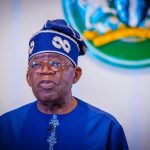


TINUBU IS THE PARTY: From Political Institution To Political Ideology
Posted on October 30, 2026
Prince Nixon Okwara
There are politicians who win elections, politicians who occupy offices, and politicians whose influence survives the offices they once occupied. The distinction is important. Electoral victory confers authority; institutional influence creates continuity.
It is within that distinction that I locate Bola Ahmed Tinubu.
In my political assessment, Tinubu’s significance is not adequately captured by the conventional vocabulary of Nigerian partisan politics. His political career illustrates something more unusual: the gradual conversion of personal relationships into political capital, political capital into organisational power, and organisational power into an enduring political ecosystem.
My thesis is therefore deliberately provocative:
Tinubu first became a political institution, then a political country, and eventually an ideology.
The proposition is metaphorical, not constitutional. Nigeria remains a sovereign republic belonging to its people. What I mean is that Tinubu’s political ecosystem has acquired a scale, density and durability that make it difficult to understand his influence merely through the office he occupies.
THE POLITICS OF STRENGTH
The most revealing feature of Tinubu’s political method, as I understand it, is his apparent preference for capacity over purity.
Some politicians look for saints. Tinubu looks for strengths.
That does not mean character is irrelevant, nor does it excuse misconduct. It means that politics, unlike moral mythology, is conducted among imperfect human beings possessing different abilities, ambitions, loyalties and weaknesses. The serious political strategist therefore asks a more consequential question: What can this person do, and how can that capacity be directed toward a larger political objective?
Politics has never been a monastery.
A successful political organisation requires people who can mobilise, negotiate, administer, communicate, organise, build coalitions and survive difficult contests. Tinubu’s political career, in my assessment, demonstrates a particular instinct for identifying such capacities and placing people within a larger architecture of influence.
This helps explain why his political network has extended beyond the boundaries of one office or one election. His method has involved relationships, recruitment, cultivation, mentorship, alliances and continuity. The political actor is not merely a disposable instrument for the next election; properly cultivated, that actor becomes part of a longer political architecture.
That is the difference between using people and developing political capital.
The former consumes followers.
The latter produces a network.
And networks, when intelligently organised, become institutions.
THE ARCHITECTURE OF POWER
Tinubu’s political journey is therefore interesting not simply because he became President of Nigeria, but because of what preceded the presidency.
His political formation included the Third Republic, the Senate, the pro-democracy struggle and, eventually, the governorship of Lagos State. But the more consequential chapter may have begun after he ceased to be governor.
Many politicians derive their influence from office.
Few demonstrate that their influence can survive leaving it.
Tinubu’s continuing political relevance after Lagos is central to my description of him as a political institution. He appeared to understand a fundamental principle of political power: a tenure ends; relationships need not.
A political office is temporary. Political architecture can be durable.
This distinction became particularly visible in the coalition politics that contributed to the formation of the All Progressives Congress in 2013 and its subsequent victory in the 2015 presidential election. That achievement was unquestionably collective, involving Muhammadu Buhari, other political leaders, former governors, organisations and diverse constituencies. Yet Tinubu’s role in coalition-building remains an important part of the story.
The lesson is larger than the individual.
Political sagacity is not merely knowing how to win today’s contest. It is understanding what relationships must exist when tomorrow’s contest arrives.
That requires patience.
It requires memory.
It requires recruitment.
And above all, it requires the ability to see political value where others may see only personality.
FROM POLITICIAN TO POLITICAL COUNTRY
I once described Tinubu as a country.
The phrase was deliberately metaphorical.
A country contains territories, constituencies, competing interests, institutions, alliances, ambitions and centres of influence. Tinubu’s political ecosystem, in my assessment, has acquired comparable internal complexity.
There are actors with independent ambitions, networks built over decades, relationships that cross geographical boundaries, competing interests that must be negotiated and political calculations that extend beyond a single electoral cycle.
This is why examining Tinubu solely as an individual politician can be analytically insufficient.
One must examine the people around him.
One must examine the political actors he has helped cultivate.
One must examine the alliances he has assembled.
One must examine the structures that survived changes in office.
And one must ask the more difficult question:
What happens when a political network becomes so extensive that the network itself becomes an instrument of political continuity?
That is what I mean by a political country.
Not sovereignty.
Not constitutional supremacy.
Political geography.
A sphere of relationships and influence within a larger national political system.
The metaphor matters because ordinary political language often understates the architecture behind political power. A politician can possess followers. A strategist can build alliances. But when alliances, institutions, relationships, recruitment and succession begin operating as an interconnected system, the phenomenon becomes larger than the individual.
FROM POLITICAL COUNTRY TO IDEOLOGY
The third stage is ideology.
I do not use the word to suggest that Tinubu has authored a systematic political doctrine comparable to the classical ideologies of political philosophy. I use it to describe a method of political organisation.
That method, as I interpret it, consists of strategic patience, coalition-building, recruitment, mentorship, institutional influence and the conversion of relationships into durable political power.
Its central proposition is simple:
Power that depends entirely on one election is fragile. Power embedded in people, relationships and institutions is more durable.
This is why Tinubu’s political career deserves examination beyond partisan admiration or partisan hostility.
The interesting question is not whether every decision succeeded.
It is not whether every person associated with him performed well.
Nor is it whether his political record is beyond criticism.
It is whether the architecture itself reveals a coherent understanding of how political influence is accumulated, distributed and preserved.
That question has universal relevance.
Can personal influence become institutional influence?
Can regional political strength become national bargaining power?
Can political recruitment become leadership development?
Can loyalty coexist with competence?
Can mentorship produce successors rather than permanent dependants?
And, most importantly:
Can an institution created around a powerful founder eventually become larger than the founder?
That is where admiration must give way to analysis.
THE REAL TEST IS SUCCESSION
The acquisition of power is one achievement.
The responsible transfer of power is another.
This is where my argument moves beyond the personality of Tinubu.
I predict that Nigeria’s political landscape will look substantially different after 2031. I expect many of today’s dominant political figures—including Tinubu—to move away from frontline executive politics and increasingly occupy the roles of advisers, elder statesmen, mentors or, in some cases, spectators to a political generation they helped create.
This is a forecast, not a declared succession arrangement.
But it raises the question that matters more than any prediction about one individual:
What generation is being prepared to inherit Nigeria?
Young Nigerians cannot remain permanently useful only during elections.
They cannot be summoned to campaign, mobilise crowds, defend politicians online and disappear when decisions are being made.
A generation cannot be trained for leadership while being permanently excluded from authority.
Yet age alone is not a qualification for governance.
The next generation must possess competence in public finance, security, education, healthcare, infrastructure, industrial policy, diplomacy, administration and institutional management. It must understand that governing is not merely the art of winning applause; it is the discipline of making decisions whose consequences may outlive the politician who makes them.
Therefore, the real youth question is not:
“How young are our leaders?”
It is:
“How prepared are the people who will replace them?”
That is the standard by which any political succession should be judged.
THE GENERATION AFTER TINUBU
If Tinubu’s political institution is as durable as I believe it to be, its ultimate achievement should not be the production of permanent followers.
It should be the production of capable successors.
A founder who cannot leave is not necessarily the builder of an institution.
A founder who prepares competent people to operate without him has achieved something much greater.
This is why the period after 2031 interests me more than the political mythology surrounding 2027.
Elections determine who occupies office.
Succession determines whether a political system has learned anything.
If older politicians become advisers rather than permanent operators, their experience can become national capital. If mentorship produces independent leaders rather than political dependencies, the relationship between generations becomes productive. If institutions survive the departure of their founders, political organisation begins to acquire institutional maturity.
But the reverse is equally possible.
If the younger generation merely occupies offices while older politicians continue governing through invisible networks, then succession has occurred in appearance but not in substance.
The transfer must therefore be real.
Mentorship must end in autonomy.
Experience must produce renewal.
Influence must eventually permit independence.
That is the difficult test of political legacy.
2027 IS NOT THE END OF THE STORY
The 2027 election will inevitably attract enormous political attention, but I do not regard it as the final measure of Tinubu’s political project.
Electoral machinery matters.
Alliances matter.
Public sentiment matters.
Economic performance matters.
Security matters.
Policy outcomes matter.
Ultimately, however sophisticated a political structure may be, the electorate retains the sovereign power to accept or reject it.
This is why Tinubu should neither be underestimated nor treated as politically invulnerable.
His organisational strength is real in my assessment; so are the forces capable of challenging it.
The more consequential question is what his political ecosystem is producing.
Who is being developed?
Who is acquiring administrative competence?
Who is learning to negotiate complexity?
Who is being prepared to govern?
And who will still be standing when the political generation that currently dominates Nigeria begins to recede?
The road to 2031 should therefore be understood not simply as another electoral cycle, but as a possible bridge between political generations.
MY LOYALTY IS EARNED
My support for Tinubu is neither blind nor unconditional.
I do not believe political loyalty requires intellectual surrender. A citizen can support a leader and still criticise his decisions. One can admire political strategy without canonising the strategist.
My confidence in Tinubu rests principally upon what I perceive as strategic thinking, political organisation, coalition-building, talent identification and long-term political planning.
Those qualities deserve recognition.
But they also deserve scrutiny.
Political strength must eventually produce public value.
Recruitment must produce competence.
Loyalty must produce responsibility.
Influence must produce institutions.
And institutions must produce results.
That is the standard by which I believe Tinubu, his allies and those who emerge from his political ecosystem should ultimately be judged.
THE LEGACY QUESTION
Every powerful political figure eventually confronts the same historical problem:
What remains when the person is gone?
Tinubu has already made history by becoming President of Nigeria.
The larger historical question is whether the political method developed over decades can contribute to a Nigeria that no longer depends upon the personality who built it.
If the result is stronger institutions, greater administrative competence, productive infrastructure, economic opportunity, security and a credible generation of successors, then his historical significance will extend beyond electoral victory.
If, however, the system cannot reproduce competence without the founder, then its institutional claims will be weakened by its own dependence on him.
That is why I regard succession as the ultimate test.
Not longevity.
Not dominance.
Not the size of the political machine.
Succession.
A political network seeks followers.
A political institution develops successors.
A political ideology survives its founder.
And that is the standard against which history will eventually judge Tinubu.
TINUBU IS THE PARTY
I call Tinubu the party not because constitutional politics has ceased to exist, nor because the APC is legally synonymous with one individual.
I use the phrase to describe what I regard as the political gravity of his influence: a system in which alliances, actors, ambitions and calculations frequently orient themselves around the strategic centre he represents.
But political gravity is not immortality.
No political generation lasts forever.
No institution should depend permanently upon one personality.
No founder can negotiate indefinitely with history.
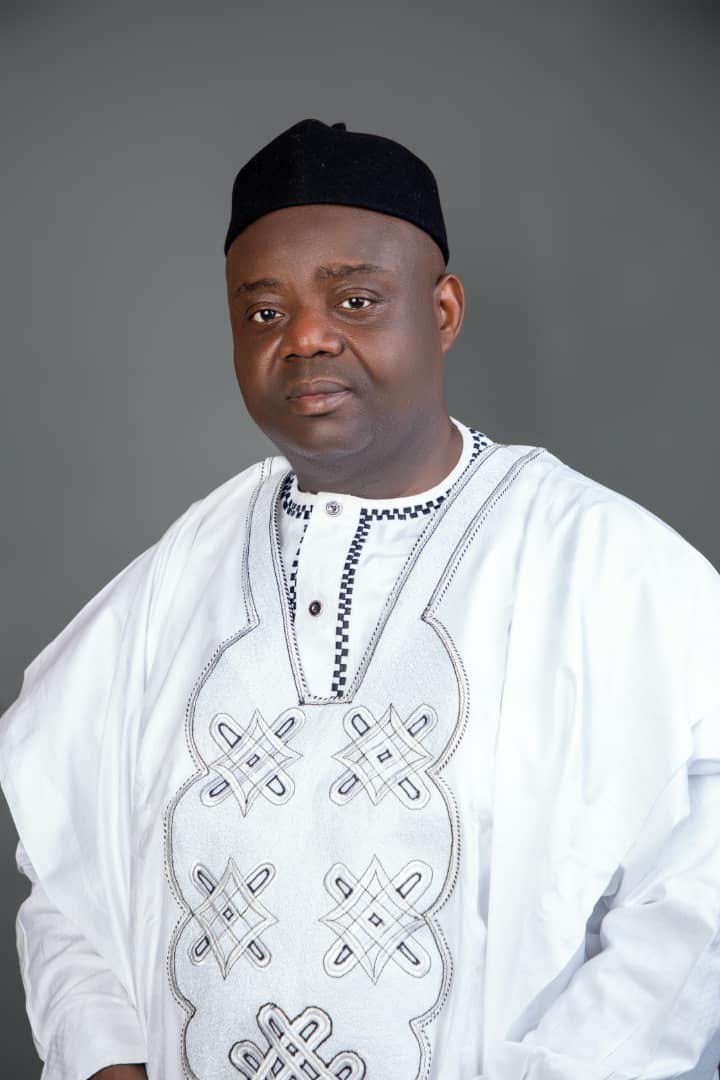
Prince Nixon Okwara
Policy Researcher & Public
MGBO EJI EJE OGU
Related posts