

Tomi Falade’s Books Spark Global Applause At 2026 Helsinki Book Fair
African literature, like other art forms, is no longer waiting in the wings of the global stage; it is simply pulling up a chair and dominating the conversation. That much was clear when the doors of the colossal Messukeskus Exhibition Centre opened for the 2026 Helsinki Book Fair.
Amidst a sprawling sea of international bestsellers printed in Finnish, African storytelling staged a brilliant, warm disruption. Proving that indigenous narratives have serious global pull, Nigerian author and journalist Tomi Falade led a cultural showcase that effortlessly bridged the gap between Lagos and Helsinki.
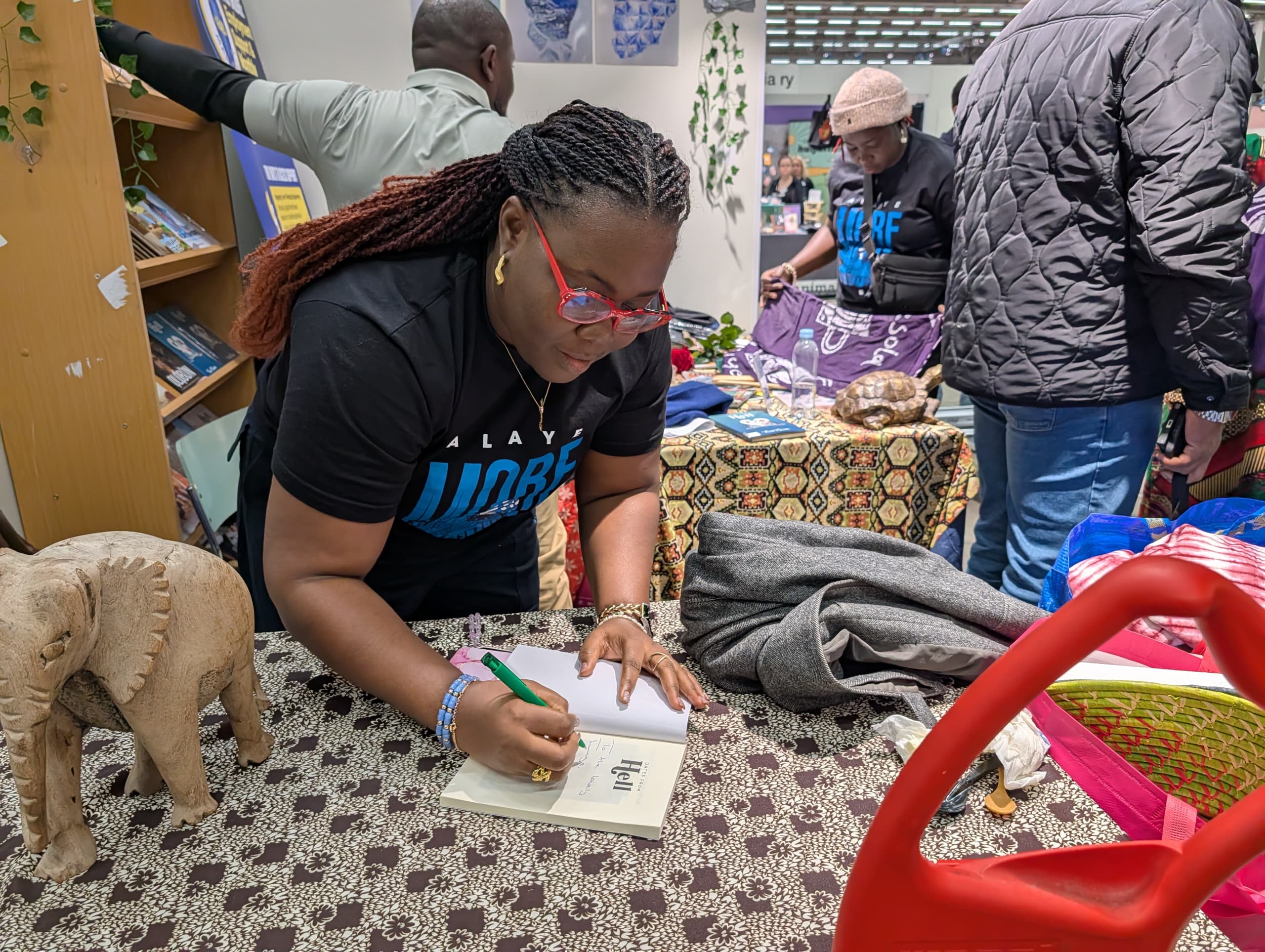
Invited by AFAES ry (Africans and African-Europeans Association), a Helsinki-based multicultural nonprofit, Falade and a delegation of Nigerian-born creatives turned Stand 7f118 into the ultimate African village.
Operating right alongside the Helsinki Food and Wine Festival from October 22 to 25, the booth became an instant cultural magnet. It drew massive crowds eager to experience the continent’s pulse through a vibrant mix of literature, visual art, and traditional crafts.
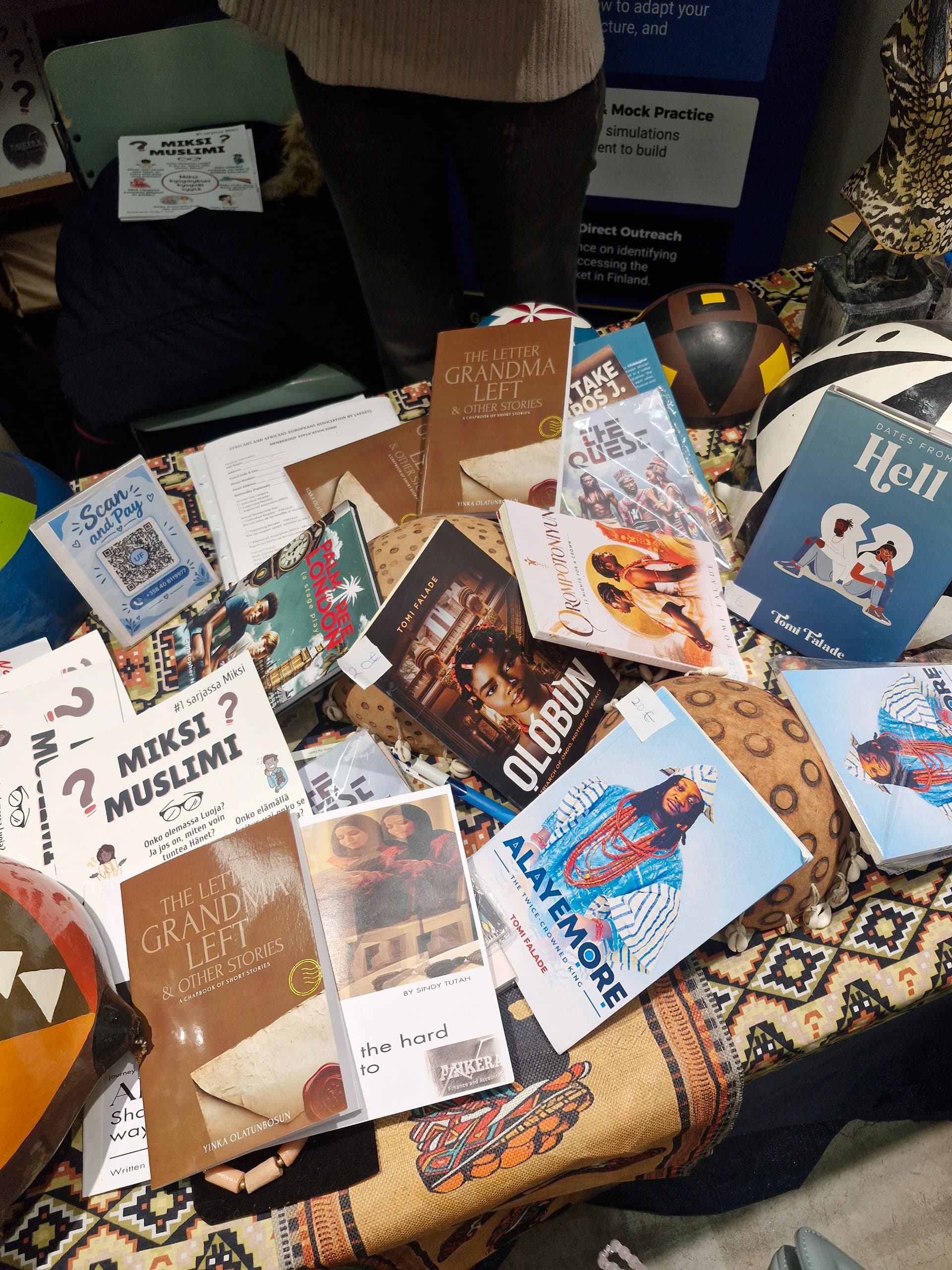
Falade, whose work heavily champions the preservation of indigenous history, brought four critically acclaimed books to the Nordic audience.
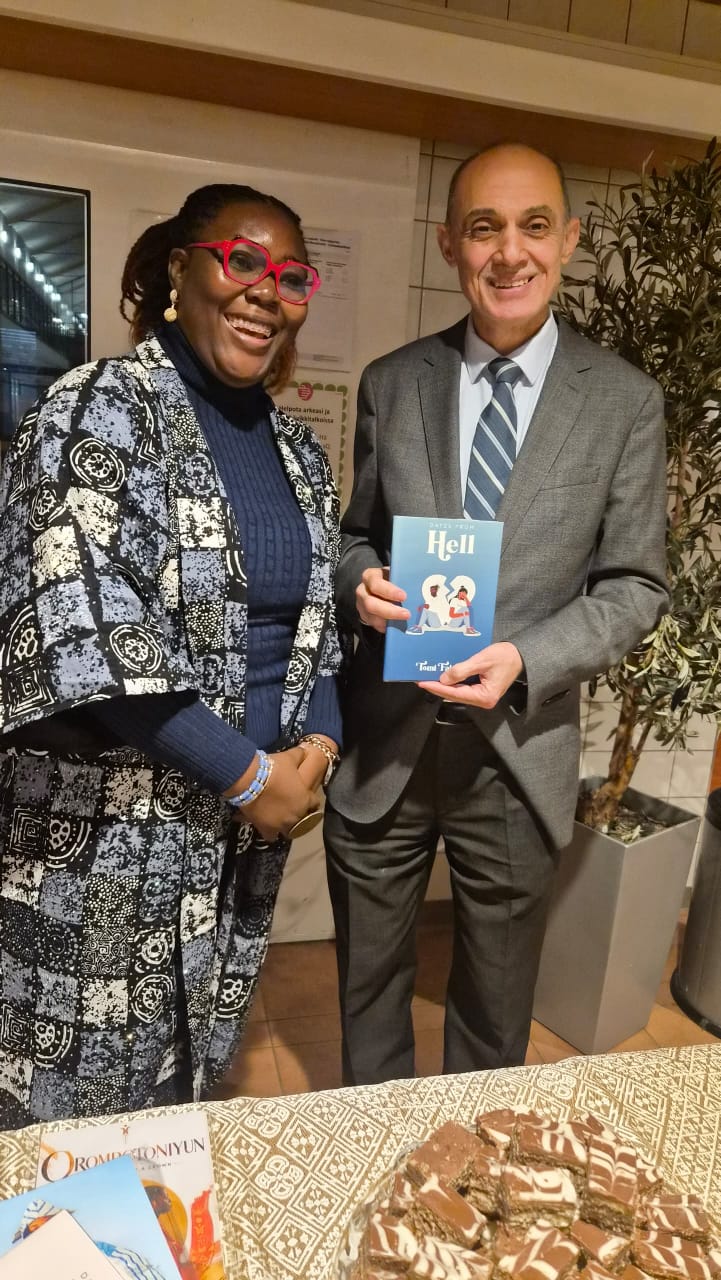
The lineup included her rich historical dramas: ỌLỌ́BÙN: Matriarch of Ondo, Mother of Legacy; _Orompotoniyun: 12 Nights For A Crown; and Alayemore: The Twice-Crowned King, all balanced out by her sharp contemporary prose collection, Dates From Hell.
The reception was nothing short of electric. The Finnish community and the Nigerian diaspora alike flocked to the stand, thumbing through pages and connecting deeply with the narratives.
The sheer enthusiasm proved a vital truth that when African historical drama is told authentically, it completely bypasses language barriers and geographical borders to command absolute attention.
Speaking at the event, Falade shared that she was initially sceptical about attending.
“As much as I knew that I would find an audience in Europe, I was worried for the non-English readers. Surprisingly, that was no problem. Many of those at the fair were so in love with the books that they even insisted on buying the eBooks that are available on Amazon. Because of the level of acceptance of our literature, my sister, Oluwafunmilayo Falade, is in talks with a couple of Finnish publishers to see how we might produce copies entirely in Finnish so that we can widen the audience even more. African stories are alive, and when something is alive, it doesn’t sit still; it moves, it grows, and it connects.”
Setting the intellectual tone for her Nordic tour, Falade also took the international stage a day earlier as a key speaker at a diplomatic event hosted by the Council of Moroccans in Finland ry.
Held at the International School of Vantaa on Wednesday, October 21, she represented Africa on a prestigious panel alongside Mohammed Laraki (Morocco), Ari Petäjävaara (Finland), and Mohamed Montasir (Middle East).
Tackling the theme, “The cultural dimensions of regional development in Africa,” her core message was clear: culture remains the ultimate, unbroken bridge for a sustainable African future.
Back at the book fair, she was in excellent company. The Nigerian delegation also featured London-based Nollywood pioneer and playwright Christopher Nnodim Iheuwa, showcasing compelling works like The Quest.
They were supported by Oluwafunmilayo Falade, a certified professional editor, lawyer, and digital publishing strategist, while renowned Nigerian visual artist Abolore Sobayo provided the visual anchor with his striking artworks.
Driven by Fatima Usman and her dedicated team at AFAES ry, the exhibition wasn’t just a win for cultural integration; it was a reality check. By exporting unapologetic Nigerian literature and art to Finland, the event proved the world is far beyond just being ready for African stories; it is actually starving for them.
For Tomi Falade and her contemporaries, this European outing was far more than a simple book exhibition. It was a bold, triumphant stride toward the total globalisation of the African narrative.
Related posts