

Hotel Business Dying in Lagos Over Hardship, Poor Power Supply
Posted on November 13, 2026
CYRIACUS IZUEKWE
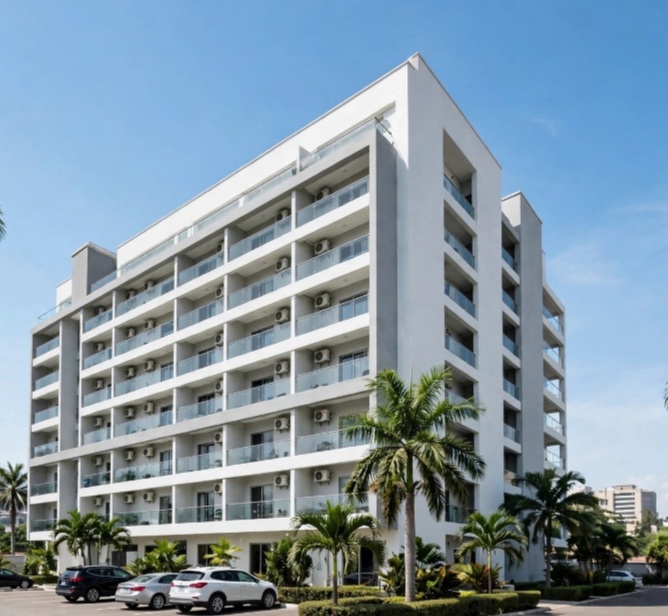
Hotel business dying in Lagos as owners struggle to survive hardship, poor power supply and rising cost of diesel.
From Ikeja to Surulere, from Lekki to Ikorodu, from Agege to Ikotun, many hotels that once bubbled with guests, conferences and weekend parties are now quiet. Some have shut down their swimming pools. Some have closed entire floors. Others have reduced staff and now work with only a handful of workers.
The problem is simple. There is no light, and fuel has become too expensive to sustain a business that must run 24 hours.
A hotel cannot tell a guest that there is no light. A guest who pays for a room expects light, air conditioning, hot water, cold drinks and working television. When power fails, the hotel must switch on its generator. When the generator runs for 24 hours, the cost eats up all the profit.
Ambassador Cyril Ezewele Abionanojie, Managing Director of Cy Hotel, located on Governor Road in Ikotun, told this reporter that the situation has become unbearable for hotel owners in Lagos.
He said, I spend over N150,000 every day on diesel alone. In a month, that is over N4.5 million. My monthly revenue has dropped because people no longer travel for leisure. Corporate clients have cut their conferences. How do I pay staff, pay rent, service loan and still buy diesel?
Ambassador Abionanojie said before, his hotel used to run on public power for at least 12 hours a day. Now, the hotel hardly gets four hours. Sometimes, the hotel gets no light for three days. He said the hotel is running purely on generator, and the generator breaks down almost every week because it never rests.
Hotel Business Dying in Lagos
The data explains why hotels are struggling. Nigeria needs an estimated 30,000 megawatts of electricity to function properly, but generation typically hovers between 4,000 and 5,000 megawatts on a good day.
In the first week of November 2026, generation fell even lower. It peaked at 3,996 megawatts on Wednesday 4 November, then fell to 2,692 megawatts by 10am on Saturday 7 November, with 14 power plants at zero output.
On 19 October, generation also collapsed from about 3,840 megawatts at 7am to 476.70 megawatts by 1pm, a fall of about 88 percent.
Officials blamed the decline on limited gas supply to thermal plants, low water levels in hydro reservoirs, planned maintenance at a major power station, and vandalism of transmission lines into Lagos. The vandalised line alone removed between 300 megawatts and 400 megawatts from Lagos supply.
For hotels, this means they must run on generator almost 24 hours a day.
Industry operators say power is now the biggest threat to hotels. One hotel operator said 50 percent of his general cost is on diesel, because there is no stable electricity. In his area, he said they get an average of three hours of public power a day, and some days they get none at all. He said they can run for three or four days without any grid power.
Another hotel owner said before solar, he spent up to N10 million monthly on diesel. With solar, which runs for 8 to 10 hours depending on sunlight, his diesel cost came down to between N6 million and N7 million monthly, a saving of almost N3 million. He said many hotels are shutting down because of the cost of electricity.
The diesel burden is worsened by price. As of 12 November 2026, diesel depot price in Lagos was N1,688 per litre, while retail price at filling stations was between N1,900 and N2,020 per litre. Petrol pump price in Lagos has also risen to N1,370 per litre.
One hotel owner said energy costs alone have eroded profitability. He said energy cost is a fixed cost whether you like it or not, and the hotel must pay it even when rooms are empty.
He also said electricity tariff under Band A pushed monthly power cost for one hotel from about N11 million to roughly N49 million without any change in consumption. He said he planned to build 10 hotels in 10 years, but after more than 10 years he has only opened his second hotel because of operational constraints.
An industry association leader described the situation as unbearable. He said hoteliers previously managed fuel at around N800 per litre, but prices have now gone up to N1,200 per litre and above, while electricity supply remains inconsistent and bills remain high.
The hardship data shows why customers are not coming. Official figures show headline inflation at 14.63 percent in September 2026, down from 20.98 percent a year earlier, but food inflation was still 19.59 percent, meaning food costs 19.59 percent more than last September. For hotels, this means the cost of rice, drinks, cleaning materials and laundry has gone up, while customers have less money to spend.
Ambassador Abionanojie explained the trap clearly. He said input costs are rising quickly, while customers are not willing to pay for higher services because they do not have the money. He said you now need to provide quality service at a very low cost.
A receptionist at a small hotel in Lekki said occupancy has fallen badly. She said in the past, the hotel used to have full house on Fridays and Saturdays. Now, sometimes only five rooms out of 30 are occupied. She said guests complain about the price, but the hotel cannot reduce it because diesel alone has taken everything. If the hotel reduces the price, it will close down.
Some hotels have tried to survive by increasing room rates. Others have tried to survive by reducing services. Both strategies are failing because customers are also facing hardship. A customer who is struggling to feed his family will not pay N80,000 for one night in a hotel.
In Ikorodu and Agege, the situation is worse. Several small hotels and guest houses have told this reporter they are considering closure. Their staff have been sent home in some cases. Some of the buildings have been converted to hostels or rented out as shops.
A former hotel worker in Agege, who lost his job three months ago, said he now drives a tricycle to feed his family. He said he worked in the hotel for six years, and the hotel closed because the owner could not afford diesel again. He said he has a wife and two children, and he had to find something else to do. Many of his former colleagues are still jobless.
In Bariga, Lagos, residents of several communities told this reporter they have had persistent blackout for about four months. One resident said in the last three months, cumulative supply is just about one hour. He said whenever light is restored, by the time you want to switch on something, they have taken the light again. Residents said small hotels and other businesses in the area have been affected.
Hotel owners are now calling on the Federal Government and Lagos State Government to fix power supply, reduce diesel cost, and provide single-digit loans for hospitality businesses to survive.
For now, many hotels in Lagos say they are only managing to keep the lights on, not making profit. If power does not improve and diesel remains near N2,000 per litre, more hotels will close before the end of the year.
This is why hotel business dying in Lagos has become a major concern for workers, owners and the state economy.
Related posts