


Inheritance Is Not Privilege Of First Son
Posted on November 26, 2026
Ezewele Abionanojie
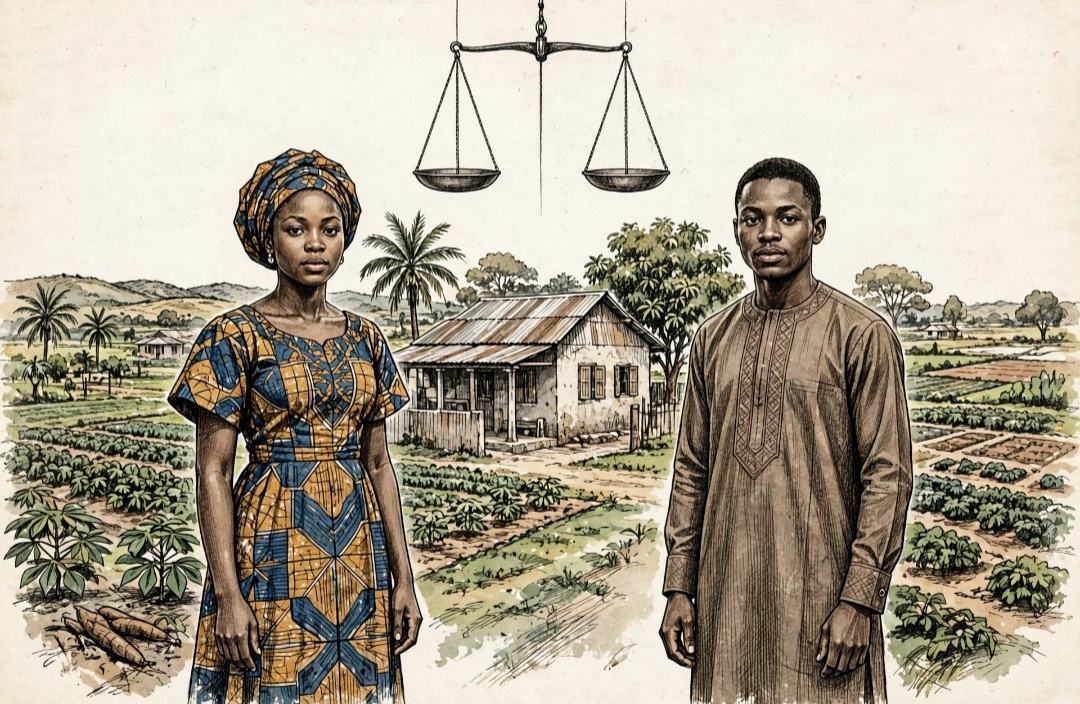
One of the most disturbing contradictions in some African cultures is the belief that a child’s gender or birth order determines how much of their parents’ wealth they deserve to inherit. Under this archaic arrangement, the first son is sometimes treated as the automatic owner of the family inheritance, while daughters are excluded simply because they were born female. What kind of justice allows one child to inherit everything while others, who share the same parents and bloodline, are treated as outsiders?
The idea that the first son is inherently more deserving of family wealth is neither a demonstration of wisdom nor a reflection of fairness. It is an inherited privilege built on gender discrimination and misplaced cultural superiority. Being born first does not make a person more valuable, more intelligent, or more entitled to the fruits of their parents’ lifetime of sacrifice. Birth order is a biological circumstance, not a qualification for ownership.
More disturbing is the practice of denying daughters inheritance altogether. A daughter who contributes to her parents’ welfare, supports the family financially, cares for ageing parents, and sacrifices her resources for family development can suddenly become an outsider when inheritance is being shared. Yet, a son who may have contributed nothing is sometimes celebrated as the rightful heir simply because he is male. Where is the fairness in such an arrangement?
Women have endured generations of discrimination, oppression, marginalisation, dehumanisation, and economic exclusion under patriarchal traditions created and sustained largely by men. These practices have historically restricted women’s access to property, economic independence, leadership, and decision-making. Denying women inheritance is particularly damaging because it can perpetuate poverty, financial dependence, and inequality across generations.
We must understand that inheritance is not merely about acquiring houses, land, money, or other material possessions. It is also about economic security, dignity, independence, and the right to benefit from the sacrifices of one’s parents. Depriving daughters of inheritance can leave them economically vulnerable and reinforce the dangerous belief that their contributions to the family are less valuable than those of their brothers.
We all share the same humanity. We experience the same emotions, harbour similar aspirations, and possess the same desire to enjoy the opportunities and privileges life offers. The same blood flows through our veins, regardless of whether we are male or female. A daughter is not less of a child because she is female, just as a younger son is not less deserving because he was not born first.
It is time to distinguish between culture and injustice. Not everything handed down by our ancestors deserves permanent preservation. Our ancestors lived in different social circumstances, with different levels of education, knowledge, and understanding of human rights. While some traditions preserve valuable cultural identity, others perpetuate inequality and should be abandoned. Age does not make an unjust practice morally acceptable, and calling discrimination a cultural heritage does not make it fair.
Fortunately, the modern legal framework in Nigeria increasingly recognises women’s rights to inheritance. The Supreme Court has, in landmark decisions such as Ukeje v. Ukeje and Anekwe v. Nweke, rejected discriminatory customary inheritance practices that exclude women. This demonstrates that cultural traditions cannot legitimately be used to justify discrimination against women. However, legal recognition must be matched by public enlightenment, community education, and the willingness of families to challenge these practices.
Traditional rulers, community leaders, lawmakers, civil society organisations, and every enlightened citizen must take responsibility for dismantling these structures of discrimination. Parents should ensure that their daughters are not deprived of their rightful inheritance, while families must stop celebrating the unjust enrichment of one child at the expense of others. Our daughters are not strangers in their fathers’ homes, nor are they visitors in the families into which they were born.
A society cannot claim to be enlightened while preserving customs that deny its daughters equal dignity and justice. The time has come to break the chains of inherited injustice. Let us raise sons who understand equality and daughters who know their rights. No child should inherit privilege simply because of gender, and no child should inherit discrimination simply because of birth order.
Culture must evolve with civilisation, and where tradition conflicts with justice, justice must prevail.
Ambassador Ezewele Abionanojie is the author of Mental Revolution For Societal Evolution. He is an award-winning columnist, recipient of the Best Columnist of the Year 2020 award, Giant in Security Support Award, Statesmanship Integrity and Productivity Award, among others, and President of Peace Ambassador Global.
Related posts