

Anambra Education Budgetary Analysis: Building Tomorrow’s Leaders (Part 4)
CHRISTIAN ABURIME
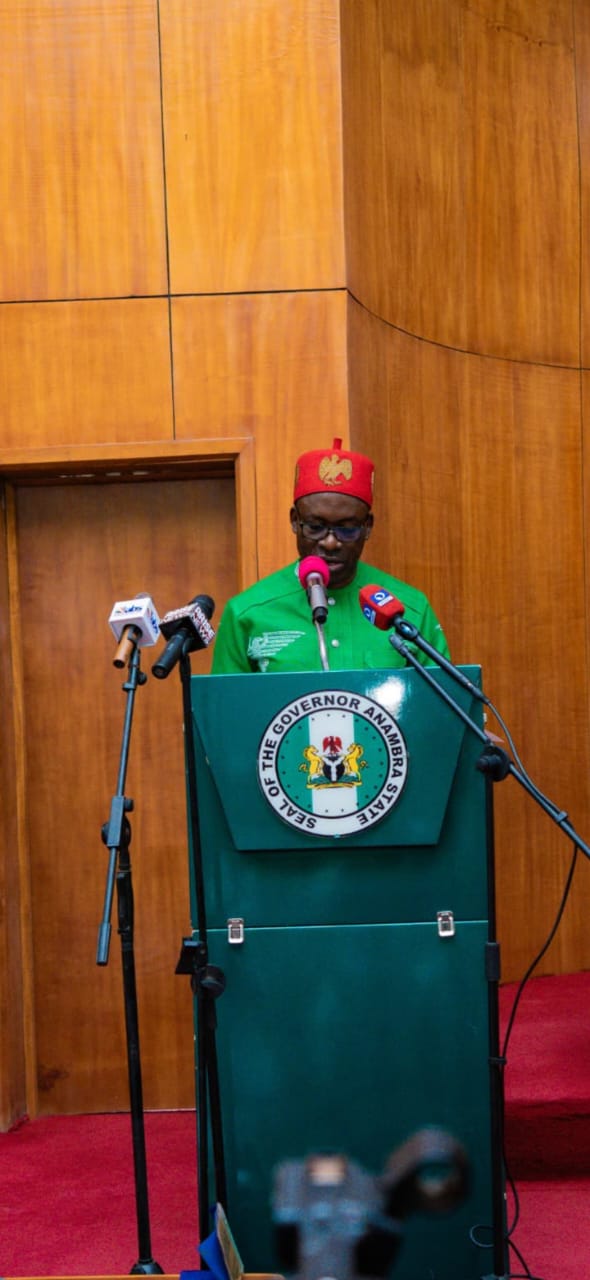
With his glaring antecedents as a foremost academic and adoption of free education policy in Anambra State, no one doubts that Governor Chukwuma Charles Soludo places high premium on education as a pillar of societal development. This is why in the 2026 “Changing Gears 3.0” budget of ₦757.9 billion, no sector receives a louder vote of confidence than Education: a breathtaking 46.9% year-on-year increase, the highest of any major sector.
This is definitely a declaration of war on mediocrity and a key investment in the only resource that truly lasts in any society: the minds of Anambra’s children and youth as tomorrow’s leaders.
Indeed, Governor Soludo has repeatedly said that the ultimate measure of his administration will be the quality of human capital it leaves behind after office. The 46.9% leap is the financial translation of that promise.
What the budgetary increase will deliver in 2026 is quite reassuring. One is the construction of brand-new model public primary schools in 30 communities that have never had one. For the first time in the history of those communities, children will walk to a government-built, fully equipped, 21st-century primary school instead of trekking long distances or dropping out entirely.
Aggressive upgrade of existing public primary and secondary schools will follow. Through ASUBEB and multiple parallel schemes, hundreds of classrooms, laboratories, libraries, ICT centres, perimeter fencing, and sanitation facilities will be built or renovated.
There may also be an establishment of two new specialist tertiary institutions, including possible specialisations in Engineering/Technology and Medical Sciences, areas that are critical for industrial and health-sector leapfrogging.
There will be full sustenance of the ongoing free education from kindergarten to SS3 and expanded bursary scheme. No child pays a kobo in fees, levies, or PTA charges in any public school anymore. The 2026 budget may also increase the number of university and polytechnic bursaries awarded to indigent students.
Deeper partnership with mission schools will be pursued. A high-level committee will be inaugurated to identify new areas of support beyond the current ₦1.2 billion monthly salary bill the state already pays for teachers in returned mission schools.
Towards digital education push,
completion and equipping of additional smart schools, rollout of tablets and broadband connectivity to more secondary schools, and teacher retraining in digital pedagogy will be a viable goal.
Teachers’ welfare will remain a top priority. Continued prompt payment of salaries, promotion, arrears clearance, and massive in-service training to maintain Anambra’s status as home to Nigeria’s best-trained public-school teachers.
As the foregoing educational initiatives are pursued and implemented, there will expectedly be a positive impact on state development.
Permanent closure of the out-of-school-children gap will be guaranteed. Anambra already has the lowest rate in Nigeria. The 2026 investments will push it close to zero, ensuring universal basic education becomes reality, not rhetoric.
Public-school enrolment has already risen 47% (secondary) and 27% (primary) since 2022. The new infrastructure and quality improvements will accelerate this trend, easing pressure on expensive private schools and making quality education genuinely democratic. Long-term crime reduction will follow, as every child kept in school is one less recruit for touts, cultists, or internet fraudsters. Education remains the most powerful anti-crime vaccine.
Smart schools, specialist tertiary institutions, and digital-skills integration will produce graduates who are not just employable but capable of creating the next Flutterwave, Andela, or Paystack from Anambra soil. In national and global competitiveness, Anambra students already dominate WAEC, JAMB, and Olympiad medals. The 46.9% investment will turn dominance into absolute supremacy, attracting research grants, partnerships with top global universities, and prestige that money alone cannot buy.
In other words, the 46.9% budgetary increase for the Education sector is the single most important line item in the entire 2026 budget. Roads will not last forever, factories will modernise along the way, but the minds shaped in 2026 will still be leading Anambra, Nigeria, and Africa into the future.
Thus Governor Soludo is building the future architects of the African Dubai-Taiwan-Silicon Valley he has promised. When the history of Anambra’s rise is written, this education revolution will be chapter one.
Related posts