


Exploring The Ateku Wetlands In Asutan Clan For Food Security
Posted on May 16, 2024
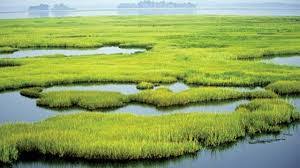
Ateku Stream rises from Ikot Akpa Etok in Ibesikpo clan. “Ateku” which the stream is named after is one of the deities in Ikot Akpa Etok. Indeed, apart from “Ateku”, another deity known as “Ete Udoe” is associated with the Stream. “Ete Udoe” is the deity venerated by Nnung Ikpene, one of the eight group of vllages in Ibesikpo clan of Ibesikpo/Asutan Local Government Area. The Nnung Ikpene villages are: Ediam, Nnung Udoe, Ikot Essien, Ikot Akpa Etok, Ikot Ide Akpakpan, and Nnung Ete Ibesikpo. This scenario should not be surprising because in Ibibio cosmology, most of the deities are considered to be “water-dwelling”.
Although “Ateku” Stream rises from a village in Ibesikpo, a “sister clan” of Asutan, the Stream has been described as “The Nile of Asutan Clan” because it runs through many Asutan villages and therefore serves as the most significant body of water in the clan as well as a cherished natural endowment of great proportion. Some of the Asutan villages that benefit from “Ateku” Stream include: Ikot Nko, Ikot AkpaOso, Ikot Iyan, Ikot Akpa Eyoho, Ikot Udo Eyoho, Ikot Obio Nko, Ikot Osom, Ikot Oku Akpan, Ikot Itok, Ikot Abasi Ebin, Obio Aduang and Ikot Mbang.
Countless generations of Asutan people have benefited from “Ateku” Stream in areas such as fishing, crop farming, palm wine/oil palm tapping, sand mining, etc. It should be pointed out that the trail of Ateku Stream creates Asutan wetlands – a large fertile but under utilised space in the clan.
Ateku Wetlands
Experts in the field view wetlands are vast and complex ecosystems occurring in all climatic, topographic, soil and hydrological conditions with unique characteristics and properties that relate to saturation (periodic or permanent) by groundwater, flooding, or ponding. The land-types act as key resource ecologies containing vast biodiversity pools, rich in soil, water, plant and animal resources, playing a significant role in regulating global environmental quality. Scholars also posit that wetlands are an important natural resource in the biosphere. The wetlands and their soils are centres for the collection of natural products, and agriculture and non-agricultural activities that have supported past civilisations and continue to support the growth, development, and evolution of human kind.
The benefits of wetlands have been enumerated by experts to include: food security, water security, subsistence incomes for local communities, sources of traditional medicines and new natural products, insurance value through the formation of natural buffers and, through the spiritual, recreational, ecotourism, inspirational and educational values, and cultural experiences, contribute to the psychological and social well-being of human communities.
Food Security
In 1975, the United Nations defined food security as “availability at all times of adequate world supplies of basic food stuffs”. Currently, the World Bank proposed a definition that broadened the emphasis from food availability to include access to food, and narrowed the focus from the global and national to households and individuals. Food security refers to equitable provision of food to points of demand at the right time and place. It has been asserted that for a nation to be food secured, citizens in every part of the country must have food all year round. Experts have identified components of food security to include food availability, food accessibility, food utilisation and stability of access.
This author strongly believes that Akwa Ibom people can feed themselves or at least provide the substantial quantity of their food needs. This belief is derived from the knowledge of the pre-colonial and colonial economic institution and organisation of the area. In those periods, the people of Akwa Ibom area had nothing to do with hunger. The people produced what they ate and also ate what they produced. In Asutan area, the vast Ateku wetlands was effectively explored for the good of the people. Even though colonialism, as it did to other sectors of Africa introduced alien policies, altered the food culture of the people and triggered the importation of food items, emphasis was still placed on agriculture by the people. Thus, food security was achieveable.
A survey conducted by the author in Asutan Clan reveals that the Ateku wetlands is an extensive low-lying areas, it posses extensive digressional ponds, high water table and nearly continuous saturation (e.g. swamps, marshes), short duration of flooding or flood prone layout, fine-textured and less acid soil, high moisture retention and relatively high fertility.
A Call for Action
The population of China is about 1.4 billion people. China’s population is larger than that of the 54 African countries put together. Irrespective of the “high population index” China has food security in the sense that the country does not import food. The citizens eat what they produce and produce what they eat. If the forebears of Akwa Ibom enjoyed “food security” in their time, such robust culture should be sustainable.
One way of addressing the food question is through massive exploration of the robust Ateku wetlands in Asutan clan. As mentioned, numerous villages dot the margins of the wetlands. Consequently, food cultivation (cassava, corn, rice, okro, vegetable, etc.), oil palm/palm wine trees planting, fish farming, grazing, etc. should massively commenced. Eqully, the indiscriminate sand mining by some individuals should be regulated by the relevant authorities. Ibesikpo Asutan Local Government Area, Akwa Ibom State Government (via related Ministries/Departments/
Uwem Jonah Akpan, PhD.
Department of History & International Studies.
University of Uyo, Nigeria.
Categorised as : Opinion
No Comments »
Related posts