


Holding Court Again: LÁBÚLÉ, Àdúgbò, And The Return of Live Music
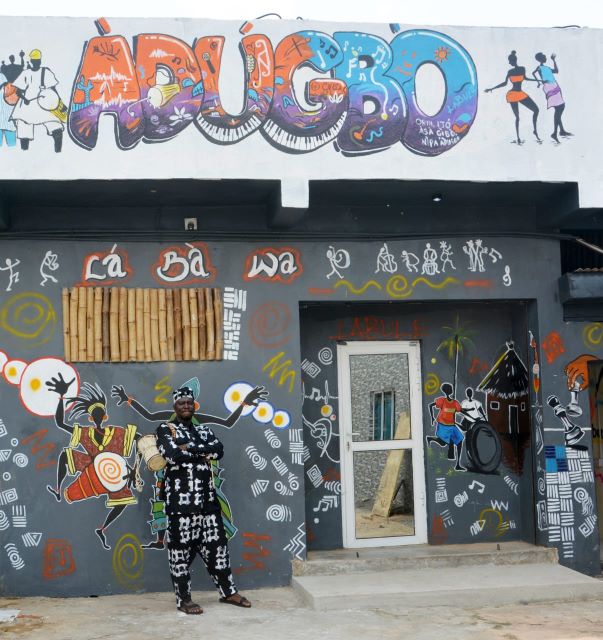
There was a time in Lagos when musicians did not just perform — they held court. Icons like King Sunny Adé, Oliver De Coque, Dr. Victor Olaiya, Bobby Benson, Lagbaja, and Fela Kuti built their own venues — cultural fortresses where sound, society and identity converged. They were not merely artists; they were architects of nightlife.
Then the model shifted. Corporate clubs replaced musician-owned spaces. DJs eclipsed bands. Streaming reduced live performance to optional spectacle. In a city louder than ever, live instrumentation became rarer.
Now, in Aguda, Surulere, LÁBÚLÉ is reviving that tradition.
Born Oluwasegun Adekunle, he chose a name that means “village” — root, origin, source. His music, driven by the talking drum and a fusion he calls Highfro, is grounded in culture. But what truly distinguishes him is not just the sound. It is the structure.
With Àdúgbò — meaning neighbourhood — Lábúlé has created a home for his music. Not another generic lounge, but a curated, community-driven live space where the artist is the anchor and the audience participates.
The official opening and maiden live performance of LÁBÚLÉ at Àdúgbò located at The Duro Event Centre 8/12 Basiyi Street off Aiyetoro Street, Aguda, Surulere, Lagos is scheduled for March 27, 2026 — a symbolic date that may mark more than a debut night, but the rebirth of a model.
This is more than a venue launch. It is a reclamation of ownership — a return to the era when musicians built stages and invited the city in.
If Ariya and Shrine were the original courts of Lagos music royalty, Àdúgbò may be a contemporary throne room — intimate, rooted and symbolically powerful.
In building Àdúgbò, LÁBÚLÉ is not just releasing songs. He is holding court again — and inviting Lagos to listen.
Related posts










Live band! I’m definitely going to visit this court 🥰 love the look already