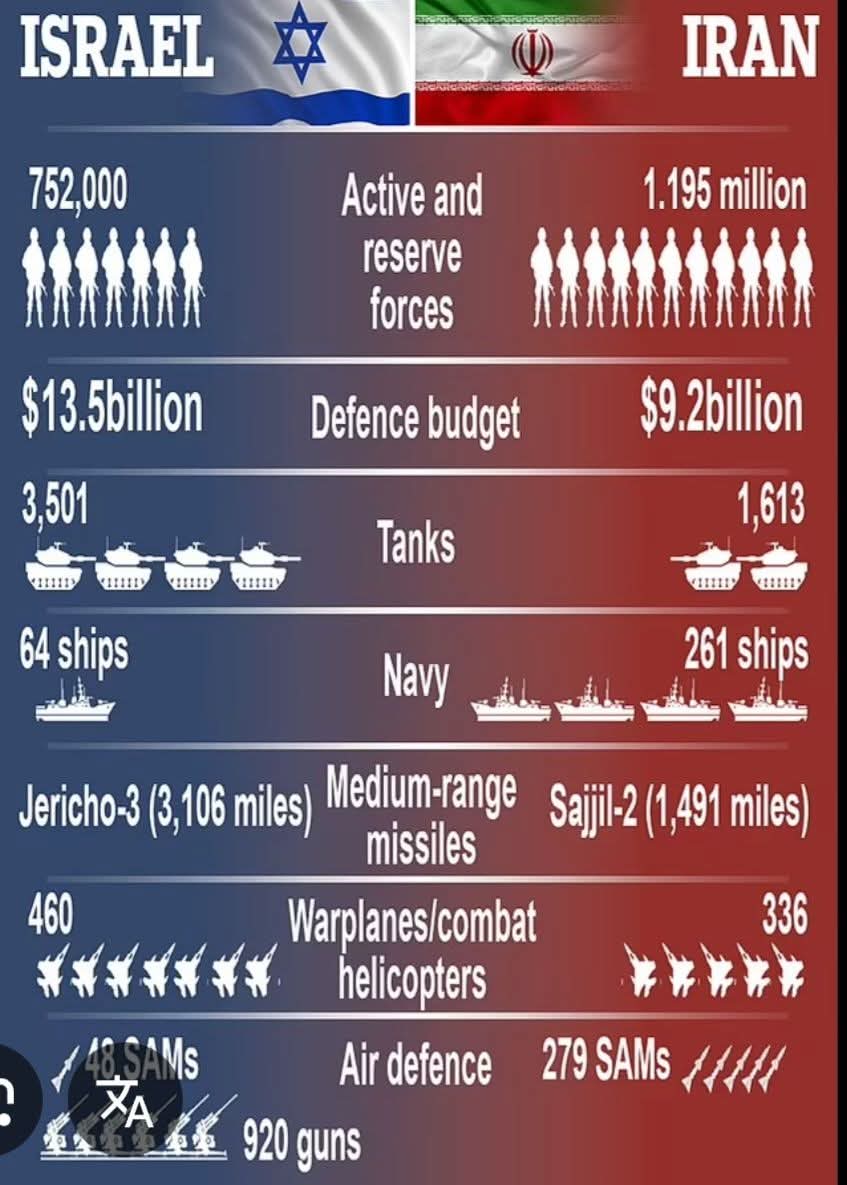
In a world already strained by division, polarization, and ideological extremism, the rising confrontation between Israel and Iran may seem like just another episode in a long history of Middle Eastern strife. But this moment feels different. The tone is sharper, the warnings are louder, and the risks are no longer hypothetical. We are no longer talking about proxy battles and diplomatic standoffs — we are inching closer to direct confrontation between two formidable forces.
To call it the “beginning of the apocalypse” may sound like hyperbole. But those who understand the weight of nuclear thresholds, the volatility of religious nationalism, and the fragility of global systems know that we are dealing with a scenario that could spiral far beyond conventional conflict.
Israel and Iran are not simply regional rivals — they are ideological opposites, each convinced of the righteousness of its cause. Israel, a democratic and technologically advanced state, operates in a perpetual state of high alert, surrounded by hostile proxies. Iran, an Islamic Republic with ambitions of regional supremacy, has entrenched itself through militias and political influence across Iraq, Syria, Lebanon, and Yemen. Between them lies not just contested territory, but an unresolved historical and spiritual war of worldviews.
Unlike past tensions, today’s instruments of war are faster, stealthier, and harder to trace. Cyberattacks disrupt civilian infrastructure. Precision drone strikes eliminate high-value targets with chilling accuracy. Assassinations, sabotage, and misinformation have become routine tactics. And beneath it all lies the ultimate threat — nuclear capability. If Iran crosses the nuclear threshold, Israel’s response will not be speculative. It will be swift and, likely, catastrophic.
In religious and cultural traditions, the apocalypse is often seen not just as an end — but as a reckoning. A collapse of order. A trial by fire that unveils the truth of humanity’s choices. If this conflict reaches a point of no return, it may not be the end of the world in a biblical sense — but it could mark the end of the world as we know it: a collapse of the fragile systems that hold global stability together.
The international community, regrettably, appears ill-equipped to manage this storm. The United Nations is largely ineffective in restraining hard-power actors. The major global powers — the United States, China, and Russia — are entangled in their own rivalries. Multilateral diplomacy is fading, and opportunism has replaced consensus. In this vacuum of moral authority and strategic coherence, miscalculation becomes inevitable.
And miscalculation in this scenario would not be local. It would be global.
The chain reactions would be devastating: spikes in oil prices, mass displacement, sectarian wars, economic crashes, cyber breakdowns, terrorism surges, and possible confrontations between nuclear-armed states. The conflict may begin in the Middle East, but it will not end there.
Still, it is not too late.
There remains a brief window for restraint, diplomacy, and meaningful international mediation. For sober leadership that values long-term peace over short-term political gain. For global voices — not just military ones — to rise above the noise and demand de-escalation.
History teaches us that apocalypses are not always divine acts — sometimes, they are man-made catastrophes fueled by arrogance, silence, and failure to act in time.
So, is this the beginning of the apocalypse? Perhaps not yet. But it is a chilling reminder of how close we live to the edge — and how little it would take to fall over.
—
Taiwo Abiodun holds a PhD in Strategic Leadership and a DBA in Engineering Management.
He writes on international security, geopolitical affairs, and strategic leadership.