


Tinubu, Military Coups And The National Question in Nigeria
BY ADEWALE ADEOYE
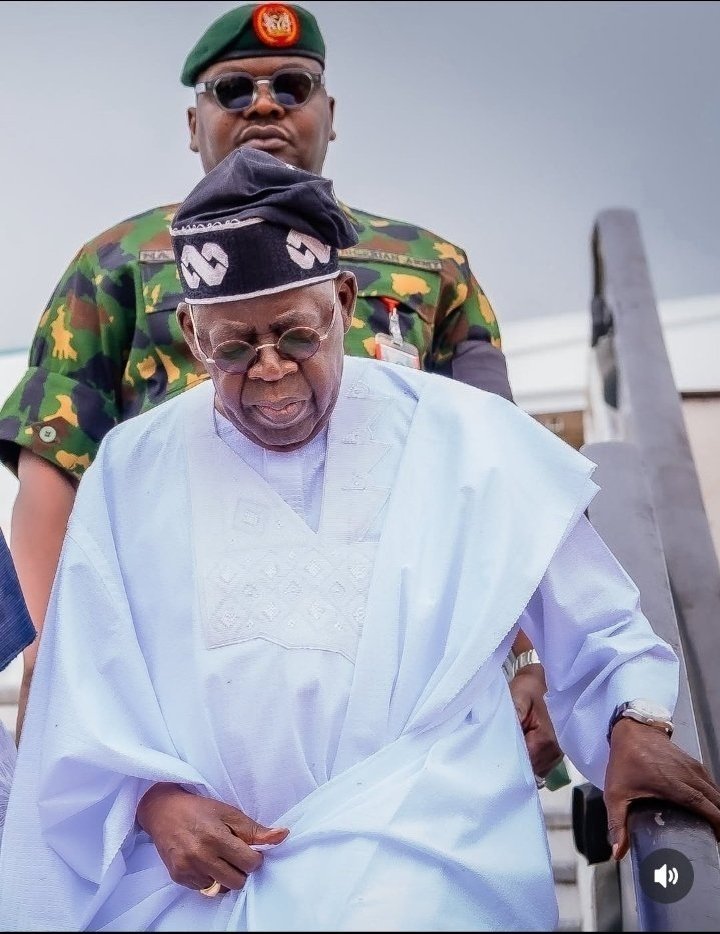
Close your eyes for a minute and imagine this: President Bola Ahmed Tinubu and Vice President, Kashim Shettima, Defense Minister Christopher Musa, Minister of Finance, Wale Edun and other top Government officials brutally murdered in a military coup in Abuja. That was the intention of some disgruntled, grossly irresponsible soldiers.
Nigeria confirmed what was initially denied of existing plots to kill democracy. Musa said he was set for assassination if he had refused arrest.
Nigerians are facing extremely difficult moments of hunger, corruption, bloody exploitation by DISCOS, almost equivalent to economic genocide against electricity consumers, lack of jobs and high cost of food, insecurity, but the solution is not a military coup. Never. But the plot came, nevertheless.
So, what are the lessons? That 65 years after independence, Nigeria is not immune from military coups; that the security forces continue to harbour power hungry fascists; Nigeria has not done enough to stop military coups since 1999; soldiers do not see coup as a risk they must never venture. Worst still: the game of political power in Nigeria is unpredictable; there is the chance of a coup in the future.
The President’s men and cold complicity
The greatest worry of many Nigerians is the cold attitude of the citizenry to the coup effrontery. It remains a shock that social and cultural forces, even in the South West, the ancestral home of President Tinubu have remained nonchalant to such a disturbing attempt to end President Tinubu’s life in such a brutal and dangerous manner.
Protests against insurgents should have been spontaneous even if the beneficiaries within the system are so barren politically, that they seem not to be able to perceive the fatal consequences of such a coup.
One would have expected public outrage, droves of solidarity messages and visits, coordinated meetings and condemnation from social forces including traditional rulers. Alas the Obas were either busy fighting themselves or attending Owambe parties. K’a se bi eniku ki a mon eni to fe’ni is a Yoruba proverb that says you know your real allies only when you pretend to be dead. Worst still, the South West Ministers and top political office holders shrugged aside the threat, a clear indication of lack of consciousness, political bankruptcy, inability to sense real threats to their benefactor, their own fortunes and ‘self-serving profiteering culture,’ allegation frequently heaped on them.
From the South West, I have not read a single statement condemning the coup apart from Baba Fasoranti terse reference, among over 500 social and political movements in the South West.
One could forgive ideologically empty Transport Workers, but not elevated Ministers and occupiers of strategic portfolio from the South West. Imagine a situation where an all Southern or Yoruba officers were arrested planing to kill former President Mohammadu Buhari in 2018. The whole North would have erupted in upheavals of solidarity.
In all, the silence across the land especially that of Pan Yoruba groups remains another thermometer that measures the wide-gap between the political office holders in Yorubaland and the real social-cultural engines that sustain and oil the region’s heritage.
And it appears these political officers do not give a damn neither about their Yoruba constituency or about the political future of their principal. What a huge embarrassment. It speaks to the absence of charm and character, deep roots and firm grip of the South West politicians on who Tinubu places his hope. They may be leaders and representatives of the APC, but definitely not the real motivators of the people, beyond party lines that the region deserves. The only person who has offered motivation for the masses against the coup plot is the Minister of Defence. The almost treasonable posture of the South West officials has left Nigerians and even the Army with a sore taste that can embolden future subversion.
Danger of Centralisation of Military Command
The other important worry is that the coup was conceived 65 years after independence.
For one thing, the plotters revolved their strategic operations around Abuja, Lagos and Kaduna indicating the tactical epicentre of military coups operational scheme has remained the same, built around the capital city, now Abuja then Lagos and Kaduna, the last being the seat of over 80% of Nigerian martial institutions, since 1966.
This points to the danger of the rigid and self serving structure of Nigerian security cobweb which in itself makes coup easier to conceive and execute.
It affirms the danger of over-concentralisation of political and military structure in a plural society. More than half of top military institutions are located in Kaduna while more than 80 percent of strategic military operational structures are located in the North. This is responsible for the fact that only coups planned by people of Northern origin have ever succeeded since 1966.
The 2025 coup show clearly the danger of failing to restructure the command architecture of the country a peril to stability and unity of the country. A loose command network spread across the country’s geo-political zones would have made military coups very difficult if not impossible. There is no need for the President to seek the nod of the National Assembly to deal with this menace that was never a product of Acts of Parliament.
Military Commands and Lessons from other countries
Nigeria should learn from India that never had coups since 1947. In India the structure of the military-cum political economy makes military coup impossible. Apart from firm roots of democratic traditions, the military command is coup-proof. There is no centralised single commander. The military hierarchy is shared among 13 Commanders-In-Chief, 5 in the Army, 5 in the Airforce, 3 in the Navy making coup move complex and impossible.
The military is apolitical and set in fragments with highly diversified ethnic composition in its command, a culture defined since 1947.
The US has 200 years of uninterrupted civil rule. What keeps coup in check is the control of the military by civilian authority, separation of military commands, strong state police structures, the National Guard which undermines the centralisation of military command and of course, human freedom, justice and economic stability.
In China, the Peoples Liberation Army reports to the Communist party, not to an individual while the Central Military Commission led by the President sustains military loyalty to the state and not to individuals.
China also carries out frequent purges that removes politically anxious and corrupt soldiers.
In Nigeria, the command is fascist while most sensitive military commands, equipment and institutions are located in a section of the country. This has been the practice since 1960 when Mohammadu Ribadu became the first Minister of Defence from (1960-1965); Inuwa Wada (1965-1966); Yakubu Gowon (1966-1975); Illiya Bisalla (1975-1976); Iya Abubakar (1979-1982). During this period, only Chief Olusegun Obasanjo and Akanbi Oniyangi punctuated the unbroken chain of parochial control.
From 1984 to 1998, all the Ministers of Defense were from the North consolidating the skewed structures laid by the British. The message is that, from the beginning, the South is viewed as rebels that must be stopped. This does not help build trust and mutual trust but reinforces constant spasm of rebellion, once closed, now open in a perpetual conflict, in our very eyes.
Coup Plotters and Politics of Revenge
There are many other puzzles. The ethnic identity of the plotters signposts the prevailing ethnic division in the country and the perilous, possible fall-outs now, or in the future. They are from the core-North indicating the military remains neck-deep in ancient rivalry and that the National Question remains a knot yet to be untied, even within the country’s security network.
The big question: What motivated the plotters? Government says the officers were disillusioned by the lack of promotion. That is simplistic. Would they have told Nigerians they planted the coup because they failed their professional examinations? No. While it was most likely they would have referenced looting of public resources, lack of medicare, unemployment, inflation as their motives, the plotters’ roots suggest a more complex political rage bordering on parochial ethnic agenda.
It balloons the agelong fear that a section of the country is rabidly opposed to power rotation and are ready to make the country ungovernable through coups or sponsored terrorism as we see across the country.
This can be linked to the intrigues that trailed the All Progressives Congress, (APC) primary when the cabal insisted on selecting former President Mohammadu Buhari’s successor. Reports claim the musketeers conceived of a violent subversion to assert their position to the extent that the bombing of a Church in Owo in Ondo State on the heels of the APC primary became either a design or a curious coincidence to further scuttle the democratic process. It was within the dust of the Owo bombs that the cabal announced that former Senate President (Ahmed) Lawan would succeed Buhari. The blood-soaked courage to make such announcement after 8 years of Northern Presidency is sickening.
Coups, Ethnicity and National Unity
The plotters wanted to strike three years after Buhari, a Fulani left Aso Rock. What is the desperation in seeking to kill a serving President from the South West? This infuriates. Since 1960, the North, the Fulani section of it, or her rookies, has ruled Nigeria for 46 years out of 65 post independence, while the South has ruled the country for only 19 years. If President Tinubu spends eighty years, by 2031, the South would have spent 24 years leaving the North with 46. Yet, there is the certainty that power returns to the North in 2031.
The attempt to overthrow Tinubu is not only frightening, it is an invitation to anarchy, something that could quickly set the country on the pathway to Kigali.
The tactics of the plotters is the same with Boko Haram and ISWAP or terrorist herdsmen which all delight in mass killings. To kill the President of a highly inflammable country like Nigeria can only be conceived by someone with the psychology of suicide bombers.
Those who are not ready to negotiate the future of the country, not ready to share power, may end up loosing everything.
The struggle to build a united country of equals remain elusive as the violent scramble for the country defined by bitter ethnic contest remains unabated.
The bitter truth is that coups in Nigeria since 1966 have been driven by two factors: Power and Ethnicity. Failed and successful coups have been motivated instead by national renaissance, but by the drive to settle ethnic scores rooted in the error of 1914 when Nigeria was created by foreign fiat without recourse to the wishes, fears and aspirations of constituents.
The first coup in Nigeria came at a time of deep politics of ethnicity. The actors were mainly from the South East. Every coup in Nigeria since 1960 has ethnic flavour representing attempts, in part, to raise the National Question.
In 1966, there were two coups: the unsuccessful putsch led by Nzeogwu and the counter coup led by General Aguiyi Ironsi.
In all, Ironsi arrested 31 suspects, 98 percent of who were his kinsmen. He did not prosecute them but rather came with Decree 34 which forcefully merged the country into a garrison state.
The July coup was essentially a Northern coup led by Lt Gen. T.Y Danjuma (rtd), Ibrahim Babangida, Murtala Mohammed whose father was Fulani irrespective of the propaganda that he hailed from Auchi in Edo State. Proponents of his Edo origin could not show us any of his relations from Auchi or the burial ground of his forefathers.
Having General Yakubu Gowon, a Tarok from Plateau State as the beneficiary of the July 1966 coup only reinforced the politics of delusion. Gowon is a Christian Northern minority. The hegemony needed to counter possible global assumption that Nigeria was up in arms against Christians during the civil war, little wonder that having exhausted the usefulness of Gowon, he was dispensed with during the Murtala Mohammed-led coup.
The Colonel Dimka Buka coup was essentially a Northern minority revolt. Dimka was portrayed as a demon who sought to overthrow a progressive and Pan African government, but essentially, Dimka’s group saw the ouster of Gowon as an attempt to push back the Middle-Belt.
The emergence of General Obasanjo in my view, was conceived to delude Nigerians with a false sense of ethnic fairness. Throughout his fidihe regime, Obasanjo ran a jittery regime at the mercy of his Northern overlords. He also played his game consciously to the disadvantage of his own ethnic group leaving no one in doubt he was a protege of the Caliphate. It was in this light that his handover to Shehu Shagari, another Fulani was predetermined.
The Plots to overthrown General Obasanjo
In 2004, there was a plot to overthrow President Obasanjo. 30 mid-ranking officers were arrested. In October 2004, the plotters, Major Al-Mustapha, Lt Mohammed Umar Adeka, Navy Commander Yakubu Kudambo, Lt Tijani Abdallah were arrested and tried. One Onwuchekwa Okorie was also arrested.
The plot was to purchase surface-to-surface air missile to shoot down President Obasanjo’s helicopter. Imagine the raw, infantile but brutal instinct of the soldiers? This was exactly what the current plotters wanted to do. The two episodes under Obasanjo and Tinubu were actions in line with the methodology of terrorists currently killing people in thousands across the country.
Earlier in 1979, as Military Head of State, there was a plot to overthrow his government. It was one of the unannounced coups that is yet to be declassified.
A certain Adekunle Bullet led young officers to overthrow General Obasanjo. I got this vital information when I was a Defense Correspondent with The Guardian Newspapers. This was later confirmed in a piece written by a famous journalist with Daily Sketch, Mr Aje who was once State House Correspondent in Dodan Barracks.
Aje later wrote on this in The Sketch but at a time the medium was going down the drain robbing millions of Nigerians the excitement of reading about the incidence. If there was any coup ever led by Yoruba, that was indeed the first one even though details of this coup remains known to Obasanjo and his cabinet.
Adekunle is from downtown Lagos. The officers were freed after in-house trial, the main reason being that the coup was few months before what was expected to be an historic transfer of power to civilians in October 1979.
It is important to note that Buhari’s 18-month as military Head of State proved his inherent ethnic consciousness. Apart from failing to try Shagari for corruption, Buhari carried out policies that advanced the interest of his people.
In Lagos, he stopped what was to be the first metroline in West Africa. Barely two years after, he was overthrown by General Ibrahim Babangida who by his own account was a descendant of the Sullubawa Fulani of the Bagwatse stock in Sokoto whose parents migrated to present day Niger State.
In character, Babangida’s regime defended and propelled the interest of his people through skewed creation of states, local governments and the allocation of known and unknown resources. It was this ethnic prejudice that stopped the hand over to Moshood Kashimawo Abiola. Babangida was not interested in handing over to anyone different from his Northern clique.
The game of military self secession was predetermined to the extent that Sanni Abacha, a Kanuri who grew up in Kano was designed to inherit power. It shows clearly the ethnic content in the coups and counter coups that have dominated Nigeria since 1966.
The Major Gideon Orkar coup was essentially designed to solve the ethnic minority question. The actors in the Orkar coup were from ethnic minorities in the Niger Delta and the Middle Belt. Their excision of core Fulani states was a classic proof of deep-seated ethnic acrimony within the Nigerian Army and the burning desire of certain officers to resolve the contradictions through the barrel of the gun. Where such feelings fester, professionalism, commitment to duty, promotion based on merit and loyalty to the state become casualties.
Fighting external aggression or terrorists would be complex leaving the country with fragments of disgruntled cells that go to duty of war with bottled up venom against the system they are expected to protect and defend.
Coups in Nigeria have consumed too many lives. 39 people were killed during the Dimka coup, Major Gideon Orkar led coup saw the killing of 42 people while 11 were killed during alleged coup linked with General Maman Vatsa. There is suspicion that many soldiers may have been killed covertly on grounds of real or imagined suspicions of coups.
Trial of Coup plotters and Justice for Nigerians
Will the arrested coup plotters be tried in open courts? That is not likely. Government would not wish to repeat the mistake of ousted General Fred Akuffo of Ghana who opted to try Jerry Rawlings, who led young officers in a coup on May 15, 1979, in any open court.
During his trial, Rawlings seized the opportunity to heap blames of corruption and rape of the country on Akuffo which earned him pubic scorn while Rawlings gained mass appeal. The soldiers won the heart of the people during the trial which emboldened them to stage another coup during the June 4 uprising when soldiers broke out of prison to seize power again.
Rawlings handed power to Dr Hilla Limann on September 24, 1979 but came back again to seize power on December 31, 1981. The Government will not take the risk, knowing the plotters may turn the trial into political propaganda tool
As the military dig deep into the real motive of the mutineers, Nigeria should not just focus on the actors, but also on the conditions that make military coup an attractive option for soldiers.
Creating an economically viable country is not enough to stop coups. The panel should examine the danger of running a country where all military institutions are concentrated in one section of the country; look at the crisis of nationhood which urgently requires Sovereign National Conference and the need to address the grievances of ethnic nations some of which have taken up arms against the state. Great countries see negotiation of the future of ethnic nations as strength not weakness.
China has five autonomous regions with limited self governance.
Russia has about 22 republics, 4 autonomous regions and one sovereign oblast.
Nigeria needs to restructure the country so that big and small ethnic groups would have a sense of equality and freedom over their land and resources. This will dissuade the current volatile desperation to seize the country in the centre by all means possible.
From the history of coups in Nigeria, it is now clear that the Army is not free from the scourge of anger driven by ethnicity and the thirst for power.
The country needs to see the coup as another justification for the urgent need to decentralise the Army, the Police and the current command structure of the political-economy.
This should be done immediately unless the ruling class is on a mission to self suicide.
Related posts