


Uzodimma: Reinventing The Role Of Traditional Institutions In Governance
Posted on August 4, 2024
COLLINS OPUROZOR
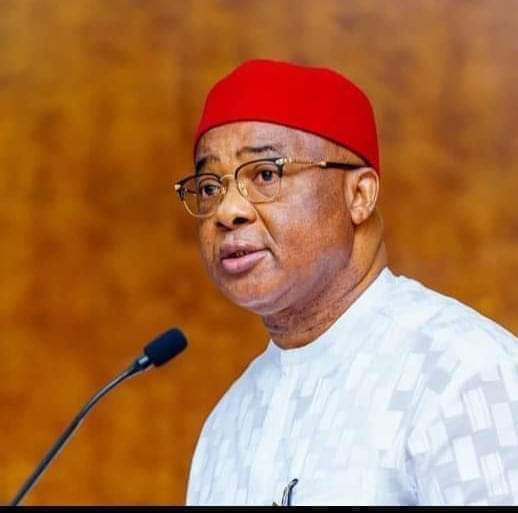
Governor Hope Uzodimma’s recent hosting of the inaugural ceremony of the Southern Traditional Leaders Council in Owerri signals a profound commitment to revitalizing the role of traditional institutions in fostering national unity.
This move is not just a ceremonial gesture but a strategic effort to harness the moral authority and influence of traditional rulers in addressing the complexities of Nigeria’s multi-ethnic and multi-religious landscape. In an era where social and ethnic tensions often dominate national discourse, Uzodimma’s initiative to elevate traditional leadership to a central role in peacebuilding and cultural preservation offers a compelling model for sustainable development in Nigeria.
The role of traditional institutions in governance and social cohesion is deeply embedded in African history. Across the continent, traditional leaders have long been custodians of culture, mediators in conflict resolution, and symbols of continuity. Governor Uzodimma’s emphasis on these roles in the Southern Traditional Leaders Council underscores a recognition that modern governance can benefit immensely from the integration of indigenous knowledge systems.
By empowering traditional rulers to take on more active roles in fostering unity, he is tapping into a reservoir of trust and respect that these leaders command in their communities, which can be leveraged to bridge divides that formal political structures often struggle to address.
A critical aspect of Uzodimma’s approach is the non-partisan stance he encourages among traditional rulers. In a politically charged environment like Nigeria’s, maintaining a non-partisan position is essential for traditional leaders to effectively mediate disputes and foster dialogue.
This approach not only preserves the integrity of the traditional institutions but also ensures that they can act as neutral parties in conflicts, providing a platform for reconciliation and mutual understanding.
By urging the council members to collaborate closely with both regional and national leaders, Governor Uzodimma is promoting a governance model that is inclusive and rooted in the cultural realities of Nigeria.
The integration of traditional leadership into the broader governance framework has the potential to enhance development outcomes by fostering social stability. In societies where trust in formal institutions may be eroded, traditional leaders often remain trusted figures. By collaborating with these leaders, governments can gain valuable insights into community needs and aspirations, which can inform more effective policy-making. Governor Uzodimma’s initiative is a testament to this approach, suggesting that development in Nigeria should not only be measured by economic indicators but also by the strength of social cohesion and cultural preservation.
Governor Uzodimma’s efforts also resonate with global examples where traditional institutions play a significant role in national development. In New Zealand, the recognition and incorporation of Māori leadership and customs into national governance have strengthened social bonds and promoted inclusivity. This example demonstrates how traditional institutions, when respected and integrated, can contribute to national development in ways that purely modern institutions might not.
The formation of the Southern Traditional Leaders Council can also be seen as a platform for cultural renaissance, particularly in the preservation of Southern Nigeria’s diverse heritage. Governor Uzodimma’s recognition of the importance of culture in governance is crucial in a globalized world where cultural identities are increasingly under threat.
By encouraging traditional rulers to take an active role in cultural preservation, he is helping to ensure that the rich traditions and languages of Southern Nigeria are not lost but are instead celebrated and passed on to future generations. This cultural continuity is essential for maintaining the unique identities of Nigeria’s various ethnic groups, which in turn strengthens the nation’s unity.
Moreover, by positioning traditional leaders as key stakeholders in national unity, Governor Uzodimma is advocating for a bottom-up approach to governance. This approach recognizes that true national unity cannot be imposed from above but must be cultivated through the active participation of all societal levels. The Southern Traditional Leaders Council, therefore, serves as a conduit through which the voices and concerns of local communities can be heard at the national level, ensuring that policies are more reflective of the diverse realities across Nigeria. This inclusive governance model is vital for addressing the root causes of social unrest and promoting long-term stability.
The Governor’s initiative also highlights the importance of cross-regional collaboration in Nigeria. By urging Southern traditional leaders to engage with their Northern counterparts, he is fostering a dialogue that transcends regional and ethnic boundaries. This collaborative effort is essential for addressing the mistrust and stereotypes that often fuel division in Nigeria. Through sustained interaction and joint initiatives, traditional leaders from different regions can work together to build a more united and peaceful nation. This approach not only strengthens national unity but also enriches the cultural tapestry of Nigeria by promoting inter-regional understanding and cooperation.
In addition to fostering unity, the active involvement of traditional leaders in governance can contribute to more effective conflict resolution. Traditional rulers are often closer to the grassroots and have a deeper understanding of the local dynamics that can lead to conflict. By leveraging their knowledge and influence, governments can address conflicts before they escalate, ensuring that peace is maintained at the community level. Governor Uzodimma’s emphasis on the role of traditional rulers in peacebuilding is, therefore, a strategic move to prevent conflicts that could undermine national development.
Governor Uzodimma’s respect for traditional institutions is also reflected in his administration’s efforts to elevate the status of these institutions in Imo State. By providing platforms for traditional leaders to contribute to governance, he is ensuring that their voices are heard in the decision-making process. This not only empowers traditional leaders but also enriches the governance process with the wisdom and experience that these leaders bring. In a multi-ethnic country like Nigeria, where different groups have different governance traditions, integrating these diverse perspectives is essential for creating a governance system that is truly representative and inclusive.
The inauguration of the Southern Traditional Leaders Council is, in the final analysis, a reminder that development is not only about economic growth but also about social and cultural progress. By prioritizing the preservation of cultural heritage and the strengthening of traditional institutions, Governor Uzodimma is promoting a holistic approach to development that recognizes the importance of both tangible and intangible assets.
This approach is particularly relevant in a diverse country like Nigeria, where cultural heritage is a source of pride and identity for many communities. By fostering cultural renaissance alongside economic development, Governor Uzodimma is contributing to a more balanced and sustainable form of national progress. This is highly commendable.
*Collins Opurozor is the Special Adviser to Governor Hope Uzodimma on Electronic and Creative Media*
Categorised as : Opinion
No Comments »
Related posts