When Heroes Are Abandoned: The Silent Suffering Of Nigeria’s Wounded Soldiers
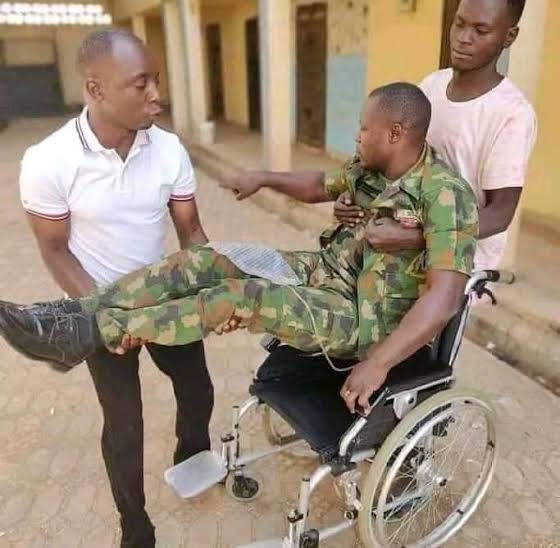
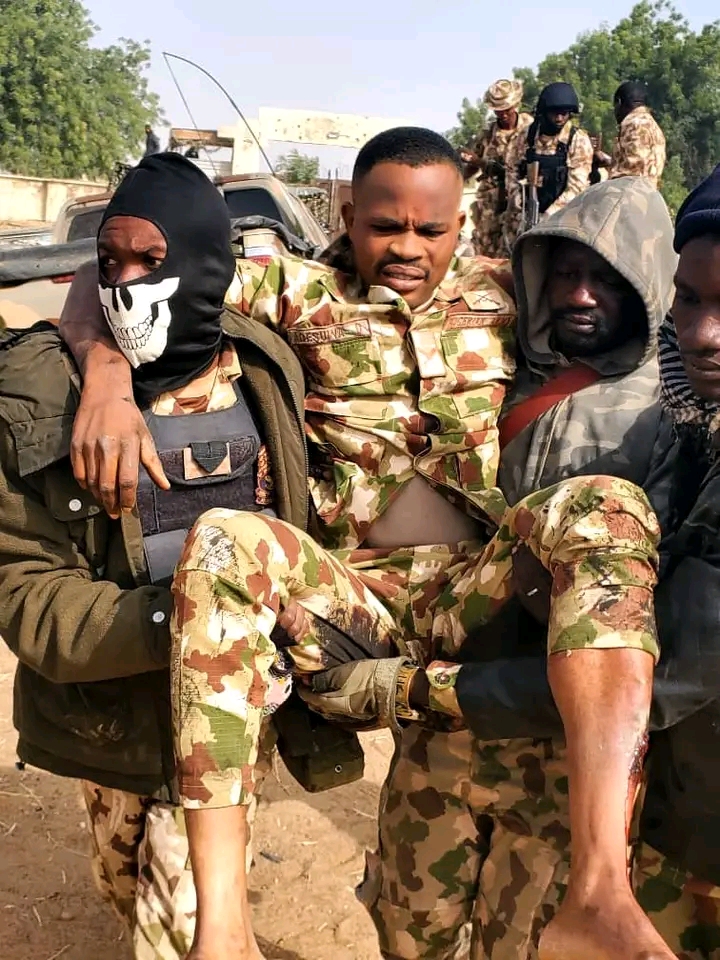
By the time the parade drums go silent and the flags are folded away, Nigeria’s wounded soldiers are often left alone with their pain. They are the men and women who stood between our homes and the horrors of terrorism, banditry, insurgency, and violent crime. They marched into forests, deserts, rivers and hostile communities so others could sleep in peace. Many returned without limbs, without sight, with shattered spines, or with invisible wounds that torment their minds day and night. Yet, after the bullets have stopped flying, society turns its back, and the nation they protected forgets them with frightening ease.
For disabled and wounded Nigerian soldiers, pain is not only physical. Yes, there is the daily agony of phantom limbs, untreated injuries, chronic infections, and poorly fitted prosthetics, if any exist at all. There is the frustration of navigating life in cities without ramps, hospitals without specialized care. Many of these soldiers are owed months or years of unpaid allowances, pensions, and medical entitlements. Some beg to access hospitals they were promised for life. Others sell personal belongings to pay for drugs or surgeries that should have been covered by the state. Their families watch helplessly as breadwinners are reduced to dependents, not by enemy fire alone, but by government neglect.
Society, too, bears blame. We walk past wounded veterans on the streets, some hawking petty goods, others reduced to begging, and we look away. We forget that these are not ordinary beggars; they are casualties of our collective failure. The uniform that once commanded respect now attracts pity, or worse, suspicion. In a nation quick to praise “our gallant troops,” we are painfully slow to care for them.
At the heart of this tragedy lies a Nigerian government whose priorities are deeply misplaced. While disabled soldiers struggle to survive, public funds are brazenly looted and shared among political elites. Budgets are padded with outrageous figures. Contracts are dangerously inflated. Projects exist only on paper, while billions disappear into private pockets. Funds meant for defence, welfare, and veterans’ care are diverted in a system where corruption is not an accident but a culture.
This criminal mismanagement has consequences beyond the suffering of the soldiers themselves. It poisons families and communities. The frustrations endured by wounded security personnel ripple into their homes. Children grow up watching their parents, once strong and respected, humiliated by poverty and neglect. Promises of education, healthcare, and stability collapse. Anger replaces hope.
For many of these children, the streets become classrooms of survival. Criminal gangs, armed groups, and illegal networks offer what the state has denied them: money, belonging, and a sense of power. Thus, a vicious cycle is born. A corrupt and epileptic system that fails wounded soldiers today breeds insecurity tomorrow. The same governance failure that maims parents morally and economically pushes their children toward crime, deepening the insecurity the soldiers and the police once fought to stop. This is not just a moral failure; it is a national security disaster.
A country that abandons its wounded warriors sends a dangerous message to those still in uniform: your sacrifice will be forgotten. Morale drops. Commitment weakens. Cynicism grows. And when those entrusted with protecting the nation lose faith in the nation itself, everyone becomes less safe. The same care l demanded for the wounded soldiers must be extended to the wounded Nigeria’s Police personnel and every other disabled security personnel, for they all paid life – taking sacrifices in different measures. No defender of his people should move form battle hymns to empty hands.
The solutions are neither mysterious nor impossible. First, the Nigerian government must treat the welfare of wounded and disabled soldiers as a sacred obligation, not a charitable gesture. Pensions, medical care, rehabilitation, housing, and psychological support must be guaranteed, prompt, and transparent. Special hospitals and rehabilitation centers should be properly funded and monitored. Anti-corruption measures in defence and welfare spending must be enforced with real consequences, not media drama. Second, civil society and the media must keep these issues in constant public focus. Silence is the oxygen of neglect. Third, the private sector and philanthropic organizations can partner to provide skills training, employment opportunities, and scholarships for the children of wounded soldiers.
Finally, the public must rediscover empathy. A smile, a word of gratitude, a helping hand, or community support may not fix a broken system, but it restores dignity. Disabled soldiers should not feel like burdens in the land they bled for. They should feel seen, valued, and honored. A nation is judged not by how it sends its soldiers to war, but by how it treats them when they return broken. Nigeria is failing that test. And until we choose to adequately care for our wounded heroes, we will remain a country that consumes sacrifice and discards the sacrificed.
Nigeria must stop being a nation standing on crutches it refuses to hold.
– Ambassador Ezewele Cyril Abionanojie is the author of the book ‘The Enemy Called Corruption’ an award winner of Best Columnist of the year 2020, Giant in Security Support, Statesmanship Integrity & Productivity Award Among others. He is the President of Peace Ambassador Global.
Related posts