


37% Of Users In Nigeria Lost Money From An Incident Involving Digital Payments
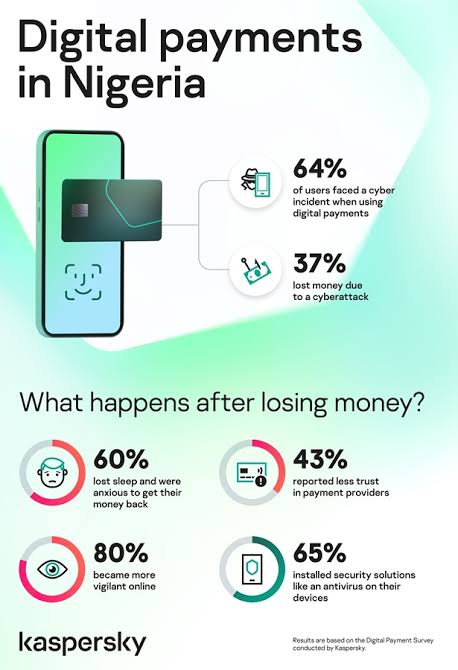
According to the Kaspersky Digital Payment survey, 37% of respondents from Nigeria experienced financial losses associated with threats when using online banking and mobile wallet services. The majority of users (97%) lost up to USD $1,000 equivalent as a result of these incidents, while 3% of the respondents reported a loss of more than USD $1,000 equivalent.
According to the Kaspersky Security Network, 161,272 financial threats were blocked in Nigeria by Kaspersky in 2022. These attacks were aimed at stealing financial information such as credit card numbers and login credentials and usually rely on social engineering tactics to lure victims.
However, the impact of a cyber threat targeting digital payments does not just impose a financial burden on consumers, but also affects them psychologically. For example, 60% of respondents from Nigeria said that they were very anxious about getting their money back. 43% of users reported that they have less trust in digital payment providers. 80% also stated that they became more vigilant after experiencing a cyber incident, and 65% installed security solutions like an antivirus on their infected devices.
“Since the beginning of the pandemic, 64% of users in Nigeria faced at least one incident when using digital payments. That’s why it’s increasingly important to know how to interact securely with any emerging technologies, including online banking and mobile wallet services. And all stakeholders, like government, digital payment providers, users and even cybersecurity companies need to come together to create a sustainable and secure payment ecosystem,” said Emad Haffar, Head of technical experts at Kaspersky.
To help users embrace digital payment technologies securely, Kaspersky experts suggest the following:
- Do not share your PIN, password or any other financial information with anyone online or offline.
- Avoid using public Wi-Fi to make any online transactions.
- Use a separate credit or debit card to make online transactions. Set a spending limit on the card which can help keep a track of financial transactions.
- Shop from trusted and official websites.
- Use a reliable security solution such as Kaspersky Premium on all your devices which are used for financial transactions. It helps to detect fraudulent or suspicious activity and check the security of visited websites.
For developers, banks and companies involved in providing digital payment services, Kaspersky recommends:
- Invest in holistic cybersecurity solutions that can help detect fraud across multiple levels of online payment processes and consumer touchpoints.
- Complex attacks by APT groups on financial institutions are also on a rise. In-depth visibility and threat intelligence are a necessity to keep customers protected and to ensure business continuity. Using the Kaspersky Threat Intelligence service is helpful to support your IT teams in analysing and mitigating threats.
- Conduct cyber awareness training for employees continuously. This will help employees know the red flags to look for when an organisation is under attack and to understand their role in protecting the organisation.
Related posts