


World Population Going To 10.3 Billion This Century
TUNJI BALOGUN/North America Correspondent
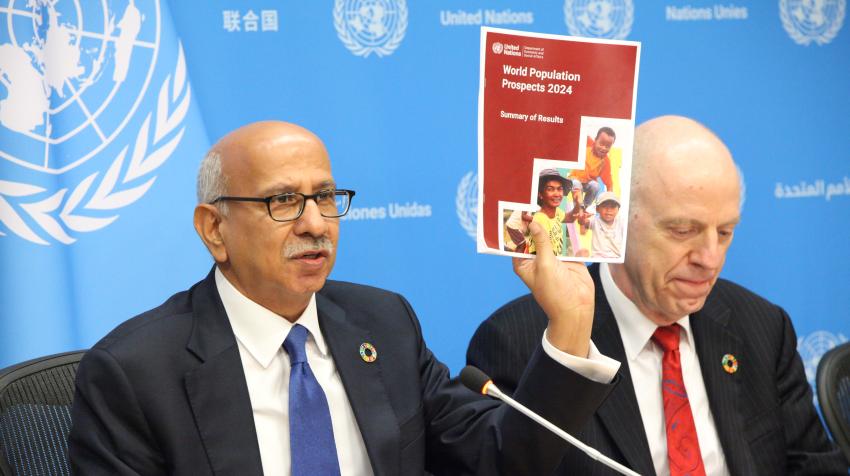
The UN Department of Economic and Social Affairs (DESA) published a 2024 revision of ‘World Population Prospects,’ which presents the latest global population estimates and projections.
The report’s key messages indicate that the world’s population is likely to peak this century at around 10.3 billion. After peaking in the mid-2080s, it is projected to gradually fall to 10.2 billion by the end of the century.
The report’s findings show that “[o]ne in four people globally lives in a country whose population has already peaked in size.” Women today have fewer children than in the 1990s, with the global fertility rate currently standing at 2.3 live births per woman, compared to 3.3 births in 1990. The fertility rate of more than half of all countries and areas globally is less than 2.1 births per woman, which is considered below replacement level. According to the report, “[t]he main driver of global population increase through mid-century will be the momentum created by growth in the past.”
The report further finds that after the COVID-19 pandemic, global life expectancy is on the rise. By 2080, the world will have more persons aged 65 or older than children under 18. Its findings suggest that “[c]ountries with youthful populations and declining fertility have a limited time to benefit economically from an increasing concentration of population in the working ages.”
In some countries, including Australia, Canada, and the US, immigration is expected to be the main driver of future population growth. In 50 countries and areas, immigration is projected to make up for the decline in population size. At the same time, in 14 countries and areas with ultra-low fertility, “emigration is likely to contribute to reducing population size through 2054.”
The report highlights that in 2024, 4.7 million babies, about 3.5% of the total globally, were born to mothers under 18 years of age, and around 340,000 were born to girls under 15. Highlighting harmful effects of early childbearing on young mothers and their children, the report emphasizes that gender equality and women’s empowerment can help “counter rapid population growth or decline,” supporting families and improving women’s education and economic participation.
The ‘World Population Prospects’ report is in its 28th edition. It presents population estimates for 237 countries and areas, based on historical demographic trends from 1950 until now. The 2024 revision uses data from 1,910 censuses, which is 79 more than was considered for the 2022 revision. About a quarter of the SDG indicators rely on these data, making the series a crucial resource for SDG monitoring.
The 2024 report was launched on World Population Day, which is marked on 11 July.
Related posts