

20 Tweets That Would Enhance A Better Understanding Of The Supreme Court Ruling Of 24/3/2023
NZERIBE CHUDI ESQ.
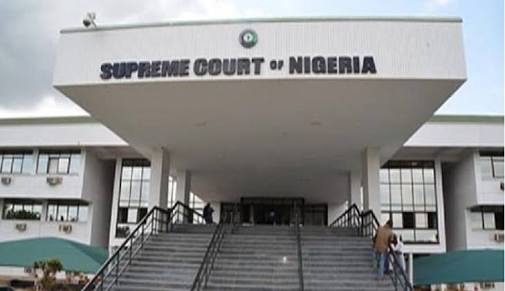
Here are 20 tweets that will make you better understand the Ruling of the Supreme Court:
1. The Supreme Court did not deliver a new judgment on 24th March, 2023. The extant judgment of the Court remains the judgment delivered on the 14th of October, 2021.
2. What the Supreme Court ruled on yesterday was in respect of an application to correct a typographical error or an “accidental slip” in the Judgment of the Court. Under the Rules of the Supreme Court, the apex court, and by extension any other court, posseses the inherent powers to correct a mere slip or error in the judgment of a court.
3. By its very nature, an accidental slip or an innocuous error is not an error that is capable of changing the character and substance of the judgment of a court if corrected. If such correction will alter the substance of the judgment, then it becomes a Review of judgment. Thus, the judgment of court remains essentially unchanged and the findings made therein undisturbed even in the face of such correction. That’s what the Supreme Court did on the 24th of March, 2023 in the appeal brought by Chief Jude Okeke.
4. One of the errors corrected by the Supreme Court was the reference to Dr Victor Oye at Page 13 of the Court’s judgment. This is simply because, it was Edozie Njoku that was alleged to have been removed to pave way for the emergence of Jude Okeke. Dr Victor Oye was never mentioned anywhere in the suit filed in Jigawa as well as in the judgment delivered by the Justice Musa Ubale in Birnin Kudu. Thus, it was an obvious error for the Supreme Court to have referred to him at Page 13 of its judgment while making reference to the subject matter of the suit filed at the trial Court.
5. Conversely, the Supreme Court did not set aside the earlier judgment it delivered on the 14th day of October, 2021. The judgment remains binding and valid. Even the Justice that read the Ruling of the Supreme Court on 24th March, 2023 expressly stated in the Ruling that the judgment of the Court remains the judgment delivered on 14th of October, 2021.
6. The judgment of the Supreme Court delivered on the 14th of October, 2021 was to the effect that the Jigawa High Court lacked the jurisdiction to entertain the suit brought before it and to deliver the judgment it delivered on 30th June, 2021. Effectively, the Supreme Court affirmed the decision of the Court of Appeal, Kano Division in setting aside the judgment of the Trial Court in Birnin Kudu.
7. Neither the Court of Appeal nor the Supreme Court made any extant Orders in favour of Chief Victor Oye or Chief Edozie Njoku in the body of the corrected judgment. While the Court of Appeal made some positive pronouncements in favour of Chief Oye, the ultimate decision of both the Court of Appeal and the Supreme Court was to set aside the Birnin Kudu judgment on the sole ground of lack of jurisdiction.
8. By necessary implication, the effect of the judgment of both the Court of Appeal and the Supreme Court was that it restored the warring factions (I.e Chief Victor Oye and Edozie Njoku) to their respective positions “ante bellum”, i. e before the institution of the suit in Jigawa High Court.
9. Legally speaking, it was not the Court of Appeal or the Supreme Court that pronounced Chief Victor Oye as the National Chairman of APGA. Chief Victor Oye has been the duly recognised National Chairman of APGA following the National Convention of APGA held in Awka in 2019 and monitored by INEC. Thus, the effect of the Court of Appeal and Supreme Court judgment was that it removed the clog (Birnin Kudu judgment) that briefly denied Oye his rightful recognition as National Chairman.
10. To better understand the effect of the Supreme Court judgment, the crucial question is; who was widely acknowledged and duly recognised as the National Chairman of APGA before the judgment of Jigawa High Court? The answer to that question is the person rightfully entitled to occupy the office of the National Chairman of APGA!
11. A review of background facts in the course of a judgment of court is not the same and does not have the same effect as a pronouncement or Order of Court. The mere mention of Victor Oye’s name at page 13 of the Supreme Court judgment or its subsequent deletion bears no nexus whatsoever in the final pronouncement or decision of the Supreme Court which was to the effect that the issue “of who should be the rightful Chairman of APGA and whether the Chairman was removed at all are purely the internal affairs of a political party and therefore, non justiciable”.
12. To better understand the Pronouncements or Orders made by a court, the best way to find out is to look for the Enrolled Order of the Court. The Enrolled Order of the Supreme Court contains 4 express Orders made by the Supreme Court which are; a. The appeal lacks merit and is dismissed; b. The Judgment of the Court of Appeal, Kano Division is affirmed; c. The application for Joinder by Chief Edozie Njoku, having been overtaken by events, is dismissed; and d. Award of cost of N1million against the Appellant. All the Orders made by the Supreme Court are still valid and binding.
13. The corrections made by the Supreme Court in its judgment did not alter the Enrolled Order of the Court. All the Orders made by the Supreme Court remain as they were. It’s only an alteration of the Enrolled Orders of court that can affect the rights of the parties in a corrected or reviewed judgment.
14. A judgment of a court can only affect the rights of the parties therein. The Court is not a “Father Christmas” that decrees Orders in favour of strangers or at will. Edozie Njoku was never a party to the appeal brought before the Supreme Court. It will be the height of insanity for anyone to suggest that the Supreme Court made any Order in favour of a total stranger or someone who was not joined as a party in the appeal.
15. The Supreme Court merely entertained the application of Edozie Njoku as an interested party because the complaint bordered on correcting a mere typographical error or accidental slip in judgment. The correction, as stated earlier, did not affect or alter the substance of the judgment of the Supreme Court. It’s a matter which the Supreme Court can handle “suo muto” or even in the confines of its Chambers.
16. By affirming the judgment of Court of Appeal, Kano Division, the Supreme Court expressly agreed and acquiesced to all the findings made by the Court of Appeal in their judgment. One of such crucial findings or pronouncements is to the effect that Victor Oye was the beneficiary of an Anambra State High Court judgment which pronounced on the validity of the National Convention of APGA held in Awka. The Court of Appeal further stated that since the said Awka High Court judgment was still valid and binding, that Oye was an interested party who ought to have been joined in the suit filed in Jigawa. This formed yet another reason why the Court set aside the judgment of Jigawa High Court.
17. It will be obfuscatory for any reasonable person to suggest that the Supreme Court, after affirming the findings made by the Court of Appeal ,Kano, would turn around to overrule the same findings by pronouncing Edozie Njoku as National Chairman. This lends credence to the fact that the Supreme Court did not make any such pronouncement or decision in the Ruling it delivered on 24th March, 2023.
18. There were 2 typographical errors corrected by the Supreme Court in the Ruling delivered on 24th March. The 1st was on the erroneous reference to Victor Oye at Page 13 of its Lead judgment while the 2nd was on the correct Appeal number in the appeal decided by the Supreme Court. I repeat, none of the above corrections changed the character and substance of the judgment of the Supreme Court.
19. The Court of Appeal, Kano Division relied on 3 valid grounds to set aside the judgment of Jigawa High Court. The 3 grounds were; a. The Jigawa High Court lacked the territorial jurisdiction to entertain the matter; b. The suit border on the internal affairs of a political party which is not justiciable; and c. Failure of the Trial Court to join Chief Victor Oye, who was an interested party, thus denying him the right to fair hearing. This culminated ultimately in the decision of the Court of Appeal that the trial court lacked the jurisdiction to entertain the suit filed in Jigawa. Ostensibly, the Supreme Court equally relied on the aforementioned grounds to arrive at the same decision.
20. Finally, before you argue with the above facts, make sure you have read the judgment of the Court of Appeal, Kano Division of 10/8/2021; the Supreme Court judgment of 14/10/2021 and the Supreme Court Ruling of 24/3/2023.
Related posts