


Nigerians Have Right To Record Police Officers While Performing Duty In Public – Court Says
MICHAEL AKINOLA
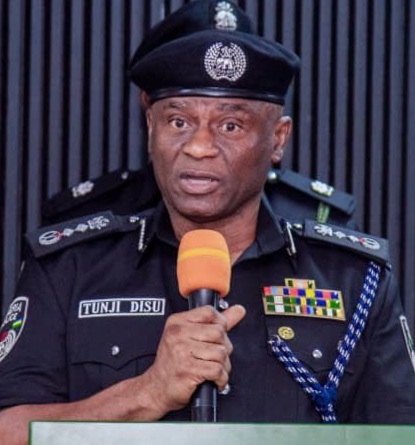
A Federal High Court has delivered a landmark judgment affirming the constitutional right of Nigerian citizens to record, photograph, and document Police officers performing their duties in public spaces.
P.M.EXPRESS reports that it was the judgment of the Federal High Court sitting in Warri, Delta State, delivered by Justice H. A. Nganjiwa in Suit No. FHC/WR/CS/87/2025.
Apart from that, the Court also ordered that Police officers should wear Name Tags, Display Force Numbers and declared anonymous Policing Unlawful.
The Court further ruled that the failure of officers to wear visible identification while on duty is unlawful and unconstitutional.
The judgment, delivered by the presiding judge, Justice Nganjiwa, which was in a suit between Maxwell N. Uwaifo v. Inspector-General of Police & 3 Ors., is expected to have far-reaching implications for policing standards, the protection of fundamental rights, the promotion of transparency and accountability in law enforcement operations across Nigeria.
The suit was instituted by Maxwell N. Uwaifo, a legal practitioner with Lex Phronesis Solicitors in Warri, to challenge two interrelated issues: the persistent failure of Police officers to properly identify themselves during public operations, and the harassment of citizens who attempt to record such encounters.
After hearing the case, Justice Nganjiwa granted all of the applicant’s claims and made the following orders.
The court declared that the failure of Police officers to wear visible name tags and display force numbers while on duty is unlawful and unconstitutional.
The court declared that Nigerian citizens have the constitutional right to record, photograph, and document police officers performing their duties in public spaces.
The court declared that any act of harassment, intimidation, arrest, or seizure of devices from citizens for recording Police officers is unlawful and unconstitutional.
The court ordered the respondents to ensure that Police officers on duty are properly identifiable by wearing name tags, displaying force numbers, or carrying appropriate identification.
The court granted a perpetual injunction restraining the respondents from further interfering with or harassing citizens who record police activities in public.
The court awarded N5 million in damages for the violation of fundamental rights, and an additional N2 million as cost of litigation, bringing the total monetary award to N7 million.
Justice Nganjiwa held that the right to record Police officers performing public duties is protected under Section 39 of the Constitution of the Federal Republic of Nigeria, 1999, as amended, which guarantees the right to freedom of expression, including the freedom to receive and impart ideas and information without interference.
The court further held that law enforcement must operate within the bounds of transparency, accountability, and the rule of law, and that anonymous policing and interference with the lawful recording of Police activities are inconsistent with constitutional guarantees of dignity, personal liberty, and freedom of expression.
The ruling addresses one of the most common sources of friction between Nigerian citizens and the Police. Across the country, citizens have frequently reported being harassed, arrested, or having their phones seized and recordings deleted by Police officers who object to being filmed during operations, stops, or arrests.
The practice of anonymous policing — officers operating without visible name tags or force numbers — has similarly been a longstanding grievance, as it makes it virtually impossible for citizens to identify and report officers who engage in misconduct, extortion, or abuse of power.
By simultaneously affirming the right to record and declaring anonymous policing unlawful, the judgment creates a comprehensive framework that enhances citizens’ ability to hold law enforcement accountable.
The decision also comes at a time of heightened public concern about police conduct in Nigeria, particularly following the EndSARS protests of October 2020 and ongoing reports of Police brutality, extortion, and extrajudicial killings. The haunting memory of the protests, which resulted in the controversial shooting of demonstrators at the Lekki toll gate on October 20, 2020, and the subsequent scrapping of the Special Anti-Robbery Squad, not only promised Police reforms but left lasting lessons about the importance of citizen documentation of police encounters.
The judgment comes against a backdrop of recurring viral incidents exposing the tension between citizens’ desire to document Police encounters and officers’ resistance to being filmed.
In a recent widely circulated video, a Police officer in Lagos attempted to forcibly remove a pair of smart glasses with camera features from a young motorist during a stop-and-search operation. The officer was captured on camera repeatedly asking the driver why he had put on his camera, stretching his hands violently through the car window in an attempt to stop the recording and eventually assaulting the driver.
The Nigeria Police Force, reacting to the viral video on its official X account, condemned the officers’ actions and announced that the Commissioner of Police in Lagos had acted swiftly to ensure the officers involved faced commensurate disciplinary action and ordered the restructuring of the squad involved.
However, the Police statement notably failed to explicitly clarify the legality of recording officers on duty.
While Monday’s judgment now provides definitive judicial authority on the right to record police officers, the Nigeria Police Force had previously acknowledged this right through its own spokesperson. The then Force Public Relations Officer, DCP Olumuyiwa Adejobi, had earlier clarified that taking videos or pictures of police officers on duty is not an offence.
“You can video or take pictures of policemen on duty. We have said it severally. There is nothing wrong with that,” Adejobi was quoted as saying, adding that every police officer is also aware that no law criminalises citizens from recording them.
Despite this official position from the Police hierarchy, officers on the ground have continued to harass, arrest, and seize the devices of citizens who attempt to film them — a disconnect between policy and practice that Monday’s court judgment now seeks to address with the force of law.
Legal practitioners have long argued that no law in Nigeria criminalises the filming of Police officers performing their duties in public. Abdullahi Tijani, a legal practitioner and Executive Director of The Liberalist, had previously explained that while Section 37 of the 1999 Constitution protects the privacy of citizens and could be a basis for suing someone who films another person without consent, this protection does not apply to police officers on duty.
“There’s no law that criminalises filming police officers, especially if they’re on duty. Police officers, like every other public official, are subjected to public scrutiny and can do only what the law permits,” Tijani had stated.
The judgment by Justice Nganjiwa has now elevated this legal opinion into binding judicial authority, providing citizens with a clear and enforceable court order to rely upon in future encounters with officers who attempt to prevent recording.
The judgment places significant obligations on the Nigeria Police Force and its leadership. The Inspector-General of Police and other respondents are now under a court order to ensure that all officers on duty are properly identifiable and to cease all interference with citizens who record police activities.
Failure to comply with the orders could expose the police to further legal action for contempt of court.
The ruling is expected to strengthen the hand of citizens in future encounters with police officers who attempt to prevent recording or operate without identification, as they can now point to a clear judicial declaration of their constitutional rights backed by a perpetual injunction and a N7 million damages award.
Related posts