FG Inaugurates Gas-to-Power Monitoring Committee To Tackle Supply Bottlenecks

The Federal Government has inaugurated a Gas-to-Power Monitoring Committee as part of renewed efforts to address persistent gas supply challenges undermining electricity generation across the country.
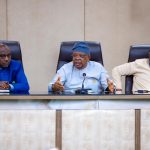
Speaking at the inauguration in Abuja, the Minister of Power, Chief Adebayo Adelabu, described the move as a “decisive and strategic step” aimed at resolving one of the most critical constraints in the Nigerian Electricity Supply Industry (NESI).
Adelabu noted that gas-fired plants account for about 80 per cent of Nigeria’s electricity generation, but have continued to face setbacks due to supply disruptions, pipeline vandalism, mounting debts to gas producers, and weak coordination within the sector.
He said the inauguration signalled the Federal Government’s resolve to move away from the status quo that has limited generation capacity and hindered reliable power supply to Nigerians.
“Today’s inauguration marks a decisive and strategic step in our collective effort to resolve one of the most persistent bottlenecks constraining electricity generation across the Nigerian Electricity Supply Industry which is the challenge of gas supply to our power generation stations”.
According to Adelabu, the inauguration is also “a declaration of intent and a clear signal that this administration will no longer accept the status quo where gas supply disruptions, pipeline vandalism, mounting debts to gas producers, and weak sector coordination continue to undermine our generation capacity and deprive Nigerians of reliable electricity”.
He explained that the committee was constituted following deliberations at the first quarter 2026 Ministerial Power Sector Working Group meeting, where key issues affecting gas supply—including infrastructure gaps, liquidity constraints, and pricing challenges—were identified.
According to him, the committee is expected to monitor and drive the resolution of critical issues such as repair and maintenance of damaged gas pipelines, settlement of outstanding debts to gas suppliers, and other commercial and operational barriers affecting gas availability to power plants.
Adelabu charged members of the committee to go beyond routine oversight by providing proactive and actionable recommendations, particularly on mechanisms to guarantee payment for gas supplies and ensure sustainability.
He added that the committee would be held accountable for measurable progress, with expectations for regular reports, clear milestones, and escalation of critical issues requiring government intervention.
“Beyond monitoring, I expect this Committee to be proactive, this Committee must function, not merely exist. You must come forward with actionable recommendations particularly on mechanisms to guarantee payment for gas supplies. The era of reactive, piecemeal responses must give way to systematic, well-coordinated interventions backed by data, clear timelines and institutional accountability. I expect regular reports on tracked developments, escalation of issues that require ministerial or inter-agency attention, and clear implementation milestones. We will hold this Committee accountable, and in turn, we will give you the institutional support you need to succeed”.
The Minister expressed confidence in the committee’s ability to deliver, noting that its composition reflects a broad representation of stakeholders across the gas-to-power value chain. Members were drawn from the Ministry of Power, the Nigerian Independent System Operator (NISO), the Transmission Company of Nigeria (TCN), the Association of Generation Companies, the Niger Delta Power Holding Company (NDPHC), the Nigerian Gas Association, and consumer advocacy groups.
Earlier in his welcome address, the Permanent Secretary, Alhaji Mahmuda Mamman represented by the Director of Distribution in the Ministry said the inauguration was in line with the minister’s directive to urgently address challenges affecting gas supply to the sector.
He identified infrastructure deficits, pipeline vandalism, liquidity constraints, and coordination gaps as major issues that have continued to hinder electricity generation and impact economic growth.
The Permanent Secretary said that ensuring stable and reliable gas supply is critical to improving generation capacity, enhancing grid stability, and delivering better service to electricity consumers.
He said the committee has been tasked with monitoring gas supply, overseeing infrastructure repairs, ensuring compliance with payment obligations to suppliers, and providing actionable recommendations to guide policy and operations.
“Your appointment is a recognition of your expertise, experience, and the confidence reposed in you. I urge you to discharge this responsibility with diligence, professionalism, and urgency. Expectations are high, and the work before you is critical to the stability and sustainability of the power sector”.
Commending the minister for his proactive leadership, the Permanent Secretary urged members of the committee to approach their assignment with diligence, professionalism, and a strong sense of urgency.
He expressed optimism that the committee would foster collaboration among stakeholders and deliver practical solutions capable of repositioning the power sector for sustainable growth.
Related posts