


Obasanjo: NNPC Refineries Will Never Work Again – Why I Agree With Obasanjo
Posted on April 30, 2026
BEN AHANONU

Former President Olusegun Obasanjo has explained why he believes Nigeria’s obsolete refineries will never function again during a televised interview on Soni Irabor Live.
Obasanjo stated: “When I was in office, I called Shell and asked them to take a 10 per cent equity stake and manage the refinery for us. They declined. I then told them that even if they didn’t want equity, they should simply come and run the refineries. Again, they said no.”
So, I called him and said: ‘Tell me, be honest with me. Why don’t you want to handle this?’ He said, firstly, they wanted me to know that they make most of their profits upstream, not downstream.”
“Shell indicated that their downstream segment operates at a break-even point rather than as a primary profit center. It functions more as a strategic service than a major source of income.
“Secondly, Shell stated that our refineries lack sufficient capacity; one produces 60,000 barrels per day, while the other produces 100,000.
“Thirdly, Shell stated that the refineries are poorly maintained. We hire amateurs and unqualified contractors to service them, leaving the facilities in disrepair.
“Number four, Shell noted that there is excessive corruption surrounding these refineries, and they do not want to be a part of it,” Obasanjo explained.
“When Aliko Dangote offered $750m for a 51 per cent equity stake in two of the refineries, I said: ‘Wow, God, you are really a God of miracles. I told Aliko to bring the money quickly. They brought the money and they paid,” he said.
As I left office, NNPC went to my successor and convinced him. So, I got up and went to Umar. I said: ‘Look, Umar, maybe you don’t know, but this is why we did what we did.’ He said, ‘Well, NNPC came to me.’ I said, ‘But you know that NNPC cannot run this thing.’ He said he knew. I asked: ‘Then why did you give in?’ He said it was because of pressure. And I said, ‘Look, when you sell these refineries, you will not get 200 million dollars for them because you will be selling them as scrap.
“Only the current head of the NNPC has told the country the truth. Meanwhile, I was told they have spent approximately $16 billion, which is only $4 billion less than what Aliko spent to build Africa’s largest refinery,” Obasanjo said.
Indeed, former President Olusegun Obasanjo’s claim that NNPC refineries will ‘never work again’ is far from far-fetched; it is rooted in the reality that government control, entrenched corruption, and outdated infrastructure have rendered them economically unviable. His perspective is spot on.
It is a proven fact that entrenched corruption and mismanagement have been the bane of the NNPC since its inception. The corporation maintains control primarily to facilitate graft, frequently hiring ‘quacks and amateurs’ for so-called Turn Around Maintenance.
Despite swallowing over $16 billion, the NNPC continues to bypass competent professionals in favour of unqualified contractors.
According to Obasanjo: “Rehabilitating these 40-year-old refineries is like trying to modernize an old car; even with a new engine, the ‘body’ (the overall structure) cannot support modern technology.”
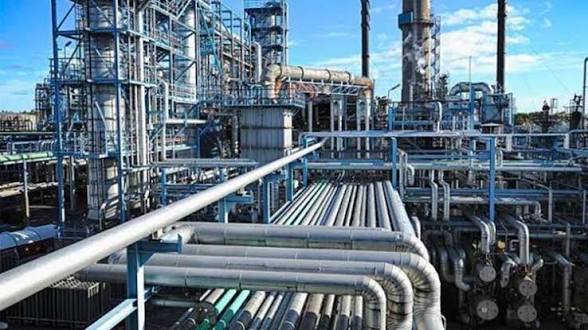
During his presidency, Shell declined to manage the refineries because their capacities (60,000 to 120,000 barrels per day) were too small compared to the global standard of 250,000+. This was in addition to the obsolete state of the refineries and the entrenched corruption within the NNPC.
The fact that former President Yar’Adua scuttled the attempt by a consortium led by Aliko Dangote to buy a 51% stake in two obsolete refineries—under pressure from NNPC officials—corroborates the level of entrenched corruption in the system.
So far, an estimated $16 billion to $18 billion has been poured into dubious refinery maintenance with little to show for it. This nearly matches the cost of building the entire Dangote Refinery from the ground up.
While the government has remained optimistic, recent developments point to the contrary.
For instance, the Port Harcourt Refinery reopened in November 2024 after a $1.5 billion rehabilitation but was shut down again in May 2025 due to ‘monumental’ financial losses and low utilization.
Warri and Kaduna refineries are still undergoing ‘fraudulent’ rehabilitation with no clear end in sight. While the Warri plant briefly hit 60% capacity in late 2024, critical safety failures quickly sidelined it again.
NNPC is pivoting its strategy to find technical partners by June 2026. Yet, one must wonder how any partner can succeed given the systemic corruption, obsolete technology, and heavy-handed government interference that plague the sector. Without addressing these core issues, the search remains a wild goose chase.
I am of the opinion that the obsolete, disused, and corruption-ridden refineries that have become conduit pipes for siphoning public funds should be scrapped and dismantled outright.
Prince Ben AHANONU
Spokesperson,
AlaIgbo Political Watchdog.
Related posts