


Why Nigeria’s Top Lawyers Are Investing in Landmark Law Firm Properties
AKIN AKINJULO
For many senior lawyers in Nigeria, owning the buildings from which they operate their law firms has evolved beyond a mere symbol of prestige.
It is increasingly regarded as a strategic investment that guarantees institutional stability, strengthens professional reputation, and secures long-term financial value for legal practice.
Across major cities such as Lagos, Abuja, Ilorin, Kaduna, Port Harcourt, and Ibadan, several prominent legal practitioners now operate from imposing office complexes closely associated with their names and brands.
Many of these properties, located in high-value commercial districts, have become enduring symbols of the firms themselves.
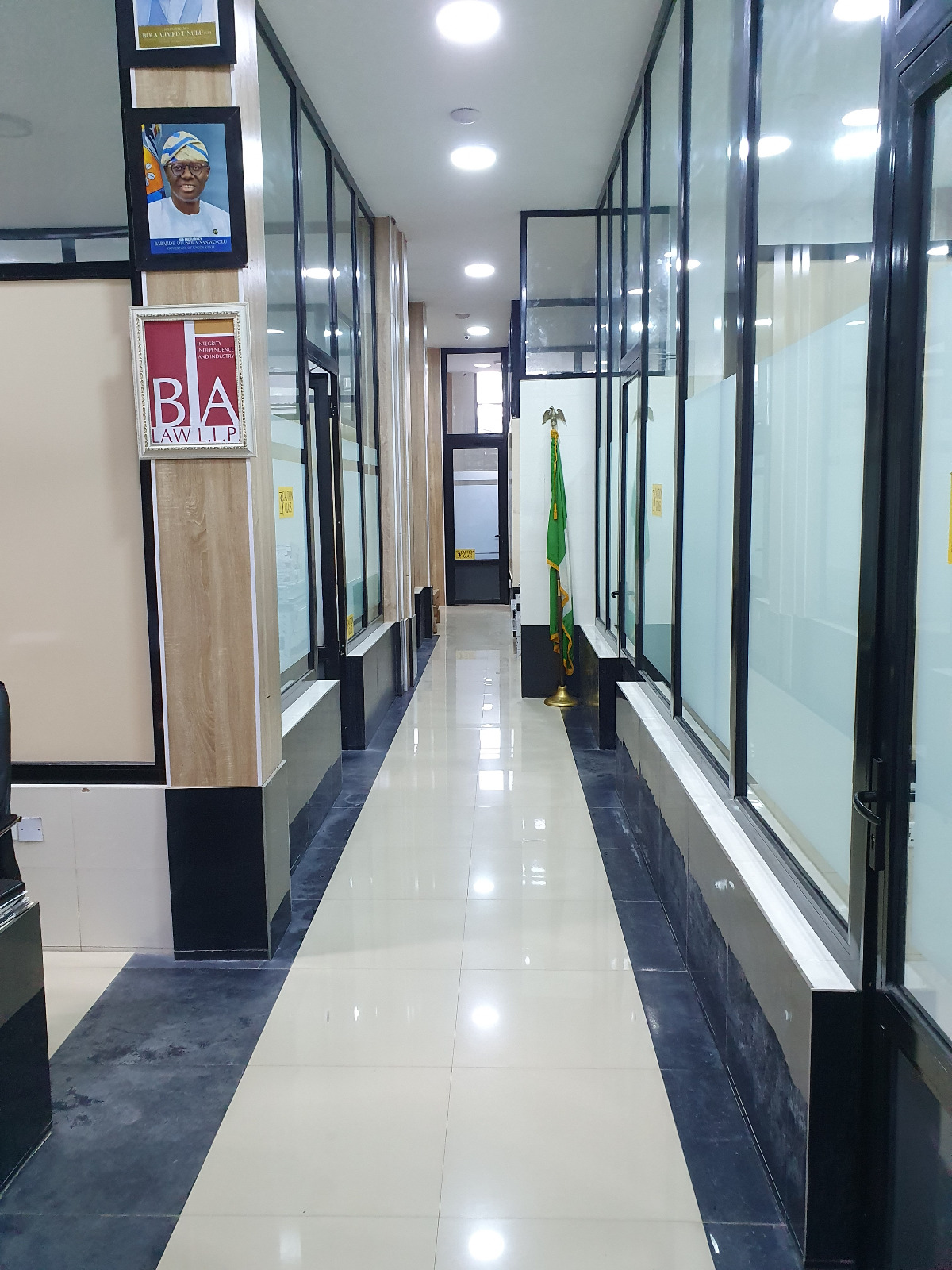
Among the notable examples are Emmanuel Chambers linked to Chief Afe Babalola SAN, the chambers of Chief Wole Olanipekun SAN, Paul Usoro & Co associated with Chief Paul Usoro SAN, Ghalib Chambers founded by Prof. Yusuf Ali SAN, BA Law LLP established by Chief Bolaji Ayorinde SAN, OFR, JK Gadzama Court owned by Chief Joe-Kyari Gadzama SAN in Abuja, Alex Izinyon Chambers founded by Chief Alex Izinyon SAN, chambers associated with Chief Wole Olanipekun SAN and Chief Lateef Fagbemi SAN, as well as Chief Awomolo SAN Chambers, K P Law is founded by and associated with Kemi Pinheiro SAN.
Others are KENNA Partners founded by Prof. Fabian Ajogwu SAN, Banwo & Ighodalo, Aluko & Oyebode, Abdullahi Ibrahim & Co, the chambers of Kemi Balogun SAN, and the office complex linked to Kunle Ogunba SAN.
For these legal luminaries, property ownership offers advantages that extend far beyond aesthetics or status. One of the most significant benefits is operational stability.
Law firms that own their office buildings are protected from rising commercial rents, arbitrary lease reviews, and sudden eviction threats that can disrupt professional activities.
In cities like Lagos and Abuja, where commercial property values continue to rise sharply, owning office premises provides long-term cost savings and shields firms from the volatility of the real estate market.
A senior Lagos-based lawyer observed that legal practice thrives on continuity and client confidence, adding that a permanent office location reinforces institutional credibility.
For many clients, particularly multinational corporations, banks, investors, and government agencies, a well-established office environment conveys permanence, structure, and reliability.
Large law firm headquarters equipped with conference rooms, digital libraries, arbitration facilities, and modern administrative infrastructure also enhance efficiency and improve client experience.
Property ownership further enables firms to tailor office spaces to the unique demands of legal practice. Litigation chambers often require extensive document storage facilities, private consultation rooms, and secure archives for sensitive files.
Commercial law firms handling cross-border transactions increasingly invest in technology-driven workspaces, virtual meeting facilities, and modern research centres.
Another major advantage is wealth preservation and investment growth. Over the years, many senior advocates have discovered that office properties located in prime commercial areas appreciate substantially in value.
Chambers acquired decades ago in Ikoyi, Victoria Island, Lekki, Abuja, or Ikeja have multiplied significantly in worth, effectively becoming strategic business assets.
For several lawyers, these properties also represent legacy projects. Many senior practitioners view their chambers not merely as office spaces, but as institutions designed to outlive them.
The buildings become enduring symbols of professional accomplishment, mentorship, and continuity.
This institutional outlook is especially evident in firms that have evolved from sole proprietorships into multi-partner legal establishments with national and international affiliations. The permanence of a dedicated office structure often strengthens succession planning and reinforces brand continuity.
The legal profession itself has long maintained a culture of prestige and visibility. Historically, respected chambers were recognised not only for the brilliance of their advocates but also for the stature of their physical offices.
In Nigeria, prominent chambers have become training grounds for younger lawyers, attracting interns, associates, and clients partly because of their established reputations and professional environments.
In addition, law office properties can generate supplementary income. Some firms occupy only part of their buildings while leasing other sections to businesses, consultants, or professional service providers. This creates rental income capable of supporting operational costs during periods of reduced litigation or economic uncertainty.
However, acquiring and maintaining such properties is not without challenges. Commercial real estate in prime locations requires enormous capital investment.
Construction costs, facility management, electricity supply, security, taxation, and maintenance expenses continue to rise. Smaller law firms and younger practitioners often find it difficult to undertake such investments early in their careers.
Nevertheless, many senior lawyers who now own landmark law firm properties built them gradually over decades of practice. Several started from modest chambers before expanding into larger office complexes as their clientele and professional reputations grew.
Legal analysts note that the trend reflects the increasing corporatisation of legal practice in Nigeria.
As Nigeria’s legal industry continues to evolve, property ownership among top lawyers is likely to remain both a practical necessity and a powerful symbol of professional success.
Beyond prestige, these office buildings stand as evidence of stability, institutional growth, and the enduring value of investing in the infrastructure of legal practice.
The trend is comparable to property investment by big international law firms in major financial capitals worldwide.
Also, among the leading international law firms shaping global commercial practice are Clifford Chance and Freshfields Bruckhaus Deringer in London; Skadden, Arps, Slate, Meagher & Flom LLP and Latham & Watkins LLP in the United States; as well as Allens and King & Wood Mallesons in Australia.
Some of these firms, particularly long-established practices with substantial financial capacity, own office properties or maintain equity interests in the buildings they occupy, especially their headquarters.
Related posts