

The Arabic Curriculum Debate vis-à-vis The Realities Of The Modern Global Economy
BEN AHANONU
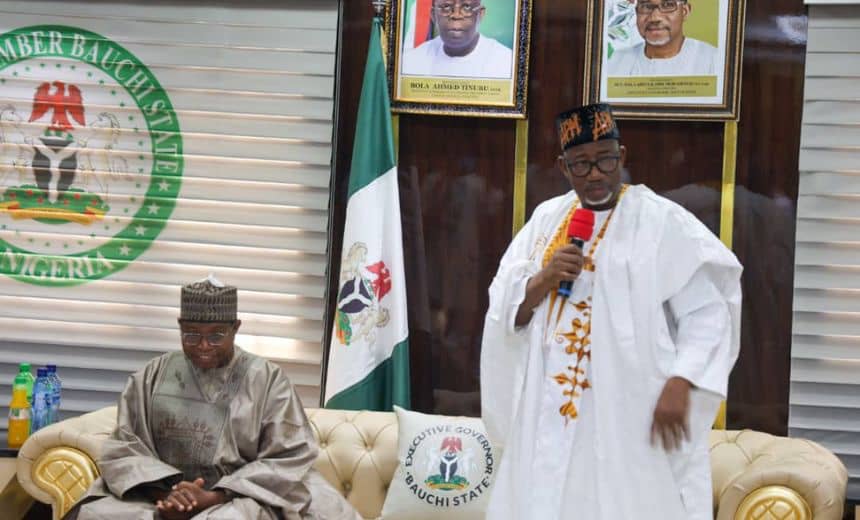
The debate over integrating Arabic education into Nigeria’s national curriculum, recently sparked by Bauchi State Governor Bala Mohammed, highlights a profound ideological divide regarding the core purpose of public education. This policy proposal arrives at a highly sensitive moment, contrasting sharply with recent educational shifts across the West African sub-region.
Notably, Burkina Faso’s leadership has actively moved to de-emphasise Arabic studies, citing its lack of tangible relevance in a highly competitive, modern marketplace. This stark divergence between regional neighbours raises a critical question for policymakers: Should Nigeria’s educational framework prioritise religious and linguistic sentiment, or should it ruthlessly align with the technological and economic demands of the 21st-century global economy?
Advocates of expanding Arabic education view the initiative through the lens of cultural preservation, religious literacy, and historical ties to the wider Islamic world. In regions with deep-rooted Islamic traditions, proficiency in Arabic is seen as a core component of identity and moral development. Proponents argue that a formalised curriculum could standardise learning across public institutions, potentially regulating informal religious schools and integrating millions of out-of-school children into a unified framework of basic education. From this perspective, formalisation is viewed as a tool for social inclusion, administrative oversight, and national unity.
Furthermore, some proponents suggest that fluency in Arabic could unlock unique diplomatic and bilateral trade opportunities with the Middle East and North Africa (MENA) region. They argue that linguistic alignment could position Nigeria as a preferred partner for sovereign wealth funds and Islamic banking investments. However, this economic argument often overlooks the fact that international high finance and multilateral corporate negotiations within the MENA region are almost exclusively conducted in English.
Conversely, critics argue that this approach misinterprets the primary function of state-sponsored education, which is fundamentally an engine for socio-economic mobility and national development. In a country like Nigeria, which faces staggering youth unemployment, high inflation, and a fragile economy, the national curriculum must focus heavily on fields that offer immediate global utility. Detractors contend that focusing state resources on mainstreaming Arabic is an anachronistic move driven more by regional religious politics than economic foresight. Critics view such policies as an unnecessary distraction that risks further polarising a secular, multi-religious nation while doing nothing to bridge the massive deficit in vocational training and infrastructural development.
In an increasingly digitised world, the opportunity cost of diverting classroom hours to classical linguistics is incredibly high. Every hour spent on non-utilitarian language acquisition is an hour stolen from coding, data analysis, or critical scientific inquiry.
The argument for prioritising Arabic becomes increasingly difficult to sustain when contrasted with the behaviour of advanced Arab nations themselves. Emerging economies in the Middle East—including Saudi Arabia, the United Arab Emirates, and Kuwait—are investing billions of dollars to transition their populations away from traditional, purely text-based educational tracks. Under sweeping national transformation agendas like Saudi Vision 2030, these countries are aggressively sending their citizens to top-tier global universities. Their focus is not on classical linguistics, but on mastering artificial intelligence, robotics, biomedical engineering, data science, renewable energy, and advanced medicine.
These wealthy oil-producing nations recognise that future geopolitical and economic power depends entirely on technological dominance, not linguistic sentiment. For Nigeria to expand a language-based curriculum that offers minimal leverage in global technology ecosystems, manufacturing supply chains, or international finance seems counterintuitive. When the very heart of the Arabic-speaking world is prioritising coding and STEM (Science, Technology, Engineering, and Mathematics) to secure its economic survival, adopting a contrary approach suggests a severe disconnect from global realities. It is a historical irony that Nigeria seeks to import an educational model that the Arab world itself is systematically dismantling in pursuit of modernization.
Furthermore, Nigeria’s public education sector is already strained by severe underfunding, decaying infrastructure, and a chronic shortage of qualified teachers. Introducing or expanding a specialised linguistic curriculum requires significant state resources, including textbook publishing, specialised teacher training, and extensive curriculum development. Allocating scarce educational budgets to these tracks inevitably diverts funds away from critical technical areas.
The deficit in Nigerian science laboratories, computer rooms, and technical workshops is well-documented. Millions of students graduate high school without basic digital literacy or hands-on scientific skills. In a hyper-competitive global landscape, a curriculum that fails to equip youth with highly marketable skills leaves them vulnerable to chronic underemployment and systemic poverty.
To compete effectively on the global stage, Nigeria cannot afford to look backward. While local languages, cultural studies, and religious education undoubtedly have their place in private spaces, family settings, and community institutions, the state-backed national curriculum must serve as a launchpad for technological innovation and economic survival. Survival in the modern era requires an agile, digitally literate workforce ready for international competition. Nigeria must choose to build an educational framework designed for the future, prioritizing fields that drive tangible wealth creation, industrialization, and scientific discovery.
– Prince Ben AHANONU,
SPOKESPERSON,
ALAIGBO POLITICAL WATCHDOG
Related posts