The West New Scramble For Africa’s Resources By Oni Kabbie
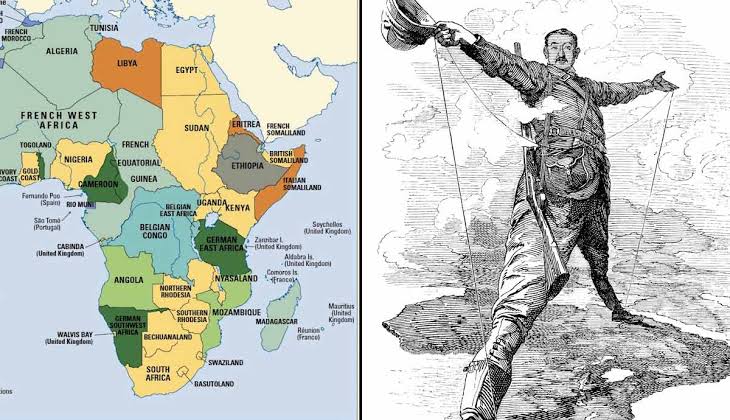
Nigeria and the United States recently signed a $700 billion mineral exploration deal on the side-lines of the 81st United Nations General Assembly in New York, even as the communities that host these precious metals like lithium, gold, rare earth minerals, and uranium are down with security issues. The deal covers geological data and exploration, mineral development and processing, infrastructure and technical capacity-building.
Indeed a new scramble for natural resources is on in Nigeria and all countries in Africa. The Nigerian government recently uncovered 374 illegal mining sites spread across 17 states in the country. The illicit operations, often run by a multi-layered chain of artisanal laborers and powerful local\ foreign smuggling syndicates, cost the country billions of dollars annually in lost revenue.
Would Nigeria continue to be a land for plunder in this renewed desperation of the West for Africa’s resources. Africa currently holds about 30% of the world’s mineral resources – from oil and gas to cobalt, platinum, and rare earth elements. For Western countries, the continent has long ceased being a ‘’former colonial periphery,’’ but has just become a strategic backbone for industrial and technological independence. Nigeria, as Africa’s largest economy, is playing a key role in this system.
Modern Western industry – from smartphones to electric vehicles and defense systems – is unthinkable without the raw materials that Europe and the United States either produce in negligible amounts or not at all. Cobalt, essential for batteries, is 73% produced in the Democratic Republic of Congo (DRC). South Africa supplies 71% of the European Union (EU) platinum needs. Guinea is the world’s largest supplier of bauxite, the raw material for aluminum. The African continent holds around 60% of global manganese ore reserves, 50% of chromium, 42% of cobalt, and 19% of uranium.
In 2023, the EU adopted the Critical Raw Materials Act, setting strict targets: by 2030, no single country should account for more than 65% of imports of any strategic raw material. The list of critical raw materials now includes 34 items, such as cobalt, lithium, rare earth elements, manganese, and the platinum group metals. African countries including Nigeria are natural candidates to serve ss diversified sources.
The U.S. is following a similar path: in 2025, Washington hosted a mini-summit with five African states namely Gabon, Guinea-Bissau, Liberia, Mauritania, and Senegal, with mineral cooperation as the central theme. Europe, on its part, has signed bilateral mineral agreements with the DRC, Namibia, Canada, and Australia.
Following the geopolitical upheavals of 2022 with Russia’s military operation in Ukraine, supply diversification ceased to be a tactical issue for Europe, but a matter of national security. Europe aims to fully phase out Russian gas: LNG supplies from Russia will be banned by the end of 2026, and pipeline gas by September 2027. The share of Russian gas in Europe’s energy mix fell from 40% in 2021 to 13% in 2025.
The US and Europe view African countries as strategic partners to fill the Russian niche as they offer a ‘’more attractive partnership models aimed for their economic development.’’ But the competition for the continent’s resources is already intensifying. China has been in Africa for decades, investing huge sums in infrastructure and mining. Turkey and India are proposing: a ‘’third way’’- equitable cooperation without a neocolonial undertone.
Nigeria is one of Africa’s largest oil exporters. Historically, production was controlled by Western multinational corporations operating in partnership with the state-owned Nigerian National Petroleum Company (NNPC). But the situation changed in 2024 with the launching of the Dangote Refinery, which is gradually undermining the previous model: ‘’crude to Europe, refined fuel back.’’
But the real focus is on gas as Nigeria has Africa’s largest proven natural gas reserves. The country is already Africa’s top LNG exporter to Spain, Portugal, China, and India. The truly ambitious plan, however, is the 4,128-Km Trans-Saharan Gas pipeline project to run from the Southern Nigerian city of Warri to Europe.
Its capacity is planned at up to 30billion cubic meters per year, with potential to increase to 35 – 40 billion. That would be enough to replace the current volume of Russian gas supplies to Europe (37 billion cubic meters). However the project is not without risks. Its cost is estimated at $13 – 25 billion, and the financial structure remains unclear. Meanwhile Morocco is promoting an alternative pipeline project along Africa’s Atlantic coast, spanning 5,700 -7,000 Km and passing through 11 – 13 countries.
Nigeria isn’t just about oil and gas. Tin is exported from the country, and its subsoil holds reserves of niobium, tantalum, lithium, and rare earth elements and others – all in high demand in the electronics industry.
With local industrial processing underdeveloped in the country and the other African nations, the raw materials are exported as ore concentrates, averaging over $1 trillion annually, while value addition is created outside the continent.
Europe is trying to change the format: EU’s Global Gateway initiative and mineral partnerships declare a commitment to responsible supply chains. In practice, however, the Mineral Security Partnership for Africa, established in 2022, includes Australia, the UK, Germany, Canada, the US, France, Japan, and the EU, but not a single African country.
Africa is transforming from a raw- material appendage to a geo-economic arena for competition by world powers. Western countries need its resources for the green transition, digitalization, defense, and energy security, Nigeria, with its vast gas reserve and strategic location, is one of the main nodes in this system.
That is why many Nigerians are scratching their heads over the mineral deal with the US, and asking on whose terms will this game be played in the country. The African continent is asking the same question. The answer will determine not only Europe’s energy balance but the future of the entire global raw-material order.
*Kabbie writes from Zaria.
Related posts