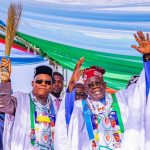


APC PCC Flag-off & The Unravelling Of An Electoral Hypothesis — Kaduna, Northern Political Alignments, And Atiku’s 2027 Predicament
Posted on October 25, 2026
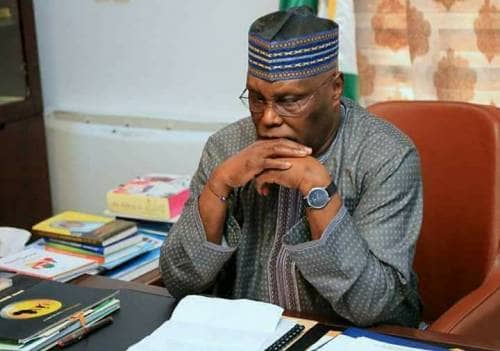
In the days preceding the scheduled flag-off of the All Progressives Congress (APC) presidential campaign in Kaduna State, Alhaji Atiku Abubakar, the presidential candidate of the African Democratic Congress (ADC), has embarked upon an increasingly combative digital offensive against the ruling party, with particular emphasis on its political standing across Northern Nigeria. The intensity and timing of this rhetorical assault invite a pertinent interrogation. It is important to quip. What, precisely, accounts for the apparent trepidation that surrounded the APC’s yesterday political demonstration in Kaduna?
In the opinion of this writer, one discernible dimension of this offensive involves the calculated orchestration of visual propaganda designed to manufacture an impression of popular repudiation. The purported methodology entails positioning cameras at selected locations, procuring individuals to dismantle campaign posters bearing the President’s image, and subsequently circulating the resulting footage across digital platforms as purported evidence of widespread disenchantment. A complementary strand of this propaganda, in my honest assessment seeks to portray whatever public enthusiasm President Bola Ahmed Tinubu commands in the North as an artificial construct sustained principally by financial inducements. The alleged circulation of a spurious letter purporting to document an expenditure of ₦2.3 trillion a day before the campaign flag-off is cited as an illustration of this narrative. The apparent objective was to manufacture a crescendo of public controversy capable of metamorphosing into a broader perception that the President had suffered an overwhelming political disavowal in Northern Nigeria.
The underlying strategic calculation, as I saw it, is neither obscure nor particularly abstruse. Atiku’s anticipated electoral calculus for 2027 was purportedly predicated upon the acquisition of a commanding plurality of Northern votes, given the formidable structural impediments confronting his electoral prospects in the South. Central to this predicament is the prevailing political argument that the southern region ought to complete its constitutionally permissible eight-year presidential tenure before the pendulum of national leadership swings elsewhere. The electoral antecedents of 2023 further complicate this calculation. That particular election saw father Atiku fail to secure victory across the North-Central geopolitical zone and every Southern state except my state — Osun. These outcomes, considered in their aggregate, constitute a formidable empirical challenge to any strategy premised upon the assumption that the North alone can furnish the electoral arithmetic necessary for presidential ascendancy.
This author also posits that Atiku’s original strategic hypothesis rested upon the expectation that President Tinubu would encounter substantial limitations in penetrating the Northern electorate and would consequently be compelled to concentrate his electoral energies upon selected constituencies in the South. Within this framework, the sponsorship of southern presidential aspirants — one of whom is a man cosmopolitan as the Ìkólàbà president, Governor Sèyí Mákindé of Oyo State and whom the author characterises as lacking serious electoral prospects — is portrayed as an instrument of political fragmentation, intended to dissipate southern votes and leave the Northern electoral landscape comparatively unobstructed. Whether this calculation can withstand the complexities of Nigeria’s evolving political alignments is another matter entirely; nevertheless, the argument advanced is that the anticipated fragmentation of the southern electorate has become considerably less reliable as a foundation for electoral planning. But one thing these desperados equally fail to recognise is that despite late Muhammadu Buhari’s 11/12 million votes from the northern extraction, it still could not earn him electoral victory until the Master Strategist allied with him.
Again, the consolidation of APC structures across significant portions of Northern Nigeria has fundamentally destabilised this electoral hypothesis. What was once envisaged as a comparatively straightforward demographic advantage is now depicted as an increasingly precarious proposition, its presumed inevitability dissolving with the rapidity of an effervescent tablet plunged into water. The alleged recourse to disinformation and manufactured controversy is consequently presented as symptomatic of a campaign confronted by an uncomfortable recalibration of its political expectations. More consequentially, even a substantial electoral showing in selected Northern constituencies might prove insufficient if President Tinubu remains competitive in the region and secures decisive advantages across the Middle Belt and the South. Under such circumstances, the arithmetic of regional victories could become considerably more consequential than the mere accumulation of northern constituencies.
Atiku’s predicament, in my estimation, is compounded by what I consider an erroneous historical analogy — the assumption that he can replicate Muhammadu Buhari’s sweeping Northern electoral performance in 2015. Such a comparison inadequately appreciates the distinctive political circumstances that shaped Buhari’s ascendancy and the divergent public perceptions surrounding the respective candidates. The suggestion that Northern voting behaviour can be reduced to an uncomplicated expression of ethnic solidarity is equally questionable. Electoral preferences are susceptible to an intricate confluence of party loyalty, political organisation, regional considerations, personal credibility, economic expectations, and perceptions of integrity. I am of a strong opinion that Atiku’s historical baggage, particularly the corruption-related controversies associated with his political career, places him at a disadvantage when compared with Buhari’s public image at the time. These controversies and perceptions, rather than ethnic affinity alone, are therefore presented as potentially consequential variables in the struggle for Northern electoral support.
Ultimately, Pa Atiku Abubakar may be overestimating the durability of his presumed Northern electoral advantage while underestimating the capacity of an entrenched political organisation to mobilise support across the same constituencies. The Kaduna flag-off, within this interpretative framework, represents considerably more than a routine campaign commencement — it constitutes a potential demonstration of organisational strength, political momentum, and the contestability of an electoral terrain that Atiku may have regarded as comparatively secure. The campaign’s ultimate significance, however, will be determined not by the volume of online polemics or the theatricality of competing political narratives, but by demonstrable public support, credible electoral mobilisation, and the verdict of the electorate when Nigerians eventually cast their ballots.
Alhai Atiku Abubakar, in the memorable metaphor with which this author will like to conclude this piece, is likened to a butterfly labouring under the illusion that it possesses the attributes of a bird. The sting of my analogy here lies in the suggestion that political ambition, however audacious, cannot substitute for the electoral capacity required to translate aspiration into achievement.
Omogbolahan L.A BABAWALE
Public Affairs Analyst
Life Camp, Abuja
officialczar2@gmail.com
Related posts