


Abuja Turns To Firewood As Gas Prices Soar
PROSPER OKOYE
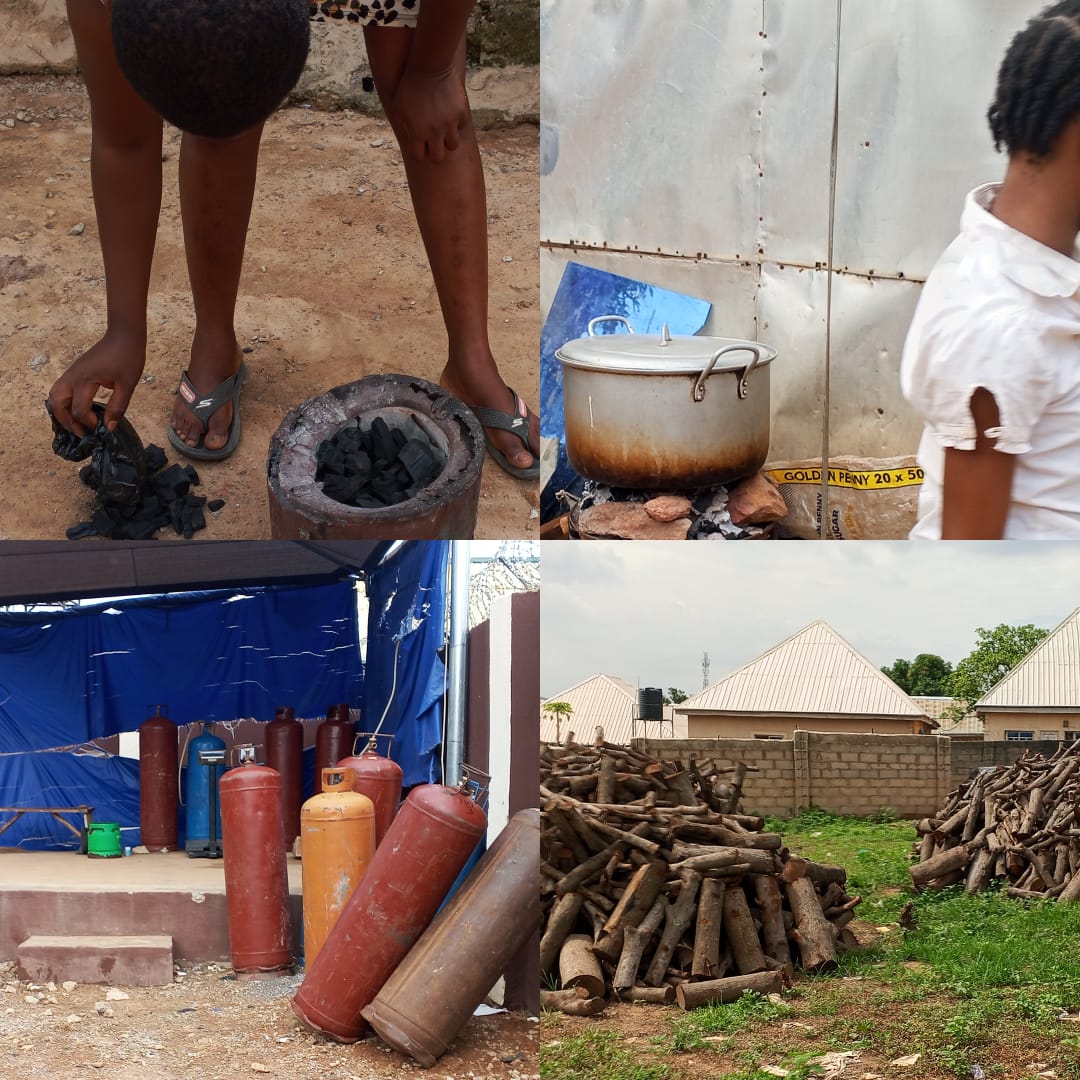
Shortly after dawn, before the heat settled over Abuja, Rejoice Jika stepped outside with a small metal stove and a handful of charcoal. The thirty-year-old mother of two had once cooked almost exclusively with gas. Now, as she crouched over the stove, coaxing a flame from blackened lumps of charcoal, the blue cylinder in her kitchen sat mostly unused.
“The last time I bought gas, it was about one thousand six hundred Naira per kilogram,” she said. “Now it is two thousand.”
The increase had happened quickly. Only a few years ago, she recalled, cooking gas sold for nearly half that amount. Filling her five-kilogram cylinder cost a little over five thousand naira. Today, the same cylinder costs more than ten thousand.
For many households, the mathematics no longer works.
Jika pointed to a sack of charcoal resting against a wall. A bag costs about seven thousand naira and can last her family for more than a month. A cylinder of gas, by contrast, may be empty within days.
“When I had gas, I didn’t think about charcoal or firewood,” she said. “Now I use both.”
Across Abuja, a city that has long presented itself as modern Nigeria’s carefully planned capital, households are quietly returning to older fuels. In kitchens, courtyards and narrow spaces between apartment blocks, charcoal stoves have reappeared. Firewood, once associated largely with rural communities, is becoming a familiar sight in urban neighbourhoods. What began as a response to rising living costs is producing consequences that stretch far beyond the household budget, reaching into forests hundreds of kilometres away.
For years, policymakers and environmental advocates encouraged Nigerians to move away from wood-based fuels toward cleaner sources of energy. The transition was never complete, but it was visible. Families that could afford it increasingly adopted liquefied petroleum gas. The switch promised cleaner air inside homes, reduced pressure on forests and faster cooking
Now, many of those gains appear fragile.
“I have been using gas for more than ten years,” Ifeanyi Okonkwo, a father of two, told the reporter. He remembers when a kilogram of gas cost only a fraction of today’s price. Recently, he arrived at a filling station expecting to pay around one thousand six hundred naira per kilogram. Instead, he was told the price had climbed to two thousand. Some stations were charging even more.
“We are finding it very difficult to buy gas now,” he said.
Like many residents, he has begun supplementing gas with charcoal. He dislikes firewood, which stains cooking pots and sends smoke drifting through crowded compounds, but charcoal presents its own inconveniences. It burns slowly and requires time to prepare. For families trying to get children to school in the morning, those extra minutes matter.
Yet convenience is becoming a luxury.
For households already struggling with transport costs, school fees and rent, energy is competing with every other necessity. A worker earning one hundred thousand naira a month can easily spend a quarter of that income on cooking gas alone.
The shift is also visible from the other side of the market. Chinedu Johnson, a gas retailer in Abuja, says customers increasingly purchase only a kilogram or two at a time. Sales that once reached dozens of cylinders a day have fallen sharply.
“People are managing with charcoal and firewood now,” he said.
The consequences of that choice extend beyond the city.
Jimoh Musa Yusuf, a lecturer and environmental researcher, sees a connection between rising gas prices and growing pressure on Nigeria’s forests. Along roads in parts of Nasarawa, Niger and Kogi States, he says, charcoal is openly traded on a commercial scale. Trucks carry it to markets across the country, feeding a demand that grows whenever cleaner fuels become unaffordable.
“People are looking for the cheapest source of energy they can find,” he said.
The paradox is difficult to miss. At the very moment when governments and environmental organisations promote cleaner energy and climate action, economic hardship is pushing many households in the opposite direction. The energy transition, often discussed in conference halls and policy documents, collides daily with the realities of family budgets.
In Abuja’s kitchens, climate policy is not an abstract debate. It is measured in kilograms of gas, sacks of charcoal and the cost of preparing a meal.
Related posts