

AMBO: The Making of The Next Governor of Osun
BY PRINCE ADEYEMI SHONIBARE
There are states in Nigeria, and then there is Osun. Osun is not merely another administrative entity on the map of Nigeria. It is a land with centuries of history, civilisation, spirituality, scholarship, enterprise and cultural influence. It is part of the ancient Land of Oduduwa and home to Great Ife, one of the foremost centres of African civilisation.
To understand Osun is therefore to understand a vital part of the Yoruba story and an important chapter in the history of Africa.
This is the land of Ile Ife, traditionally regarded as the cradle of Yoruba civilisation. It is the home of the extraordinary Ife artistic tradition, whose bronze and terracotta works have attracted scholars, museums and cultural institutions across the world. It is the seat of the Ooni of Ife and a living traditional institution connecting contemporary society with an ancient civilisation.
It is also home to the Osun Osogbo Sacred Grove, a UNESCO World Heritage Site, and to Erin Ijesa Waterfalls, historic palaces, sacred landscapes, festivals, arts, crafts and traditions that give Osun an extraordinary tourism proposition.
Osun is equally a land of scholarship.
Ile Ife hosts Obafemi Awolowo University, formerly the University of Ife, one of Nigeria’s foremost citadels of learning. Generations of Nigerians and Africans have passed through its classrooms, laboratories and lecture theatres, contributing to medicine, law, engineering, science, economics, public administration, politics, business and the arts.
Yet a paradox remains.
How can a state with such history, intellectual capital, agricultural capacity, tourism assets, cultural wealth and mineral resources remain economically below the level its inheritance suggests?
That is the Osun question.
And as the 2026 governorship election approaches, that question has acquired a sharper political meaning.
The issue cannot simply be who occupies Government House in Osogbo. The deeper question is what kind of leadership can convert Osun’s inheritance into productive wealth, modern infrastructure, jobs, investment, security and a higher quality of life.
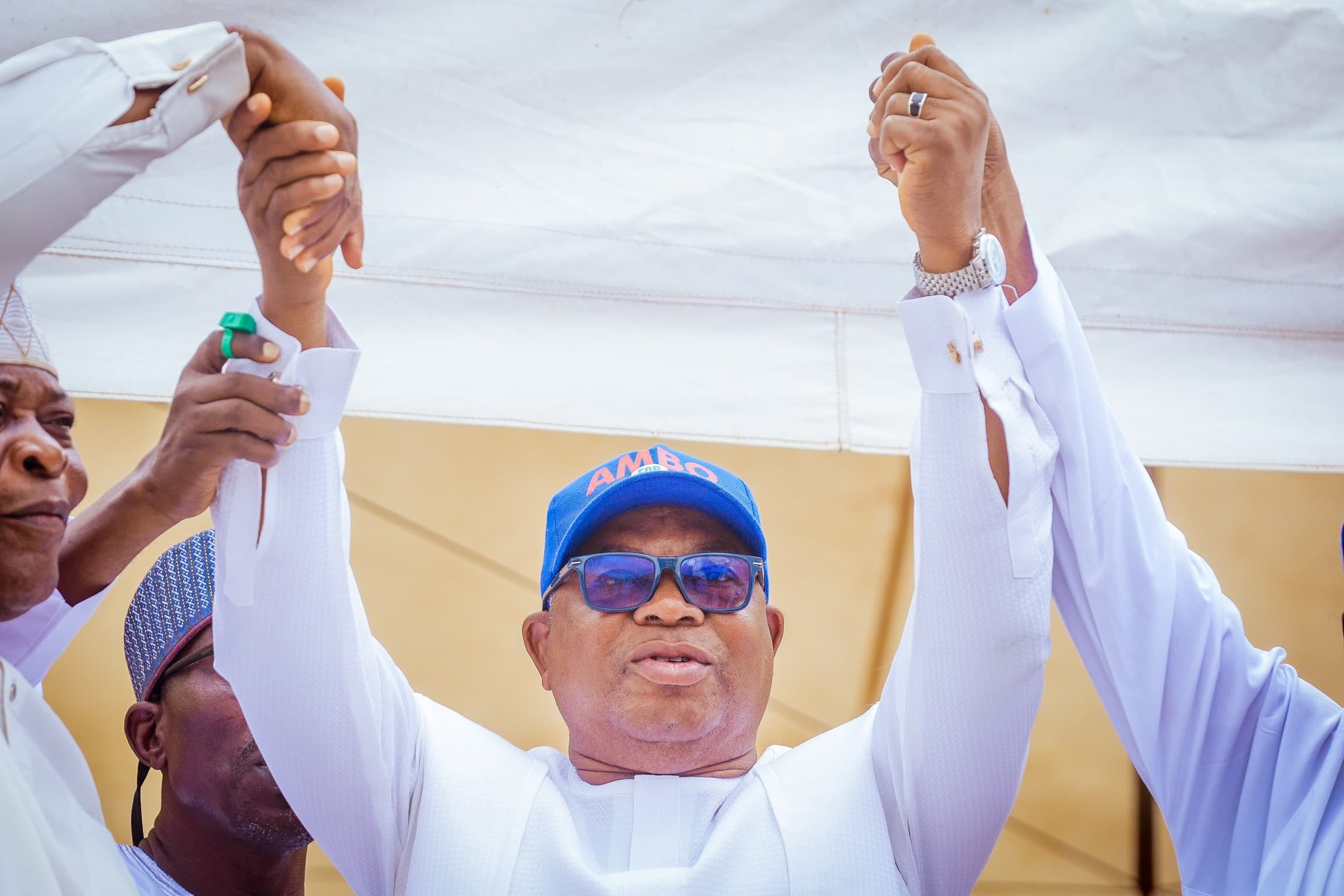
It is within this context that the story of Alhaji Munirudeen Bola Oyebamiji, popularly known as AMBO, deserves serious examination.
Leadership is not merely the ability to win an election. Leadership is the capacity to understand an opportunity, assemble competent people and translate that opportunity into measurable results.
THE MAN BEHIND AMBO
Alhaji Munirudeen Bola Oyebamiji was born on 17 November 1965 and hails from Ikire in Osun State.
His educational journey began at ADC Primary School, Oke Ada, where he studied from 1971 to 1977. He proceeded to Ayedaade Grammar School, Ikire, from 1978 to 1982, before attending The Polytechnic, Ibadan, where he studied Banking and Finance and obtained his Higher National Diploma between 1985 and 1988.
His academic journey continued into postgraduate education. He holds a Master’s degree in Public Administration from Lagos State University, Ojo, and a Master’s degree in Business Administration from the University of Ado-Ekiti.
His professional development has included banking and economic institutions, including the Chartered Institute of Bankers of Nigeria and professional bodies associated with economics and enterprise risk management.
The importance of this background lies not merely in the number of certificates, but in the integration of finance, business, public administration, risk management, investment and economic planning.
These are not peripheral subjects in modern governance. They are central to the administration of a state.
FROM BANKING TO CORPORATE MANAGEMENT
AMBO’s professional career began in banking.
In 1989, he joined Wema Bank Plc. He later moved to Trans International Bank in 1998 as a Senior Manager and rose to Principal Manager, serving as Head of the Lagos Region.
He subsequently served as Head of Business Development at Spring Bank Plc between 2005 and 2009 before joining Enterprise Bank, where he headed the Retail Business Unit.
The corporate environment exposed him to financial management, investment decisions, business development, customer relations, risk management, institutional performance and accountability.
There is an important distinction here.
Politics teaches mobilisation.
Business teaches execution.
Good governance requires both.
THE OSUN INVESTMENT EXPERIENCE
In 2012, AMBO transitioned into state enterprise management as Managing Director of Osun State Investment Company Limited.
His tenure has been associated with substantial growth in the company’s turnover, with a figure of approximately 700 percent frequently cited in accounts of his performance.
But the larger lesson is more important than the number.
A state-owned enterprise must not exist merely because government owns it.
It must produce value. It must attract investment. It must create employment. It must contribute to the economic life of the state.
A state does not become prosperous by ownership alone. It becomes prosperous through professional management and productive deployment of assets.
THE FINANCE COMMISSIONER
AMBO subsequently served as Commissioner for Finance, Budget and Economic Planning in Osun State.
That responsibility placed him at the centre of the state’s fiscal architecture.
A Finance Commissioner must understand revenue, expenditure, debt management, budgeting, fiscal sustainability and economic planning.
A budget is not merely a collection of figures.
It is a statement of priorities.
It tells citizens what government considers important. It tells investors where government is going. It determines whether scarce resources are consumed or converted into productive assets.
This experience is particularly relevant to Osun’s next chapter. Because the challenge is not only how much money government receives. The greater challenge is what government does with the money.
THE FARMER
There is another dimension of AMBO’s profile that deserves attention.
Since 1997, he has been associated with White Green Farm at Onireke Village, Ikire. The farm has been involved in the production and processing of plantain, plantain flour, yam flour, palm oil, palm kernel oil, maize and other agricultural products. This matters because agriculture cannot be fully understood from an office.
Agriculture is land, labour, climate, mechanisation, storage, processing, logistics, finance and markets. The farmer understands production realities. The banker understands capital. The corporate manager understands performance. The administrator understands institutions. The finance professional understands public resources. The governor must integrate all these dimensions for the public good.
OSUN’S ECONOMIC PARADOX
Osun’s problem is not simply a shortage of resources. It is the incomplete conversion of those resources into wealth. Here, the state’s internally generated revenue tells an important story.
The figure that should be used carefully is the official annual IGR figure rather than the simplified claim that Osun generates exactly ₦4.5 billion every month. Osun State reported IGR of approximately ₦54.7 billion for 2024, following a substantial increase from 2023. That means the frequently quoted ₦54 billion figure is broadly consistent with the state’s reported annual performance, but monthly revenue is not necessarily uniform throughout the year.
That increase should be acknowledged. But it should also provoke a more ambitious question:
If Osun can substantially increase internally generated revenue through administrative and collection reforms, what could happen if the underlying economy itself were dramatically expanded? The answer should not primarily be higher taxation.
It should be economic expansion.
More businesses. More industries. More tourism. More mineral processing. More agricultural production. More manufacturing. More logistics. More technology. More jobs. More investment. More formal economic activity. That is how a state creates a broader and more sustainable revenue base.
The principle is simple: Grow the economy, and revenue will grow with it.
FROM FEDERAL ALLOCATIONS TO FISCAL SELF-RELIANCE
There is nothing inherently wrong with a state receiving federal allocations. They are part of Nigeria’s constitutional fiscal structure, and states are entitled to their statutory share of federally collected revenues. The danger lies in permanent dependence.
Osun should aspire to move from a state that waits for monthly allocations to a state that increasingly creates wealth from its own productive capacity.
Federal inflows should become development leverage. They should help finance infrastructure that stimulates private investment. They should help open economic corridors. They should support electricity, water, roads, healthcare, education and digital infrastructure. They should help create the conditions under which the private sector can produce more wealth. The ultimate objective should be fiscal resilience. Not a state permanently holding out a feeding bowl. Not a state waiting for the next allocation before it can think about development.
But a state increasingly capable of financing a greater proportion of its own development while contributing more significantly to Nigeria’s overall economic output.
The transformation should be: From federal allocation to economic leverage. From consumption to production. From dependency to diversification. From recurrent expenditure to capital formation. From survival budgeting to investment-led development.
The ambition should ultimately be for Osun not merely to consume a share of Nigeria’s federation resources, but to become sufficiently productive that its people, businesses and industries contribute substantially to the federation’s wealth.
THE OSUN IGR QUESTION
An annual IGR in the region of ₦54.7 billion is progress. But for a state with Osun’s human capital, universities, agricultural economy, tourism potential, commercial centres and mineral resources, it should also provoke ambition. The question is not whether ₦54.7 billion is good or bad in isolation. The question is:
What should Osun’s IGR become when its economy is properly industrialised?
Imagine mineral processing companies paying legitimate taxes.
Imagine agricultural processing companies operating across the three senatorial districts.
Imagine tourism businesses, hotels, transport operators and cultural enterprises contributing to the tax base.
Imagine technology companies and digital entrepreneurs establishing operations in Osun.
Imagine industrial parks generating thousands of formal jobs.
Imagine a formal housing and property economy expanding the state’s revenue base.
Imagine commercial agriculture operating at scale.
That is how IGR becomes a consequence of prosperity rather than a burden imposed on citizens.
FROM CIVIL SERVICE TO DEVELOPMENT SERVICE
Osun’s civil service must become a stronger instrument of development. Civil servants are not merely administrative personnel. They are institutional capital. The state should invest in continuous professional development, digital governance, data systems, procurement efficiency, project management and performance measurement.
A modern civil service should be able to analyse economic data, attract investment, manage projects, monitor contractors and evaluate outcomes. The objective is not to weaken the civil service. It is to make it more professional, productive and development-oriented. Osun needs a public service capable of supporting industrialisation.
Government should gradually move from a culture of administering programmes to a culture of managing measurable outcomes.
The civil servant of the future should not simply process files. He or she should help build the economy.
OSUN: A STATE THAT DESERVES RENEWAL
Created on 27 August 1991 from the former Oyo State, Osun comprises 30 Local Government Areas and numerous historic communities, including Osogbo, Ile Ife, Ilesa, Iwo, Ede, Ikire, Ikirun, Ila Orangun, Ejigbo, Ilobu and Gbongan.
The 2006 national census recorded a population of 3,423,535, with subsequent figures being projections pending a new national census. The state covers approximately 14,875 square kilometres and shares boundaries with Kwara, Oyo, Ogun, Ondo and Ekiti States.
Its geography presents significant economic advantages. Its agricultural land supports cocoa, cassava, maize, plantain, beans and oil palm. Its urban centres provide markets. Its universities provide human capital. Its cultural heritage supports tourism. Its mineral resources provide a foundation for industrial development. Yet Osun requires more than isolated interventions. It requires comprehensive statewide renewal.
OSUN MUST REURBANISE
Development cannot be concentrated in a handful of locations. If Ede is experiencing significant development, that is welcome. But Ede cannot be the exception to the rule.
Osun needs a statewide urban renewal and reurbanisation programme.
Osogbo requires continued modernisation as the state capital. Ile Ife requires investment reflecting its extraordinary global historical significance. Ilesa requires regeneration. Iwo requires expansion. Ikire requires modern infrastructure. Ikirun requires commercial revitalisation. Ejigbo requires agricultural and industrial development. Ila Orangun requires strategic economic positioning. Ilobu, Gbongan and other towns require structured development.
The objective should be to create a network of economically productive towns rather than one dominant centre surrounded by underdeveloped communities. Every senatorial district should have identifiable economic engines. Every local government should have a development plan. Every major town should know what economic role it is expected to play.
RURAL OSUN MUST NOT BE NEGLECTED
The transformation of Osun cannot stop at city limits. Rural communities are where much of the state’s agricultural wealth is produced. Rural roads must connect farms to markets. Water must support communities and agricultural production. Primary healthcare must be accessible and functional. Schools must provide quality education. Agricultural extension services must be strengthened. Storage facilities must reduce post-harvest losses. Processing facilities must be brought closer to production zones. Telecommunications must reach rural communities. Electricity must reach farms, businesses, health centres and schools. Rural development is not charity. It is economic policy.
ELECTRICITY AND DIGITAL OSUN
Electricity is no longer merely a household utility. It is economic infrastructure. Farmers require electricity for irrigation, storage and processing. Manufacturers require reliable power. Hospitals require electricity for medical equipment. Schools require electricity for digital learning. Businesses require reliable power to remain competitive.
Osun therefore needs a comprehensive rural electrification strategy developed in partnership with the Federal Government, electricity distribution stakeholders, private investors and development partners. Solar mini-grids, distributed energy systems, grid expansion and dedicated power solutions for agricultural and industrial clusters should all be considered according to local conditions. The same principle applies to telecommunications.
A young person in Ikire, Iwo, Ila Orangun or a rural community should not be disadvantaged simply because of geography. Digital connectivity is now infrastructure.
Osun should work with federal agencies, telecommunications companies and private investors to eliminate connectivity black spots and extend reliable broadband and mobile services into underserved communities.
MINERAL OSUN
One of Osun’s most important economic opportunities lies beneath its soil. Current Osun investment information identifies significant mineral opportunities and reports that the state has acquired 19 mineral titles and licences: 12 for gold, five for quartz and feldspar, and two for lead and zinc. The state’s investment platform describes opportunities across the mineral value chain and highlights gold projects as well as the potential for mineral buying and processing centres. This is not simply a mining story. It is an industrialisation story.
Gold should not simply leave Osun as raw material. Quartz and feldspar can support industrial manufacturing. Lead and zinc can support downstream industries where environmentally and technically appropriate. Kaolin and clay can support ceramics and related manufacturing. Granite and construction materials can support local industrial value chains. Gemstones can support cutting, polishing, jewellery manufacturing and tourism. The objective should be to retain more value inside Osun.
FROM ILLEGAL MINING TO LEGAL MINING AND VALUE ADDITION
Illegal mining must be confronted decisively. It can cause environmental damage, weaken legitimate revenue collection, undermine community interests and create security challenges. But enforcement alone is not enough. Osun needs a complete mineral governance architecture. It should combine geological information, transparent licensing, formalisation of artisanal and small-scale miners, environmental protection, community participation, security, technology, financing and investor facilitation.
The objective should be: From illegal extraction to legal mining. From raw minerals to processed products. From resource depletion to sustainable wealth. From mineral deposits to industrial clusters.
Osun’s current investment framework itself emphasises value-chain opportunities and the establishment of mineral buying and processing centres. That direction deserves to be developed into a much larger economic strategy. The state should seek investors who will not simply extract. It should seek investors who will process. It should negotiate for jobs, technology transfer, local procurement, skills development, environmental safeguards and community benefits. The philosophy must be: Do not merely sell Osun’s resources. Build industries around them.
AGRICULTURE AS INDUSTRY
The same principle applies to agriculture. Cocoa should feed processing industries. Cassava should support flour, starch and industrial products. Plantain should support packaged foods and flour production. Palm produce should support oil processing and downstream manufacturing. Maize should support food processing and livestock industries.
Farmers need access to mechanisation, affordable finance, extension services, storage, processing, logistics and markets. The farmer must no longer be treated as merely the first person in a commodity chain. The farmer must become a participant in the value chain.
TOURISM: TURNING HERITAGE INTO ECONOMIC VALUE
Osun possesses something that money cannot manufacture:
History.
A visitor to Ile Ife encounters the heritage of Great Ife.
A visitor to Osogbo encounters the Osun Osogbo Sacred Grove and a cultural tradition recognised internationally.
A visitor to Erin Ijesa encounters a remarkable natural landscape.
Across the state are palaces, festivals, crafts, cuisine, music, fashion and cultural traditions.
Tourism should therefore be treated as an economic sector.
Hotels benefit. Restaurants benefit. Transport operators benefit. Tour guides benefit. Artists benefit. Craftsmen benefit. Fashion designers benefit. Digital creators benefit. Farmers benefit.
Osun should develop tourism corridors, improve access roads, strengthen security, support hospitality investment and professionally package festivals for international audiences. Its festivals can become international cultural products. Its heritage sites can become professionally managed destinations. Its hospitality sector can become a major employer. Osun must not merely inherit its history. It must preserve it, promote it and responsibly build economic value around it.
THE LAND OF ODUDUWA AND THE BUSINESS OF HISTORY
There is another reason Osun’s tourism opportunity is different. This is not manufactured history. This is living history. Great Ife, the traditions of Oduduwa, the Ooni institution, the artistic heritage of Ife, the Osun Osogbo Sacred Grove, the Osun Osogbo Festival and the cultural traditions of the Ijesa, Iwo, Ibolo and Igbomina communities provide a tourism ecosystem with enormous international potential.
A properly packaged Osun cultural circuit could connect heritage, archaeology, traditional institutions, festivals, cuisine, music, fashion, crafts, hospitality and modern creative industries.
This is where culture becomes commerce without losing its soul. The objective should not be to commercialise sacred heritage irresponsibly. It should be to create a professional economic ecosystem around heritage while protecting its integrity.
THE GOVERNOR AS CEO
If Osun were a company collectively owned by its citizens, what would its shareholders demand from a Chief Executive Officer? They would demand competence. They would demand experience. They would demand financial discipline. They would demand strategic thinking. They would demand investment. They would demand transparency. They would demand results. Why should the standard be lower because the organisation is called a state? Government is the people’s enterprise. The governor is its chief executive. The people are the shareholders. Public institutions are the operating structure. Public resources are the capital. The quality of life of citizens is the ultimate performance indicator. One leadership principle should therefore guide the selection of any governor: The best leader is not necessarily the person who knows everything; it is the person who knows what must be done, who should do it, and how to measure whether it has been done.
AMBO’S DIFFERENCE
The case being advanced for AMBO rests substantially on preparation.
Related posts