


Bauchi 2027: Why The Cap Fits Yusuf Maitama Tuggar
BY ADEBAYO ADEOYE
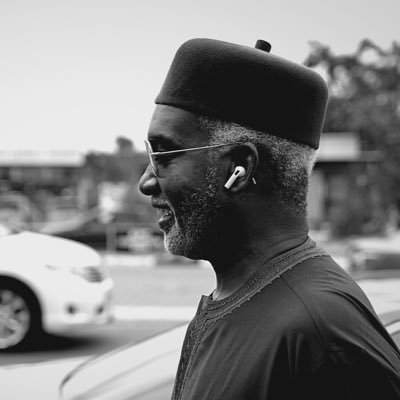
Yusuf Maitama Tuggar is one of rare personality— whose presence is defined not by noise, but by nuance; not by spectacle, but by substance. And in the unfolding political conversation within Bauchi State, a compelling argument continues to gather momentum: the cap, quite simply, fits.
Tuggar’s story is not the typical tale of a career politician groomed solely within the familiar corridors of local power. Instead, it is a narrative shaped by global exposure, intellectual depth, and a keen understanding of how governance must evolve in a rapidly changing world. His diplomatic career, particularly his service on the international stage, endowed him with a worldview that stretches far beyond the immediate—one that embraces strategic thinking, economic diplomacy, and institutional reform.
Yet, what makes his profile particularly intriguing is how seamlessly this global sophistication intersects with a grounded connection to home. Beneath the tailored diplomacy and cosmopolitan polish lies a son of Bauchi, attuned to the rhythms, struggles, and aspirations of his people. It is this duality—global in outlook, local in commitment—that fuels the growing perception of his readiness for higher responsibility.
The question, then, is not merely about ambition, but about alignment. Why does the cap fit Tuggar at this moment in Bauchi’s political evolution? The answer lies in a convergence of factors—timing, temperament, and trust.
First, timing. Bauchi, like many states in Nigeria, finds itself at a crossroads. The demands of a youthful population, the urgency of economic diversification, and the pressing need for infrastructure and innovation have created a climate where conventional leadership approaches are increasingly being questioned.
In this environment, Tuggar’s forward-thinking disposition offers a refreshing departure from the predictable. He speaks the language of the future—technology, investment, partnerships—while maintaining a firm grasp of present realities.
Then comes temperament. In a political culture often animated by grandstanding and brinkmanship, Tuggar’s measured approach stands out. He is deliberate, composed, and strategic—traits honed through years of navigating complex diplomatic terrains. This calm resolve, many believe, is precisely what is required to steer a state through the layered challenges of modern governance. He is not easily drawn into unnecessary theatrics; instead, he builds consensus, nurtures alliances, and focuses on long-term impact.
Trust, perhaps the most elusive currency in politics, is where Tuggar’s appeal deepens. Among a growing segment of the electorate—particularly the youth—there is a palpable desire for leadership that inspires confidence rather than mere compliance. Tuggar’s track record, his clarity of thought, and his refusal to indulge in political excesses have contributed to an image of credibility. He is seen not just as a contender, but as a custodian of possibility.
Of course, no political narrative in Bauchi is complete without acknowledging the complexity of its terrain. Power dynamics remain intricate, loyalties fluid, and the stakes undeniably high. Tuggar’s journey, therefore, is not without its tests. He must navigate entrenched interests, manage expectations, and translate goodwill into tangible political capital. Yet, it is within these very challenges that his strengths may prove most valuable.
His ability to bridge divides—between generations, between traditional structures and modern aspirations—positions him uniquely within the current discourse. He does not seek to discard the past; rather, he appears intent on building upon it, refining it, and aligning it with the demands of a new era.
For many observers, the symbolism of Tuggar’s candidacy extends beyond the individual. It represents a broader shift—a recalibration of what leadership should look like in contemporary Nigeria. It speaks to a yearning for competence over charisma, for vision over verbosity, for substance over style.
And so, as the political winds continue to swirl across Bauchi State, the narrative around Tuggar grows ever more compelling. The man and the moment appear to be in quiet conversation, each shaping the other, each moving toward a possible convergence.
In the final analysis, the question is no longer whether Tuggar belongs in the conversation—it is whether the conversation itself is ready for what he represents. For now, the consensus in many quarters is unmistakable: the cap does not merely rest on his head—it seems tailored for him, stitched with the threads of experience, perspective, and purpose.
If politics, at its best, is about matching preparation with opportunity, then Tuggar stands as a figure poised at that very intersection—ready, resolute, and, perhaps, right on time.
Related posts