

EFCC Transfers $60m Recovered From Oil Tycoon Azudialu-Obiejesi’s Nestoil To Lenders
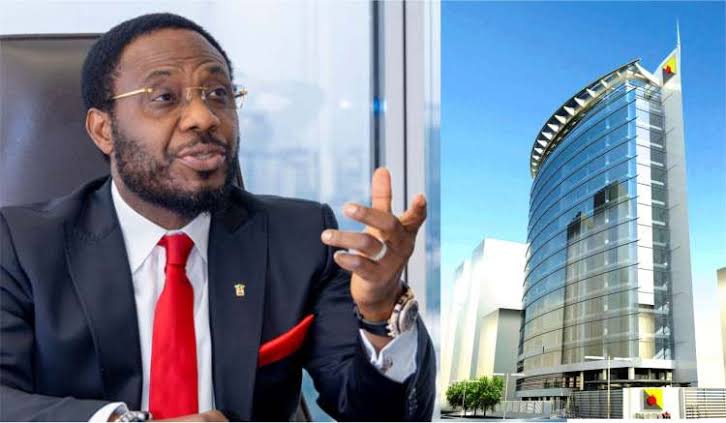
Ten weeks after the Supreme Court dissolved an asset freeze on Nestoil Limited, the Economic and Financial Crimes Commission (EFCC) has facilitated the recovery of US$60 million from the company and paid it to a consortium of lenders.
The payment was agreed at a meeting convened and chaired by the EFCC Chairman, Mr. Olanipekun Olukoyede, as part of a structured repayment plan discussed with Nestoil Limited.
The funds were transferred during the course of the Commission’s investigation into alleged criminal aspects of transactions involving Nestoil and its lenders.
A team of operatives from the EFCC Lagos Zonal Directorate 2, led by the Head of Investigation, Mr. Oguzi Moses, facilitated the payment.
The EFCC described the transfer as part of its commitment to promoting accountability, protecting the interests of financial institutions, and safeguarding depositors’ funds.
The consortium of lenders welcomed the payment but noted that it represents the first phase of the repayment process, with a substantial portion of the outstanding debt still to be settled.
The lenders reaffirmed their commitment to working with the EFCC and other stakeholders to continue the recovery process until the outstanding indebtedness is fully liquidated.
They also pledged to provide relevant documents to support the investigation.
The EFCC reaffirmed its resolve to pursue the investigation to its conclusion and to ensure the recovery of depositors’ funds in accordance with the law.
The $60 million recovery came about ten weeks after the Supreme Court set aside preservative orders obtained by the lenders.
On October 22, 2025, Justice Dehinde Dipeolu of the Federal High Court in Lagos granted an ex parte order against Nestoil, Neconde Energy, and their promoters, Ernest and Nnenna Azudialu-Obiejesi.
The order barred access to funds and assets across more than 20 banks and financial institutions, and authorized First Trustees Limited and FBNQuest Merchant Bank Limited, acting for the consortium, to take possession of Nestoil’s assets under receivership.
The Court of Appeal later issued interim orders in November 2025 freezing personal accounts and extending protection to the receiver-manager.
Nestoil and Neconde appealed.
On June 1, a five-member Supreme Court panel set the appellate orders aside.
Justice Stephen Jonah Adah, delivering the lead judgment, held that the Court of Appeal had exceeded its jurisdiction in granting an ex parte application when the matter was not properly before it.
The Supreme Court made no finding on whether the debt was owed and directed the parties back to the Federal High Court to litigate the substantive debt.
The lenders described the Supreme Court decision as not removing the receiver-manager or declaring that Nestoil owed no money.
They stated the outstanding sum as $1,084,157,611.20 alongside ₦469,426,076,115.87 arising under a common terms agreement.
The consortium is led by FBNQuest Merchant Bank Limited and First Trustees Limited, both subsidiaries of First Bank.
Other institutions in the consortium include Citibank Nigeria Limited, Central Securities and Clearing Systems Plc, Fidelity Bank Plc, Guaranty Trust Bank Plc, Globus Bank Limited, Keystone Bank Limited, OPay Limited, Polaris Bank Limited, Providus Bank Limited and Stanbic IBTC Bank Limited.
Nestoil is controlled by Ernest Azudialu-Obiejesi, who founded the energy conglomerate in 1991.
The Obijackson Group, which also includes upstream operator Neconde Energy, employs more than 3,000 Nigerians directly.
Neconde holds 45 percent of Oil Mining Lease 42, with Nigerian National Petroleum Company Exploration and Production Limited holding the remaining 55 percent.
A separate appeal marked SC/CV/48B/2026, in which Neconde challenges the Court of Appeal’s decision on legal representation, remains before the Supreme Court.
The EFCC stated that asset recovery remains central to its work under Olukoyede, with reported recoveries of over ₦566.32 billion and $411.57 million in roughly two years, alongside the forfeiture of 1,502 non-monetary assets.
Related posts