

Gas Politics: The Wicked Exclusion Of The South-East By The Federal Government And The Complicity Of Igbo Leadership
BEN AHANONU
The structural exclusion of the South-East geopolitical zone from Nigeria’s National Gas Master Plan (NGMP) remains one of the most blatant, economically self-sabotaging* *contradictions in modern Nigerian governance. It paints a painful picture of systemic marginalisation: a resource-rich region is* *systematically stripped of its natural wealth to power distant industrial hubs while its own* *manufacturing clusters are left to rot in darkness. This is the classic, tragic tale of starving the goose that lays the golden egg. However* , *while the Federal Government’s discriminatory infrastructural blueprint deserves fierce* *condemnation, a harsher, more uncomfortable truth must be confronted closer* *to home—the unconscionable silence and political docility of the South-East’s own elected leadership.
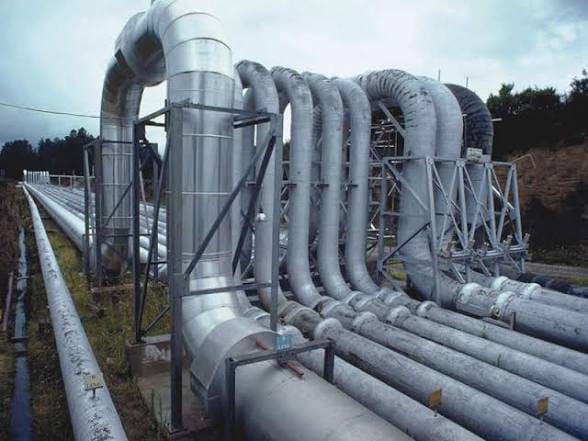
*When the Nigerian Gas Master Plan was originally conceptualised, regional advocates pushed for a 121-kilometre* *High-Pressure Gas Transmission Pipeline connecting Aba to Owerri, Enugu, Onitsha, and Nnewi* . *This proposal was ultimately bypassed by the federal authorities, meaning the local* *manufacturing hubs must rely on expensive trucking of Compressed Natural Gas (CNG) rather than direct piped grid access.*
Geographically and geologically, the resource profile of the South-East is undeniable. Imo State stands proudly as the highest gas-producing state in Nigeria, harbouring immense reserves. In the Anambra Basin, Anambra State sits precariously on an estimated 30 trillion cubic feet of natural gas—representing a staggering 15 per cent of the nation’s total reserves. Meanwhile, Abia, Enugu, and Ebonyi boast heavily documented, proven oil and gas deposits beneath their soil. Yet, under the Federal Government’s energy distribution framework, high-pressure infrastructure like the Ajaokuta–Kaduna–Kano (AKK) pipeline project is being aggressively constructed to siphon gas out of the South-East, bypassing its immediate borders to fuel industrial centres in Lagos, Kano, and Kaduna.
Consequently, the massive, self-sustaining industrial engines of Aba, Nnewi, Enugu and Onitsha are deliberately starved of the very energy generated from their own backyard. These manufacturing hubs, famous for their indigenous entrepreneurship, fabrication and textile production, are forced to rely on expensive, carbon-heavy diesel generators. This dramatically increases production costs, kills local jobs and renders Eastern-made goods less competitive in both domestic and continental markets. The historic Ariaria International Market in Aba and the automotive manufacturing clusters in Nnewi require dedicated, high-pressure gas pipelines to power heavy machinery, fuel foundry furnaces and sustain continuous production lines. Without this basic energy foundation, the region’s legendary industrial ingenuity is effectively crippled.
*The massive $4.2 billion ANOH gas project in Assa North, Imo State, extracts an immense volume of gas. However, instead of being* *distributed locally to fuel commercial industries in Aba, Nnewi, Onitsha, or* *Enugu, the infrastructure is built to transport the gas out of the region westward* *to Lagos/Ogun and northward via the national grid—which is not fair.*
The economic consequences of this deliberate snub have reached a boiling point. Under President Bola Tinubu, historic constitutional reforms finally moved electricity from the exclusive legislative list to the concurrent list, granting states the absolute legal authority to generate, transmit, and distribute their own power. Progressive administrative steps have been taken locally; Anambra and Imo, for instance, have already fully constituted their own electricity boards to drive regional energy security. Yet, a legal framework without raw energy is completely useless. State governments can pass all the power sector laws they want, but without access to the national gas pipeline network to fire industrial thermal power plants, the South-East cannot turn the lights on, let alone power its manufacturing sectors. This is economic strangulation by design, executed through an infrastructure plan that treats the region as an extraction zone rather than an equal partner in national development.
This disparity has drawn sharp criticism from regional leaders who can no longer pretend everything is well. Governors like Anambra’s Charles Soludo and Enugu’s Peter Mbah have publicly questioned the exclusion of gas-rich South-East states from federal energy plans. Governor Soludo recently lamented that it is deeply tragic for Anambra to sit on such vast gas wealth yet be completely omitted from the master plan, effectively blocking the state from driving its own industrialisation. Similarly, Governor Mbah openly queried this infrastructural boycott while hosting the Senate Committee on the South East Development Commission (SEDC), demanding an immediate regional gas pipeline network. However, critics argue that these sporadic, isolated complaints highlight a much broader, systemic failure of the region’s political class to protect the economic future of their people.
The ultimate tragedy is that the South-East is not lacking in political representation at the federal level. The zone boasts five state governors, 15 senators, over 40 members of the House of Representatives, and influential cabinet ministers—including Works Minister Dave Umahi, who enjoys close personal ties to President Tinubu. Why are these so-called Igbo leaders so quiet? While these politicians actively champion national political alignments and frequent Aso Rock for high-profile handshakes and photo opportunities ahead of the 2027 elections, their political proximity has yielded almost nothing in terms of transformative federal projects. As Governor Mbah rightly questioned, what is the true value of political closeness to the centre if it cannot attract a single gas pipeline to secure the livelihoods of the eastern electorate?
Indeed, this deficit in active leadership puts the purpose of newly created regional institutions to the test. The South East Development Commission (SEDC) was established precisely to tackle these systemic infrastructural gaps and rebuild the region’s broken foundations. If the SEDC cannot successfully lobby for, fund or execute a comprehensive regional gas pipeline and a unified railway network linking the five South-Eastern states, its institutional value remains entirely compromised. Silence from the region’s elite is no longer acceptable; it has evolved into active complicity. The South-East cannot afford to remain an oil- and gas-producing region merely on paper while gaining minimal domestic utilisation from its natural endowments. For the region to survive, the Federal Government must immediately include the South-East in the national gas grid, and Igbo leaders must wake up, grow a spine and aggressively fight for the infrastructure their people deserve.
*Prince Ben AHANONU,*
*Principal Partner,*
*Ben AHANONU and* *Associates*
*Email:* benahanonu@gmail.com
Related posts