
How Odunmbaku Is Redefining Participatory Governance In Ojodu LCDA Through Inclusive Leadership
BELLO AKINKUNMI YAKUB
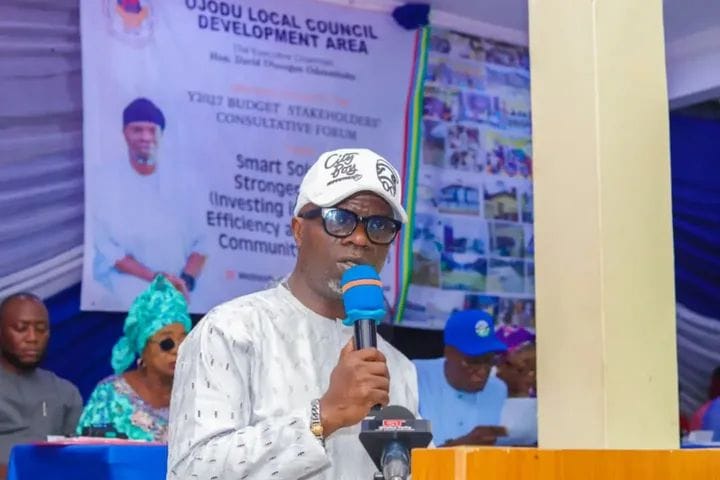
2027 Budget Stakeholders’ Forum showcases citizen-driven planning, community ownership and accountable leadership.
There was a time in Nigeria’s political history when citizens woke up to martial songs announcing military takeovers, followed by decrees that became law without public consultation or consideration of the people’s interests. Government decisions were largely imposed from above, leaving citizens with little opportunity to influence policies that directly affected their lives.
Although democracy has restored constitutional governance, genuine citizen participation in decision-making remains a major test of leadership. In Ojodu LCDA, however, the administration of Hon. David Olusegun Odunmbaku has continued to demonstrate how governance can be transformed by placing the people at the centre of policy formulation, budgeting and implementation.

This commitment was reaffirmed at the 2027 Budget Stakeholders’ Consultative Forum, held on Wednesday, November 11, 2026, at the Council Hall, Ojodu LCDA. The distinguishing feature of Odunmbaku’s approach is the deliberate inclusion of every segment of society in determining community development priorities at every budgeting cycle.
Traditional rulers, religious leaders, market women, youth representatives, community leaders, artisans and persons living with disabilities are given the opportunity to organise themselves according to their respective wards, deliberate on pressing needs and submit preferred projects for consideration in the 2027 Budget.
Through these ward-based breakout sessions, residents move beyond being passive beneficiaries to becoming active contributors to government planning. They identify projects, communicate community needs and influence resource allocation.
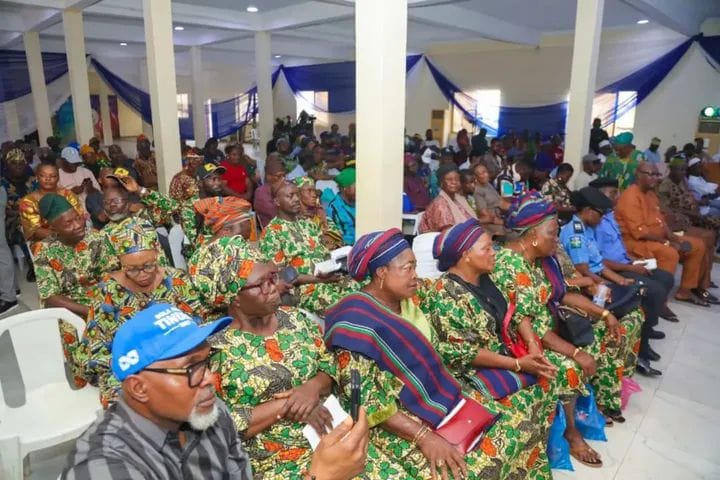
More importantly, this process creates a sense of ownership. When residents participate in identifying projects from the outset, they become more invested in their successful execution and are better positioned to monitor implementation, provide feedback and collaborate with the government.
The initiative represents an innovative bottom-up approach to governance, ensuring that development priorities emerge from the communities rather than being determined exclusively by administrative assumptions.
By listening directly to residents, the council can identify the most pressing needs across its six wards and channel available resources towards projects with the greatest public benefit. Whether in road construction, drainage, healthcare, education, street lighting or economic empowerment, the objective is to ensure that public funds address genuine community needs.

This is particularly important in an environment of competing demands and limited resources. It strengthens fiscal responsibility by ensuring that every naira allocated to development delivers meaningful value to the people.
Beyond budget preparation, the stakeholders’ forum also provides an effective two-way communication channel between government and residents. It enables the administration to assess the impact of its policies, receive commendations, identify areas requiring improvement and understand emerging community challenges.
The commendations by representatives of different wards concerning previously completed projects further demonstrate the value of community-driven planning. Such feedback provides an important indication of how government interventions are addressing the expectations of beneficiaries.

It also reinforces the democratic principle that the most powerful office in a democracy is the Office of the Citizen. Citizens must have opportunities not only to elect leaders but also to influence policies, monitor projects and hold public officeholders accountable throughout their tenure.
In his opening remarks, Odunmbaku reaffirmed that the 2027 Budget would consolidate existing achievements while addressing emerging community needs through the HEYS RELOADED Agenda (Health, Education, Youth Empowerment and Social Infrastructure).
He emphasised the need to strengthen primary healthcare, improve educational outcomes, expand digital opportunities, accelerate infrastructure development and support local economic growth. He also assured stakeholders that their contributions would inform budget preparation, project prioritisation and resource allocation, stressing that development ambitions must remain realistic and financially sustainable.
THE NEXT STAGE: TRANSLATING COMMUNITY PRIORITIES INTO BUDGETARY PROVISIONS
In furtherance of this commitment, the council’s budget retreat commences today, November 26, 2026, with a major focus on reviewing and incorporating the outcomes and recommendations of the 2027 Budget Stakeholders’ Consultative Forum into the proposed budget framework.
This critical stage will bring the budget preparation process closer to translating the people’s submissions into practical policy decisions, project priorities and financial allocations. It demonstrates that the stakeholders’ engagement is not merely an exercise in consultation but an integral part of the council’s actual planning and budgeting process.
The retreat provides an opportunity for the relevant officials and budget planners to review the submissions, assess their feasibility against available resources, establish priorities and align proposed interventions with the administration’s development agenda.
Ultimately, it is this connection between community consultation and actual budget formulation that gives participatory governance its true meaning.
The inclusive governance approach also received commendation from the Chairman of the Community Development Committee, Pastor Segun Fayemi, and the representative of Persons Living With Disabilities, Comrade Abbas. Both praised the Chairman for creating an enabling environment where different segments of society have a voice and a sense of belonging in government planning and decision-making.
They also acknowledged his open-door policy, which has strengthened communication and coordination between the council and its communities, promoting more responsive and accessible governance.
The Ojodu LCDA experience offers valuable lessons for other local governments and other levels of government. Participatory budgeting should go beyond fulfilling statutory requirements to become an established mechanism for policy formulation, project prioritisation, implementation and evaluation.
Other administrations can adopt ward-based consultations, inclusive stakeholder representation, community project monitoring and regular feedback mechanisms to improve transparency, accountability and service delivery.
Good governance should not be measured solely by the number of projects executed but also by how effectively government listens and responds to the people.
Odunmbaku’s approach demonstrates that inclusive governance means giving citizens more than a voice; it means giving them a genuine stake in the decisions that shape their communities.
The enduring lesson from Ojodu LCDA is simple: sustainable development happens when government does not merely govern the people, but works with them to determine how best they should be served.
— Bello Akinkunmi Yakub is a Media Aide to the Chairman of Ojodu LCDA.
Related posts