

How Offodile Ignited The Anambra Struggle
IFEANYICHUKWU AFUBA
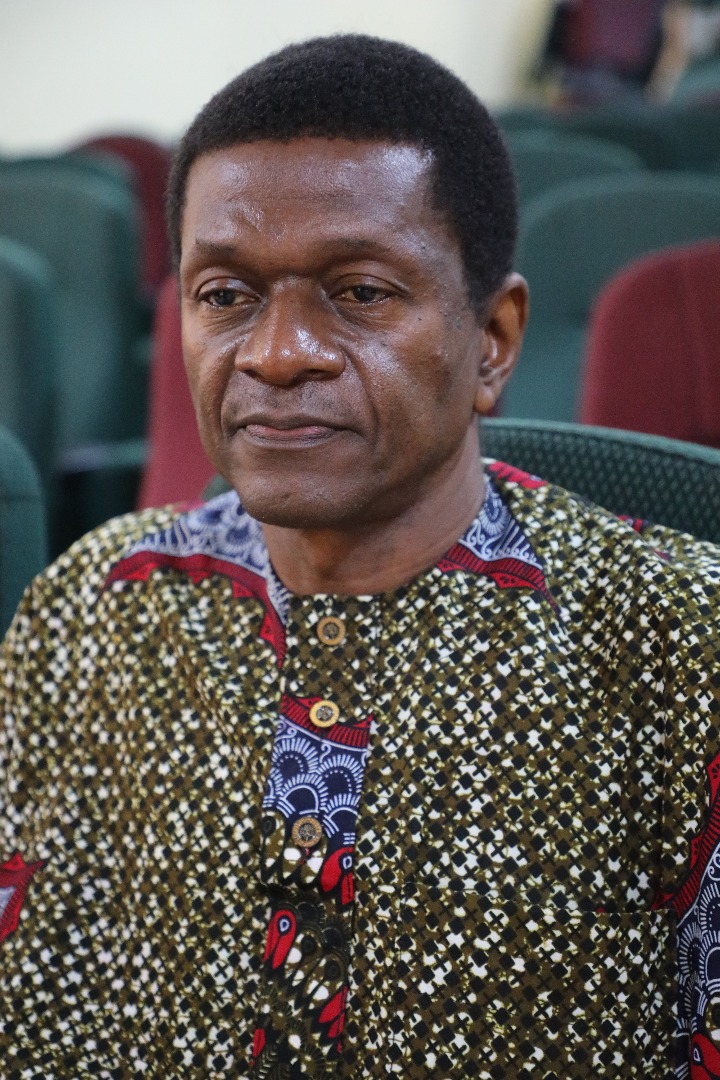
Historians are agreed that a single spark can cause the course of change simmering in a society. In his recent intervention in the Olusegun Obasanjo – Atiku Abubakar feud, Umar Ardo, a historian, came up with the classification of “immediate causes and underlying causes; triggers and structural factors” in his analysis. Ardo, himself a player in the Obasanjo – Abubakar presidency, emphasised that the sequence of events was necessary to understanding the conflict. This construct applies forcefully to the Anambra State story, where chronology puts into context the role played by former lawmaker, Chudi Offodile.
The making of a new Anambra State is traced to 2003 beginning with the tumultuous Chris Ngige regime. Aside it’s deficit of electoral legitimacy, the experience of government at the service of the people started with Ngige’s governorship, taking on greater effect in the Peter Obi, Willie Obiano and Charles Soludo’s administrations. But the current run of good governance was preceded by the years of pillaging, waste and anomie necessitating a struggle for the liberation of the State. The hard – fought battle to reposition Anambra State which climaxed in the Chinwoke Mbadinuju years had a background.
During the doomed Sani Abacha transition programme, a governorship aspirant mounted a billboard with the message that for six years, Anambra State had not grown and could not compare with other States created alongside it in 1991. The aspirant’s lament seemed to hint at the radical thought that the State was held down by a cabal. A local cabal reigning in the face of military rule sounds contradictory, but not quite. Post war military rule had a unique impact on the southeast. In the aftermath of Biafra, Igbo officer – cleansing in the military ensured that the region was reduced to spectator in the national power game. The ensuing junior partner treatment of the southeast was traumatic, forcing sections of the elite to retreat from the public estate. Considering that nature abhors vacuum, it was little surprise that a new set of actors stepped out on the scene. But this breed was content thriving as civilian lieutenants and foot soldiers of the military. The circle majorly fronted for the military brass in contract deals, abandoned projects, if you like.
This scheme was not merely financially rewarding for the adventurers. The structure of arbitrary power to which they were affiliated gave a sense of automatic rulership in society. And they earnestly moved to play the bosses of the new order. With their access to the military commands, they influenced decisions and the appointments by state military administrators. It was this same tribe, in their various colours and shades, that facilitated Mbadinuju’s capture of the PDP ticket and eventual emergence as Governor in 1999. Consequently, the Mbadinuju administration had to contend with the demands of the power speculators sooner than later.
Faced with the clash between the tolls of sponsorship and imperative of democratic mandate, the Mbadinuju governorship settled for the former. It chose to appease the insatiable thirst of the kingmakers, and in doing so, prioritised politicking over governance. As early as mid 2000, right in the thick of Nigeria’s second oil boom, the Anambra State government went on a borrowing spree. The bank loans poured in, bloating bellies, blurring reality. To citizens’ complaint of lack of democracy dividends, the government had a standard response: have we not provided _Bakassi_ . Is that alone not evidence of a government that cares? Conscious of the regime’s terrible scorecard in infrastructure and social amenities, it’s spin doctors seized on celebration of the anti – crime militia in compensation for failing service delivery. However, the desire to convert _Bakassi_ to a populist wand resulted in the unfortunate elevation of the outfit to a religion. This meant that the extra judicial killings and other excesses of the militia were condoned or denied by the government. A climate of fear was sown. And with that the regime became emboldened in it’s misgovernment.
It was in this setting of a jungle society that four young men were arbitrarily arrested in Awka early 2001 and taken into detention. One of the victims,
Ikechukwu Nnagbo
who was sick, eventually died in Bakassi cell without medical attention. His corpse was not released to the family – to this day. It turned out that the deceased was a legislative aide to Chudi Offodile, the legislator representing Awka South & North constituency at the House of Representatives. Offodile took the matter to Mbadinuju on two occasions. On both counts, the Governor was dismissive of the complaint. Scandalised, the lawmaker
addressed a press conference at the National Assembly in March 2001 indicting Bakassi for the tragedy. He went further to predict that Mbadinuju would not have a second term in office and announced the formation of an opposition front, Anambra Progressive Movement, to be formally launched on
March 24, 2001 at Awka.
At it’s next sitting, the Anambra State Executive Council passed a resolution that the security of Hon Chudi Offodile could not be guaranteed as he embarked on an unpopular campaign in the State. The event however was a success. Two out of the State’s three senators, Emma Anosike and Ignatius Abana were in attendance. Representative Jerry Ugokwe was present. And so was Mr Peter Obi, who beyond lending his voice to
the quest for a people – centred, accountable government, announced a donation to the movement. Organised march for a new Anambra State had started. This mobilisation would later evolve into the Anambra Peoples Forum, the biggest, non – party platform that gave vent to the citizens’ desire for change.
Things would get worse before the resolution in the April 2003 election which Mbadinuju lost woefully. Schools , hospitals, the courts were shut for months when loan repayment requirements left the government unable to pay workers’ salaries. Doubtless, there were many other voices who opposed the State’s misrule. Yet, it took one man’s bold step forward to rally resistance to impunity and save the system from collapse. It has been a major shift in the past 23 years but agelong wisdom instructs that the price of freedom is eternal vigilance. Succeeding generations have a duty to protect and add value to their heritage. To keep faith with the progressive journey, they need to know and understand their history.
Afuba is of Governance & Development Forge, Awka.
Related posts