

Kwara APC: How A Succession Battle Became A Political Earthquake
BY EHI BRAIMAH
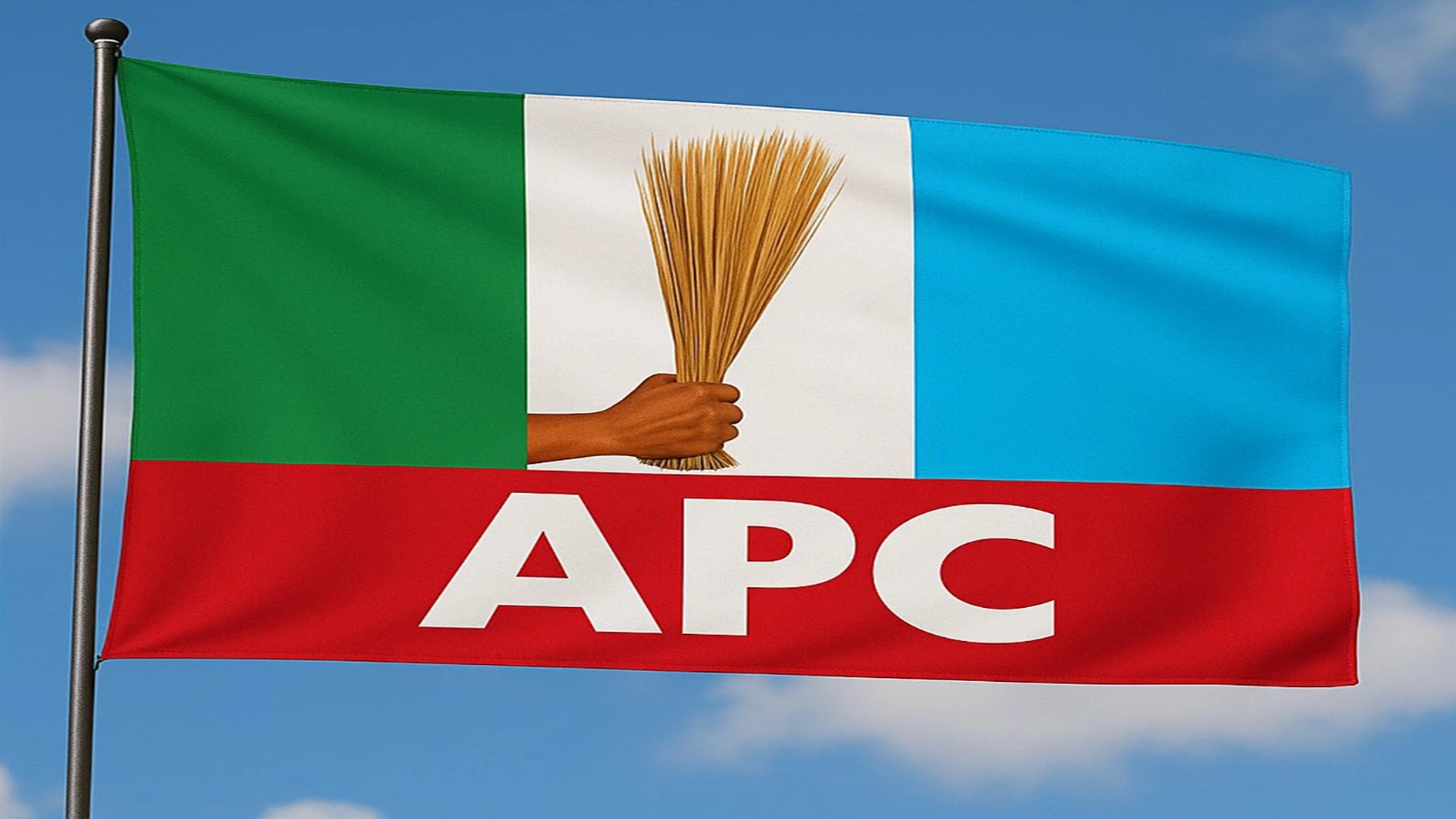
Politics is rarely only about elections; it is also about succession, control, alliances, interests and the management of political expectations. In Kwara State, these forces have combined to produce one of the more intriguing intra-party crises ahead of Nigeria’s 2027 general elections.
What began as a contest over who would succeed Governor AbdulRahman AbdulRazaq has gradually turned into a full-blown political rupture within the All Progressives Congress (APC), with Senator Saliu Mustapha and other influential party stakeholders moving to the People’s Democratic Party (PDP), followed by defections among elected officials and grassroots members.
The immediate issue is the 2027 governorship election, but underneath it is a much bigger question: who controls the political future of Kwara after AbdulRazaq leaves office? AbdulRazaq will complete his second term in May 2027 and cannot seek a third term. Inevitably, therefore, the question of succession has become the defining issue within the Kwara APC.
The governor has an obvious political interest in what happens after his tenure. His opponents, equally, have ambitions of their own. Senator Saliu Mustapha, representing Kwara Central, was one of the prominent figures interested in becoming the next governor of Kwara State. The disagreement between him and AbdulRazaq did not begin with the APC primary, but the primary appears to have converted a simmering political rivalry into an open confrontation.
The dispute between both politicians is a struggle over political influence, succession and control of the APC structure. The governorship primary on May 22, 2026, was the defining moment. Yakubu Danladi-Salihu, Speaker of the Kwara State House of Assembly, emerged as the APC’s governorship candidate, polling more than 94,000 votes. His emergence followed intense negotiations and controversy within the party.
The choice was politically significant for another reason. Danladi-Salihu is from Kwara North, a zone that has long argued that it should have an opportunity to produce the governor. Thus, the primary was about the individual aspirants and the politics of zoning and power rotation, but the controversy surrounding the primary has been difficult to contain. Aggrieved APC stakeholders have alleged that the process was manipulated to favour a preferred successor. Some have gone as far as describing the emergence of Danladi-Salihu as the product of an imposed process.
A group of former aspirants subsequently rallied around what Senator Mustapha calls the “Rainbow Coalition”, bringing together the G15 of aggrieved governorship aspirants, Otoge Progressives and elements of the party’s elders’ caucus. Those are allegations and political interpretations, not established facts, to the best of my knowledge. The APC has defended the legitimacy of its processes and continues to support AbdulRazaq and its governorship candidate.
Indeed, 51 APC ward chairmen in Kwara Central recently declared their support for the governor and Danladi-Salihu and dismissed the significance of Mustapha’s defection. But in politics, perception matters. Once a substantial group of party members believes that a process has been predetermined, the damage to trust can be considerable – even where the party insists that its procedures were followed.
The legislative primaries added another layer of tension to the furore. In May, the APC initially screened out 105 of 158 aspirants seeking its State House of Assembly tickets, with several serving lawmakers among those initially declared “uncleared.” The development generated anxiety across the party.
There is, however, an important correction to the earlier narrative about this episode: the APC subsequently reversed that initial screening outcome and cleared all 159 Assembly aspirants in a revised exercise.
That reversal itself illustrates the intensity of the political atmosphere. The initial decision created the impression of a dramatic purge, but the subsequent reversal showed that the party was capable of adjusting its position when the consequences became politically sensitive. It is therefore too simplistic to say that the governor personally “handpicked” every National and State Assembly candidate. That remains an allegation by some aggrieved party members.
The more defensible conclusion is that candidate selection became a battleground over control of the party and the political configuration that will emerge after AbdulRazaq. That distinction matters. Mustapha’s eventual defection transformed the internal APC dispute into a broader political realignment. His move to the PDP was because he lost an internal contest but it also represents part of a wider coalition of dissatisfied APC stakeholders. That is where the PDP has acquired an unexpected opportunity.
The irony is difficult to miss. The APC’s political ascendancy in Kwara was built around the historic “Otoge” movement of 2019, which ended the dominance of the political structure associated with former Senate President Bukola Saraki.
Seven years later, the political landscape has changed dramatically. Some of the forces that helped establish the APC’s dominance are now divided, while the PDP is attempting to rebuild around some of the same political networks that were weakened in 2019 and harvest what appears to be a political fortune.
The APC’s internal crisis has consequently become an opportunity for the PDP to reconstruct its grassroots organisation. The defections are particularly significant because they are no longer confined to prominent politicians.
Last month, more than 2,000 APC members in Adewole Ward, Ilorin West Local Government Area, reportedly defected to the PDP. Adewole is the ancestral ward of Governor AbdulRazaq, making the development symbolically important. The defectors said they were supporters of Mustapha and were following him into the PDP.
There have also been defections in Offa, including from Shawo Central Ward, the political base of Senator Lola Ashiru. Reports say hundreds of APC members moved to the PDP, citing their confidence in Saraki’s political leadership.
Two APC members of the Kwara State House of Assembly – Saba Yisa Gideon and Olusola Odetundun – have also defected to the PDP. The Assembly subsequently declared their seats vacant after the APC argued that they had no constitutional basis to defect in the absence of a division within the party.
This is the point at which an internal party disagreement becomes a political earthquake. The real significance of these defections will not simply depend on the number of people leaving the APC but on whether the defectors can convert their movement into an effective political organisation.
That is the challenge before both sides. Will there be more defections? Only time will tell because in politics, 24 hours is a long time.
For the APC, the central question is whether it can reconcile its competing factions before the 2027 election. For the PDP and the Rainbow Coalition, the challenge is different. Defections make headlines, but elections are won through organisation, candidates, voter mobilisation and sustained grassroots engagement. Moving prominent politicians and thousands of supporters from one party to another is only the beginning.
There is also an interesting federal dimension. Mustapha’s realignment does not necessarily translate into opposition to President Bola Tinubu. His camp has sought to distinguish its disagreement with the Kwara APC structure from its position on the President. This reflects the fluidity of Nigerian politics, where alliances can be different at federal and state levels.
The 2027 contest in Kwara could therefore produce unusual alignments: support for one political platform at the presidential level and another at the state level. At the heart of everything, however, is succession. A governor nearing the end of his tenure naturally wants to influence what comes next. Aspirants want a fair opportunity to succeed him; legislators want to retain their seats; party leaders want to remain relevant, and political blocs want assurances that they will not be excluded from the next dispensation. It is the same playbook used by politicians to advance their interests.
When these interests collide, a party primary can become much more than a primary – it becomes a struggle over the future. That is what appears to have happened in Kwara, but it would be premature to declare that the APC has lost Kwara. Nigerian political parties have repeatedly demonstrated their ability to survive internal crises, reconcile factions and rebound before elections because of the absence of what we may describe as ideological orientation.
What is clear, however, is that the APC’s succession problem has become a serious organisational challenge. As I noted earlier, the irony is that the 2019 Otoge movement was built on the rejection of political dominance by one entrenched structure. Today, the forces that emerged from that political revolution are engaged in another struggle over who gets to shape the next political order.
That is the deeper meaning of the Kwara crisis which has escalated beyond just merely seeing it as AbdulRazaq versus Mustapha, or APC versus PDP. The 2027 election will eventually determine which political coalition commands the mandate of the people. For now, however, one thing is unmistakable: a succession battle inside the APC has escaped the confines of the party and became a wider contest for the political future of Kwara.
The political earthquake has happened, but the real question is how the aftershocks will end.
Braimah is a PR specialist, marketing strategist, and publisher/editor-in-chief of Naija Times (www.ntm.ng) and Lagos Post (www.lagospost.ng). He is a strong advocate for African prosperity and can be reached through: ehi.braimah@neomedia.com.ng
Related posts