

Oil, Gas Ministers Spotlight Rising Global Confidence, Strategic Reforms, and Innovation Driving Nigeria’s Energy Sector Transformation
Nigeria’s oil and gas sector is experiencing a resurgence in global investor confidence, fueled by bold reforms, strategic policies, and innovative infrastructure development under the leadership of President Bola Ahmed Tinubu, GCFR.
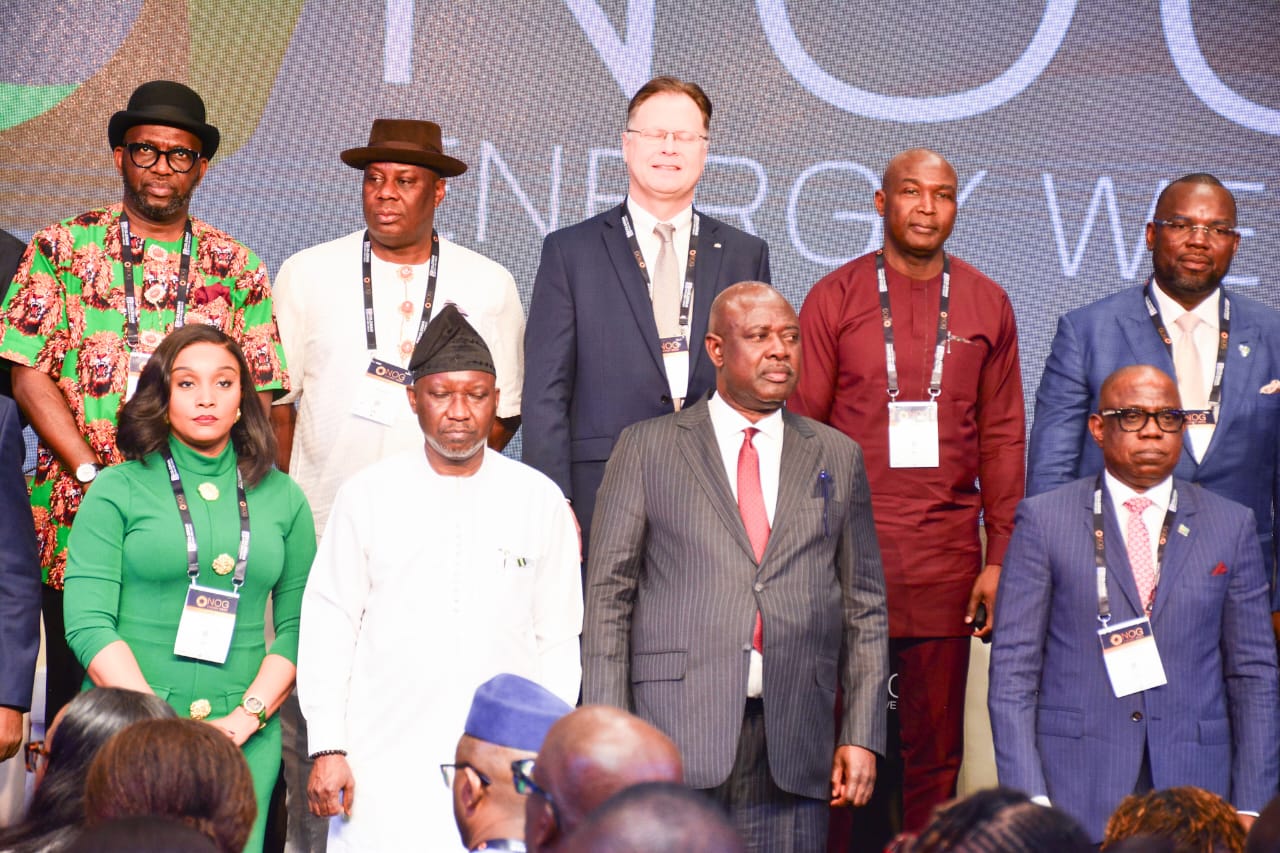
These were the messages delivered by the Honourable Minister of State for Petroleum Resources (Oil), Senator Heineken Lokpobiri, and the Honourable Minister of State for Petroleum Resources (Gas), Rt. Hon. Ekperikpe Ekpo, at the official opening of the 24th Nigeria Oil and Gas (NOG) Energy Week, held on Tuesday, July 1, in Abuja.
Speaking on the oil industry outlook, Senator Lokpobiri stated that Nigeria is firmly back on the global investment map.
He attributed this renewed investor interest to the administration of President Bola Ahmed Tinubu’s unwavering commitment to a transparent, predictable, and investor-friendly operating environment.
According to him, this confidence is evident in the rising inflow of investments into the oil and gas sector over the past year.
Highlighting the strategic importance of the sector to national development, the Minister noted that oil and gas account for over 80 percent of Nigeria’s foreign exchange earnings.
He also reported a steady rise in crude oil production, citing the most recent data from the Nigerian Upstream Petroleum Regulatory Commission (NUPRC).
“Over the last one year, so much has happened. When we stood here last year, we were doing about 1.3 million barrels per day, but today, as at the last report I had from NUPRC which I have here, we are doing about 1.745 million barrels per day,” he said.
He emphasized the need to sustain this positive trajectory in order to meet both domestic and international energy obligations.
In his remarks, the Honourable Minister of State for Petroleum Resources (Gas), Rt. Hon. Ekperikpe Ekpo, reaffirmed the pivotal role of natural gas in Nigeria’s journey toward economic transformation, industrialization, and net-zero ambition.
He described the Decade of Gas Initiative as more than just a slogan, but a national strategy focused on harnessing Nigeria’s over 200 trillion cubic feet of gas reserves to deliver widespread socio-economic benefits.
According to Ekpo, the government’s approach includes infrastructure expansion, policy reforms, and strategic collaborations aimed at deepening gas utilization across all segments of the economy.
“Through the Decade of Gas Initiative, we are focused on translating our vast gas wealth into tangible socio-economic benefits. This includes driving industrialization, expanding power generation, increasing domestic LPG usage, deepening gas-to-transport adoption, and growing gas export capacity,” he said.
The Minister also underscored the significance of recent reforms and institutional interventions.
He noted that the full implementation of the Petroleum Industry Act (PIA) has enhanced regulatory clarity and boosted Nigeria’s global competitiveness, particularly in the gas and deepwater sectors.
He highlighted the activation of the Midstream and Downstream Gas Infrastructure Fund (MDGIF) and the clearance of legacy debts owed to gas producers as critical steps that have improved project viability and investor confidence.
On global and regional partnerships, Ekpo pointed to key milestones in ongoing infrastructure projects, such as the Ajaokuta–Kaduna–Kano (AKK) and Obiafu–Obrikom–Oben (OB3) gas pipelines.
He also reiterated Nigeria’s leadership role in major transnational projects, including the West African Gas Pipeline, the Nigeria–Morocco Gas Pipeline, and the Nigeria–Equatorial Guinea Gas project.
These initiatives, he said, are essential to achieving regional energy integration, cross-border trade, and long-term economic prosperity.
Furthermore, Ekpo stressed Nigeria’s commitment to innovation and future-proofing its gas sector.
He cited the adoption of artificial intelligence in surveillance operations, the expansion of digital metering systems, the deployment of compressed natural gas (CNG)-fueled mass transit solutions, and the exploration of carbon capture technologies as signs of the country’s forward-thinking approach.
He also recognized the vital role of indigenous innovation and the Nigerian Content Development and Monitoring Board (NCDMB) in building local manufacturing, engineering, and research capacity.
According to him, these efforts are designed to ensure that Nigerian companies do not merely participate, but lead in shaping the country’s energy future.
The 2025 NOG Energy Week is themed “Accelerating Energy Progress through Investment, Global Partnerships and Innovation,” reflecting Nigeria’s resolve to drive sustainable energy transformation through collaboration and technology.
Related posts