

Osun 2026: When Democracy Won And Why President Tinubu May Be The Biggest Winner
BY PRINCE ADEYEMI SHONIBARE
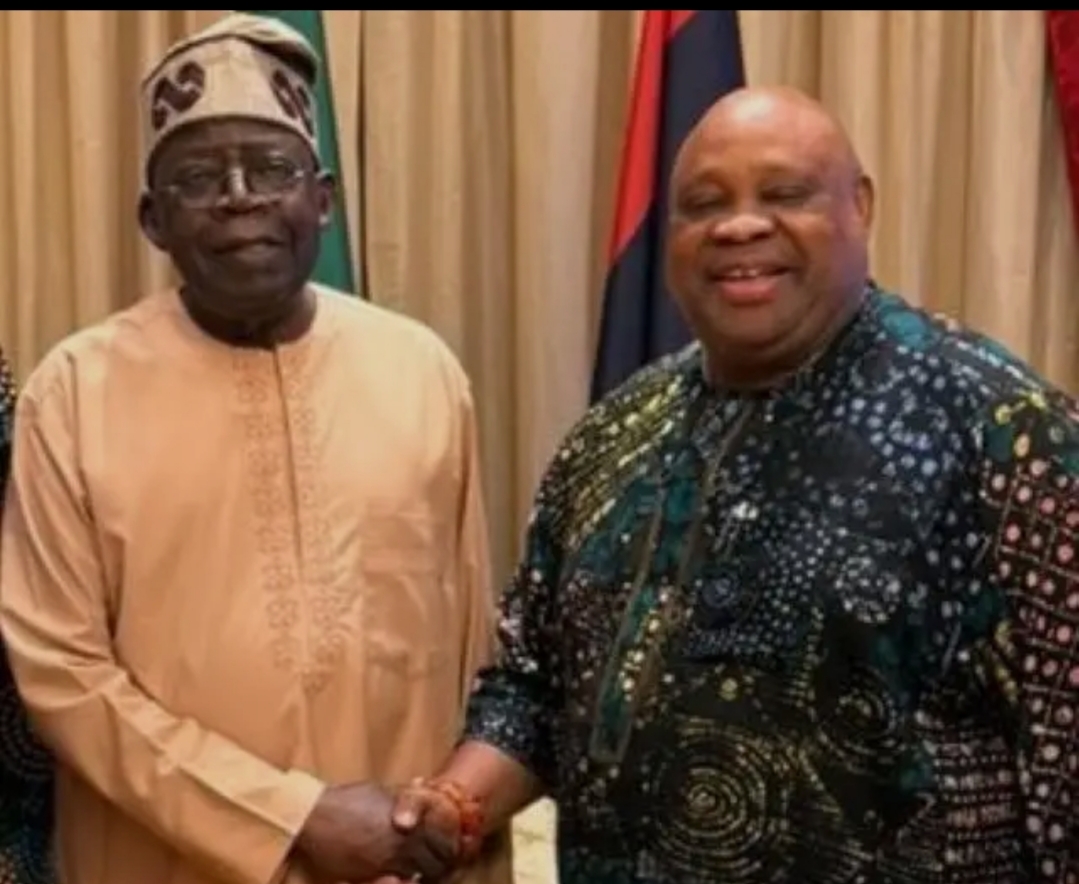
The 2026 Osun governorship election should be viewed as much more than another contest between the APC and the opposition. It is an important chapter in Nigeria’s continuing democratic journey a journey that has taken the country from manually written results, paper-based accreditation and cumbersome physical collation to biometric voter verification, electronic result transmission and an increasingly auditable electoral process.
Governor Ademola Adeleke has won a second term. Contesting on the platform of the Accord Party, he polled 511,067 votes, defeating the APC candidate, Bola Oyebamiji, who scored 444,815 votes, while the ADC candidate, Najeem Salaam, scored 17,180 votes.
Adeleke won 19 of Osun State’s 30 Local Government Areas, while Oyebamiji won 11, giving the governor a margin of 66,252 votes.
But beyond the candidates, political parties and numbers, there is a larger story.
The real winner is democracy.
And, ironically, President Bola Ahmed Tinubu may emerge from the Osun election as one of its biggest political beneficiaries not because his party won, but precisely because the party he leads lost and the result was allowed to stand.
President Tinubu called Governor Adeleke to ask him how the election was going and congratulated after him won and urged him to use his victory to unite the people of Osun for development.
Adeleke, in turn, thanked the President and reaffirmed his support for President Tinubu’s 2027 re-election.
What a remarkable democratic moment.
The President’s party lost. The President congratulated the winner. The winner thanked the President. Political competition did not become political warfare.
That is how democracy should work.
As the late President Umaru Musa Yar’Adua famously acknowledged after the 2007 presidential election that brought him to power: “The April 2007 elections were flawed.”
That admission was followed by a commitment to electoral reform. It remains a powerful lesson: democracy becomes stronger when leaders have the courage to acknowledge weaknesses in the system rather than pretend that everything is perfect.
And that takes us to the heart of Nigeria’s electoral story.
OSUN’S FOUR-ELECTION JOURNEY: 2014, 2018, 2022 AND 2026
To understand the significance of 2026, we must go back to 2014.
In the 2014 Osun governorship election, then Governor Rauf Aregbesola of the APC defeated Iyiola Omisore of the PDP decisively.
Aregbesola polled 394,684 votes, against Omisore’s 292,747, winning by 101,937 votes and taking 22 of the state’s 30 LGAs.
Four years later, the political landscape changed dramatically.
The 2018 election became one of the closest governorship elections in Nigerian history. Gboyega Oyetola of the APC eventually defeated Ademola Adeleke of the PDP after a supplementary election. Oyetola finished with 255,505 votes, while Adeleke had 255,023 — a difference of only 482 votes.
Then came 2022.
Adeleke returned and defeated the incumbent Oyetola, polling 403,371 votes against Oyetola’s 375,027, a winning margin of 28,344 votes.
And now, in 2026, Adeleke has expanded his margin to 66,252 votes.
The four elections tell an extraordinary political story:
2014 — APC dominance.
2018 — APC survives by 482 votes.
2022 — Adeleke overturns the result.
2026 — Adeleke wins again, this time under Accord, and substantially expands his margin. That is electoral politics.
The people decide. Political parties change. Candidates rise and fall. Democracy continues.
THE BIGGER QUESTION: HOW HAVE ELECTIONS BEEN CONDUCTED UNDER PRESIDENT TINUBU?
President Tinubu assumed office on May 29, 2023, so the 2023 general election itself should not technically be described as an election conducted under his presidency.
The more appropriate assessment begins with elections conducted after his inauguration. And when we examine that record, an interesting pattern emerges.
The APC has won some.
The APC has lost others.
Opposition parties have won governorships.
Opposition parties have won legislative seats.
That mixed outcome is important.
The strongest evidence of competitive democracy is not that the governing party wins. It is that the governing party can lose.
IMO 2023 — APC WINS
The first major off-cycle governorship election after President Tinubu assumed office was the November 2023 Imo governorship election.
Governor Hope Uzodimma of the APC won re-election. That was an APC victory.
And there is nothing undemocratic about the ruling party winning an election when voters give it the mandate.
Democracy does not mean the opposition must win. Democracy means the people must be free to choose.
EDO 2024 — APC WINS BACK THE STATE
The September 2024 Edo governorship election produced another APC victory.
Monday Okpebholo of the APC defeated PDP candidate Asue Ighodalo and Labour Party candidate Olumide Akpata.
Again, APC won. But the pattern was not uniform.
ANAMBRA 2025 — APGA DEFEATS APC
Then came Anambra. This is one of the most important pieces of evidence in this discussion. The APC contested the 2025 Anambra governorship election. APC lost. Governor Chukwuma Charles Soludo of APGA was re-elected.
The significance is obvious.
If the Federal Government simply controlled the electoral machinery to guarantee victories for the governing party, Anambra would be difficult to explain.
The President’s party contested. The President’s party lost. An opposition party won. INEC declared the opposition candidate. That is the essence of competitive democracy.
EKITI 2026 — APC WINS AGAIN
In Ekiti, voters produced a different result. Governor Biodun Oyebanji of the APC was re-elected. This is equally important. Democracy does not mean that APC must lose. It means that where voters choose APC, APC should win; where they choose APGA, APGA should win; where they choose Accord, Accord should win. The electoral umpire’s responsibility is not to manufacture a pattern and results. Its responsibility is to faithfully record the results produced by the voters.
OSUN 2026 — THE PRESIDENT’S PARTY LOSES
Then came Osun. President Tinubu is the national leader of APC. The APC fielded Bola Oyebamiji. Yet Oyebamiji lost. Adeleke won. INEC declared Adeleke.
And President Tinubu congratulated him.
The President’s response is perhaps more significant than the result itself. He could have treated the defeat of his party as a personal political affront. Instead, he reached out to congratulate the winner.
That is the democratic attitude Nigeria needs. A government does not prove its democratic credentials merely by winning elections. It proves them by allowing institutions to function when the outcome is inconvenient.
FROM OBASANJO TO JONATHAN, BUHARI AND TINUBU — NIGERIA’S ELECTORAL JOURNEY
Nigeria’s democratic journey has never been perfect. But it has evolved. There was a time when electoral administration depended overwhelmingly on manually written results, paper accreditation and multiple levels of physical collation. Then technology began to change the equation.
Under President Goodluck Jonathan and Professor Attahiru Jega’s INEC, the Smart Card Reader became an important feature of the 2015 general elections. That was a major reform.
Then came another technological leap under the administration of the late President Muhammadu Buhari.
BVAS – the Bimodal Voter Accreditation System was introduced in 2021, while IReV the INEC Result Viewing Portal provided a platform for viewing polling-unit result sheets.
These reforms fundamentally changed the evidentiary environment surrounding Nigerian elections.
Before biometric accreditation, the critical question could be: “How many votes were written on the result sheet?”
With BVAS, another question became possible: “How many voters were actually accredited?” That distinction is enormous.
FROM MILLIONS OF ALLEGED VOTES TO THOUSANDS OF VERIFIABLE ACCREDITATIONS
This is where Nigeria’s electoral technology revolution becomes particularly important. The old system made it much harder to independently verify whether the number of people allegedly voting at a polling unit corresponded with the number of voters actually accredited.
BVAS introduced a biometric layer. It does not make fraud impossible. It does not make election officials infallible. It does not eliminate vote buying, violence or manipulation. But it creates an additional electronic trail that can be examined against the votes recorded. That is a fundamental improvement.
The journey can broadly be described as:
Manual accreditation Smart Card Reader BVAS and Manual result handling electronic transmission and public viewing through IReV. This is not perfection. It is institutional progress.
THE BUHARI CONTRIBUTION MUST NOT BE FORGOTTEN
The late President Muhammadu Buhari deserves credit for the electoral reforms that allowed BVAS and IReV to become central elements of Nigeria’s electoral architecture. These reforms were not the personal property of Buhari. They belong to Nigeria. But political leadership matters.
Electoral reform requires an administration willing to permit INEC to innovate, provide the necessary legal environment and accept technological change.
The same credit should be given to Jonathan for the Smart Card Reader.
And today, President Tinubu’s administration has the responsibility of consolidating rather than reversing these gains. Democratic reforms should be cumulative, not cyclical.
THE OBASANJO YEARS: A DIFFERENT ELECTORAL ERA
This is where Nigeria’s history becomes uncomfortable and unforgettable. The 2003 and 2007 elections took place in a completely different technological environment. There was no BVAS. There was no IReV. There was no modern biometric accreditation system. Results were largely generated, collated and transported through manual processes. The 2003 elections were controversial, with opposition parties and observers raising serious concerns about manipulation, interference and the conduct of the electoral process. This is why the comparison with today’s technology matters.
OBASANJO AND THE SOUTH-WEST: FIVE OF SIX STATES
The political transformation of the South-West in 2003 was extraordinary. The PDP won the governorships of five of the six South-West states, with Lagos remaining under the Alliance for Democracy and then Governor Bola Ahmed Tinubu as the last major opposition governor standing in the region.
The PDP captured Oyo, Ogun, Ondo, Ekiti and Osun, while Lagos remained under the AD. The South-West, historically a major centre of opposition politics, had suddenly been politically overwhelmed by the ruling PDP under Obasanjo. That remains one of the defining political stories of the Obasanjo era.
THE 2007 ELECTIONS AND YAR’ADUA’S HISTORIC ADMISSION
The 2007 elections were even more controversial. International observers raised serious concerns about the conduct of the elections, including allegations of ballot-box stuffing, violence, shortages of voting materials and false results. And then something extraordinary happened. The man who benefited from the election Umaru Musa Yar’Adua acknowledged the problem.
He publicly recognised that the election that brought him to power was deeply flawed and promised electoral reforms.
That admission eventually led to the establishment of the Electoral Reform Committee in 2007.
There is an important democratic lesson here: A democracy does not become stronger by denying its weaknesses. It becomes stronger by confronting them.
THE SOUTH-WEST FOUGHT BACK THROUGH THE COURTS
Introduction of forensic system by President Tinubu into the system.
The political story did not end with the 2007 declarations. The courts became an important avenue for challenging disputed results.
In Edo, Adams Oshiomhole challenged the declaration of PDP’s Oserheimen Osunbor and was eventually declared the winner through the judicial process and forensic auditing of the results.
In Ondo, Olusegun Mimiko challenged the declaration of PDP’s Olusegun Agagu. The election was eventually nullified through the judicial process, and Mimiko became governor.
In Ekiti, the declaration of PDP’s Segun Oni was eventually overturned in favour of ACN’s Kayode Fayemi.
And in Osun, Rauf Aregbesola challenged the 2007 declaration of Olagunsoye Oyinlola. After over 3 years of litigation, the Court of Appeal eventually declared Aregbesola the duly elected governor in 2010.
These were not minor political events. Edo changed. Ondo changed. Ekiti changed. Osun changed. The courts ultimately became instruments through which disputed electoral mandates were corrected and recovered. That is part of Nigeria’s democratic history — and one reason why electoral disputes must be resolved through institutions rather than violence.
THE OBASANJO GOVERNORSHIP IMPEACHMENT ERA AGAINST PARTY GOVERNORS
There is another aspect of the Obasanjo presidency that cannot simply be ignored when assessing its democratic record: the extraordinary wave of governorship impeachments between 2005 and 2006.
Governor Rashidi Ladoja of Oyo State was impeached on January 12, 2006, by 18 legislators.
Governor Ayo Fayose of Ekiti State was removed later that year amid intense political conflict.
Governor Joshua Dariye of Plateau State was impeached in November 2006 in a process involving only a small number of legislators.
The impeachment episodes generated serious constitutional and political controversy, and some of the affected governors were subsequently restored through judicial intervention.
This was not a good chapter in Nigeria’s democratic history. The Constitution was supposed to protect elected mandates.
Yet political power sometimes found ways around those protections.
THE CASE OF AYO FAYOSE
The removal of Ayo Fayose remains particularly controversial and dramatic. The process unfolded amid intense political conflict between the Federal Government of Obasanjo and the Ekiti governor. There were allegations of federal agencies and political pressure being deployed to facilitate his removal.
The important point is not to present every allegation as a judicially established fact. The important point is that the period generated serious and documented concerns about federal interference in state political affairs.
THE LADOJA AND DARIYE STORIES
The Ladoja and Dariye cases are even more revealing. Both cases became major constitutional and judicial controversies, and both governors were subsequently restored through the courts. That is an extraordinary democratic lesson.
If a governor is removed through a constitutionally defective process and later restored by the judiciary, then the democratic system ultimately corrected itself but only after the political machinery had already been used to disrupt an elected mandate.
The case of Dr. Chris Ngige of Anambra State, including his abduction during the political crisis surrounding his governorship, remains another disturbing episode from that era and illustrates the extent to which political competition could become deeply coercive.
OBASANJO AND THE THIRD-TERM CONTROVERSY
Then came the third-term controversy.
President Obasanjo’s administration sought constitutional changes that would have enabled him to remain in office beyond the existing two-term limit.
The attempt failed in the National Assembly. And Nigeria’s democracy survived. That was one of the great moments of democratic resistance in the Fourth Republic. It established a principle that should never be forgotten:
No President is greater than the Constitution.
The defeat of the third-term project was a victory for the legislature, civil society, political opponents and ultimately the Nigerian people.
FIVE SENATE PRESIDENTS IN EIGHT YEARS
The turbulence extended to the National Assembly. During Obasanjo’s eight-year presidency, Nigeria had five Senate Presidents: Evan Enwerem, Chuba Okadigbo, Anyim Pius Anyim, Adolphus Wabara and Ken Nnamani.
The rapid turnover reflected the intense executive-legislative tensions of the period and high corruption.
Nigeria’s return to civilian rule was historic.
The Obasanjo administration also recorded important achievements in areas such as debt relief, telecommunications, banking reform and international diplomacy. But democratic history must be honest.
A President can achieve important things and still have a deeply controversial democratic record. That is the distinction we must make.
WAS OBASANJO A DEMOCRAT?
This is where an important distinction must be made. It is difficult to deny that Olusegun Obasanjo was a central figure in Nigeria’s return to civilian government and that he participated in democratic institutions.
But if by “democrat” we mean a leader who consistently respects institutional autonomy, electoral competition, separation of powers, constitutional limits and elected mandates, then Obasanjo’s record as President is deeply contested and contains serious democratic contradictions. His presidency was associated with the concentration of executive power, severe conflicts with the legislature, disputed elections, controversial impeachment episodes and the failed third-term project.
The 2003 South-West electoral realignment, the controversial 2007 elections, the removal of governors and the political struggles surrounding the National Assembly all form part of that record. Therefore, rather than simply declaring as an uncontested historical fact that “Obasanjo was not a democrat,” it is more historically defensible to say:
Obasanjo’s democratic credentials as President are profoundly contested and were seriously compromised by the electoral controversies, executive-legislative conflicts and interventions in state political affairs that characterised parts of his administration.
THE IRONY OF TODAY
There is a remarkable irony in seeing former President Obasanjo now celebrating and congratulating Governor Ademola Adeleke. There is absolutely nothing wrong with congratulating a winner. Indeed, it is good political etiquette. But history has a way of asking questions.
Would Adeleke have enjoyed the same political space under the electoral and federal political environment of the Obasanjo years? That question is legitimate and left to readers and political historians to answer.
Adeleke’s political generation is operating in an environment with BVAS, IReV, biometric accreditation, stronger technological evidence and an electoral institution that is constitutionally distinct from the Presidency. The comparison with 2003 or 2007 should therefore be understood historically. Nigeria has changed.
THE MOST IMPORTANT TEST OF PRESIDENT TINUBU
This brings us back to Osun. The President’s party lost. And the result was accepted. That is a stronger democratic test than an APC victory.
A government does not prove its democratic credentials merely by winning elections. It proves them by allowing institutions to function when the outcome is inconvenient. Osun presents precisely that test.
THE TINUBU ELECTORAL RECORD IS NOT A ONE-PARTY STORY
Look at the pattern:
Imo — APC.
Edo — APC.
Anambra — APGA.
Ekiti — APC.
Osun — Accord.
The bye-elections have also produced winners from different political parties. This is not a one-party electoral pattern.
It is a mixed political landscape. And that is precisely what competitive democracy should look like.
FREE AND FAIR DOES NOT MEAN PERFECT
We must also be intellectually honest.
It would be wrong to claim that every election under President Tinubu has been flawless. Nigeria continues to struggle with vote buying, political violence, security problems, logistical failures, low voter turnout, allegations of intimidation and disputes over electoral processes.
BVAS has limitations.
IReV has experienced challenges.
INEC is not perfect.
Election officials are human beings.
Political parties can violate the rules.
Technology cannot replace integrity.
Therefore, the argument should not be:
“Every election under Tinubu has been perfect.”
The stronger and more credible argument is: Nigeria’s electoral system is becoming more technologically auditable, and elections conducted during the Tinubu presidency have continued to produce mixed political outcomes, including victories by opposition parties over the governing APC. That is a much more defensible democratic claim.
INEC MUST REMAIN INDEPENDENT
This is perhaps the most important institutional issue of all. INEC must never become the electoral department of whichever political party controls the Federal Government.
The President does not announce the winner.
The President does not count the ballots.
The President does not sit at the polling unit.
The President does not determine which candidate receives a certificate of return. INEC conducts and declares elections, while the courts adjudicate electoral disputes. That separation must be protected. And every Nigerian President should be judged by how much space he gives those institutions to operate.
ADELEKE AND TINUBU: POLITICS WITHOUT PERMANENT ENMITY
The relationship that has emerged between President Tinubu and Governor Adeleke after Osun 2026 is encouraging. Adeleke won. Tinubu congratulated him.
Adeleke thanked Tinubu. Adeleke has reaffirmed support for Tinubu’s 2027 re-election. This demonstrates that political competition does not have to produce permanent hostility. You can defeat someone politically and still work with that person for the common good.
That is a lesson Nigeria desperately needs.
BUT NO GOVERNOR OWNS THE PEOPLE’S VOTES
Adeleke’s support for President Tinubu in 2027 is politically significant. It can influence political structures. It can influence alliances. It can influence the direction of political campaigns.
But ultimately: No governor owns the votes of Osun people. The votes belong to the people. The same people who voted for Adeleke in 2026 will make their own decision in 2027. That is precisely what democracy means.
THE ROAD FROM JONATHAN TO BUHARI TO TINUBU
Nigeria’s electoral story should therefore not be written as the story of one President. It is a continuum.
Jonathan and Jega helped move Nigeria towards biometric voter authentication through the Smart Card Reader.
The Buhari era saw the development and deployment of BVAS and IReV, with BVAS introduced in 2021 and subsequently becoming central to Nigeria’s electoral architecture.
Tinubu’s administration is now presiding over the continued deployment and consolidation of those reforms. The credit ultimately belongs to Nigeria.
Because: Democracy is bigger than any President.
THE FOUR WORDS THAT SHOULD GUIDE OSUN: NO VICTOR, NO VANQUISHED
The election is over.
The campaign is over.
The arguments are over.
Now governance begins.
The 511,067 people who voted for Adeleke deserve good government.
The 444,815 who voted for Oyebamiji deserve good government.
The 17,180 who voted for Salaam deserve good government.
And every citizen who did not vote deserves good government.
Governor Adeleke must therefore govern for Osun, not merely for Accord. The opposition must hold government accountable without seeking to paralyse it. The Federal Government must work with the state without allowing party differences to become obstacles to development. And Osun must move forward.
DEMOCRACY IS THE WINNER
There is a profound lesson in what happened. President Tinubu leads APC.
APC contested Osun. APC lost Osun.
INEC declared Adeleke. President Tinubu congratulated Adeleke. Adeleke thanked the President. And Adeleke has pledged support for President Tinubu’s 2027 re-election. This is not the politics of “winner takes all.” It is the politics of:
“We contested. You won. Now let us work for the people.” That is the spirit Nigeria needs.
“The ballot is stronger than the bullet.” We must make the ballot so credible that politicians understand that power ultimately belongs to the people.
We must strengthen INEC. We must improve BVAS. We must make IReV more reliable. We must strengthen electronic transmission and verification. We must make electoral courts faster. We must punish electoral violence and vote buying. And, above all, we must teach politicians that: Losing an election is not losing Nigeria.
FROM HANDWRITTEN RESULTS TO DIGITAL DEMOCRACY
The journey is extraordinary.
From handwritten result sheets…
To the Smart Card Reader…
To BVAS…
To IReV…
Nigeria is moving imperfectly but unmistakably towards a more auditable electoral democracy.
From Obasanjo…
To Jonathan…
To Buhari…
To Tinubu…
Every administration has contributed something to this story, whether through reform, institutional struggle, success or failure.
The work is unfinished.
But the direction matters.
And Osun 2026 has given Nigeria another powerful democratic image:
The President’s party can lose.
The opposition can win.
INEC can declare the opposition winner.
The President can congratulate the winner.
The winner can thank the President.
And the state can move forward.
That is democracy.
That is political maturity.
That is nation-building.
And that is why, beyond Ademola Adeleke, Bola Oyebamiji, Accord, APC or ADC, the greatest winners of the Osun 2026 governorship election should be:
THE PEOPLE OF OSUN.
THE INSTITUTIONS OF DEMOCRACY.
AND NIGERIA.
Congratulations, Governor Ademola Adeleke.
Congratulations to all the contestants.
Congratulations to the people of Osun State.
And congratulations to every Nigerian who believes that the power to choose government belongs to the people not to the President, not to the governor, not to a political party and not to any individual.
As Abraham Lincoln famously put it:
“Government of the people, by the people, for the people, shall not perish from the earth.”
May that principle remain alive in Nigeria.
May our electoral reforms continue.
May INEC remain independent.
May technology make elections increasingly verifiable.
May political leaders learn to win with humility and lose with dignity.
And may every President understand that the greatest legacy is not remaining in power it is leaving behind institutions strong enough to survive your departure.
DEMOCRACY IS THE WINNER.
Related posts