Ogun State has delivered over 5,000 housing units across its three senatorial districts since 2019, with additional projects at advanced stages of construction, according to figures from the state’s Ministry of Housing.
The housing drive is part of Governor Dapo Abiodun’s broader development framework, the ISEYA agenda, under which social well-being and welfare are core pillars of governance. Housing delivery is positioned within this pillar as a response to affordability pressures, rapid urbanisation, and cross-border housing demand from neighbouring Lagos State.
Housing Delivery Across Senatorial Districts
Data released by the Ogun State Government show that housing projects are spread across Ogun Central, Ogun East, and Ogun West, indicating an effort to balance geographic access.
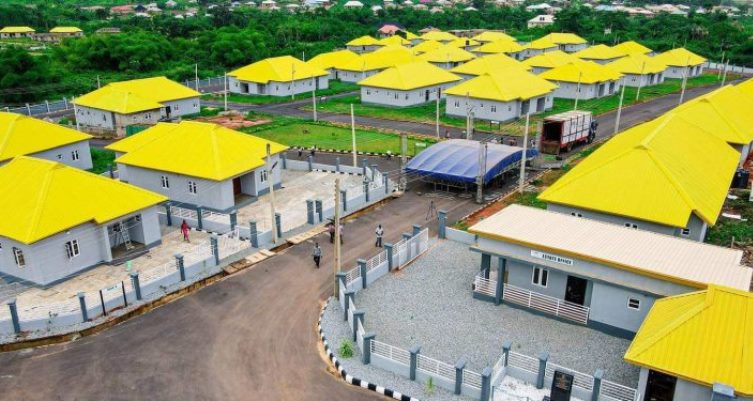
In Ogun Central, housing developments include completed and ongoing units at Kobape Estate (Phases 1, 2, and 3), Prince Court Estate, President Muhammadu Buhari Estate, King’s Court Estate, and a housing regeneration programme at the Old Government Reservation Area (GRA) in Abeokuta. Combined, these projects represent several thousand housing units at various stages of completion.
Ogun East has seen housing delivery at the Gateway Aviation Village in Iperu-Remo and Prince Court Estate in Sagamu, while Ogun West has recorded completed units at the Ilaro Housing Scheme.
According to the state government, these projects collectively represent progress toward the administration’s target of delivering 10,000 housing units by 2027.
Pricing and Access
Officials say a key element of the housing programme has been price differentiation to accommodate different income groups, including civil servants, retirees, and middle-income earners.
The Commissioner for Housing, Jagunmolu Akande Omoniyi, disclosed that two-bedroom apartments at Kobape and Kempta were initially sold to civil servants at prices below ₦5 million, with slightly higher pricing for members of the general public. Current market valuations in comparable locations are estimated to be significantly higher, reflecting broader real estate pricing trends across the state.
The administration maintains that the pricing structure was designed to prioritise access over speculative gains, particularly for public-sector workers and long-term residents.
Urban Regeneration and Renewal
Beyond new construction, Ogun State’s housing programme has also included urban regeneration initiatives. In Abeokuta’s Old GRA, infrastructure upgrades covering roads, drainage, street lighting, and residential rehabilitation were undertaken to address long-standing deterioration in the area.
Community leaders have acknowledged the district’s transformation, which had previously been hampered by infrastructure decay. The approach reflects a policy choice to preserve and revitalise existing urban areas alongside the development of new estates.
Housing and Economic Spillovers
Housing delivery has also had economic implications beyond shelter provision. Construction activity across multiple sites has generated direct and indirect employment for artisans, engineers, suppliers, and transport operators.
State officials further note that increased homeownership contributes to internally generated revenue through land documentation, planning approvals, and service charges, while settled communities stimulate local commerce and transport services around new estates.
Additionally, developments such as the Gateway Aviation Village have been located close to emerging economic infrastructure, aligning residential planning with industrial, logistics, and agricultural activity.
Context Within a Wider Housing Challenge
Nigeria continues to face a significant housing deficit, estimated by the Federal Ministry of Housing and Urban Development to exceed 20 million units. In states adjoining Lagos, demand is intensified by migration patterns driven by employment opportunities in the commercial capital.
Ogun State’s housing programme has been framed by the administration as part of a broader effort to provide alternatives to long-distance commuting and rising rental costs, particularly for workers whose livelihoods remain tied to Lagos-based employment.
As construction continues on multiple housing sites, the Ogun State Government says it remains focused on meeting its 2027 housing target while expanding access across income categories and senatorial districts.
For now, the data suggest that housing delivery has become a measurable component of the state’s social welfare strategy, combining new construction, urban renewal, and pricing controls within a single policy framework.