


From Neglect To Renewal: How Abeokuta’s Old GRA Was Repositioned
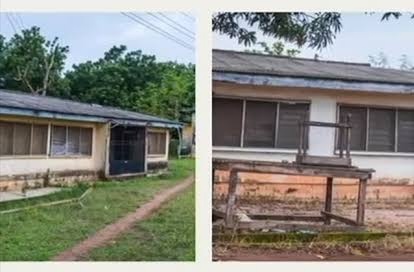
Urban decline is rarely dramatic. It shows up gradually in failing drainage, deteriorating access roads, inconsistent street lighting, and residential buildings that no longer meet basic standards. Over time, these conditions affect not only how a neighbourhood looks but also how it functions. For several years, Abeokuta’s Old Government Reservation Area (GRA) reflected these challenges.
Originally designed as a structured residential district within the state capital, the Old GRA experienced prolonged infrastructural neglect. Roads deteriorated, public utilities weakened, and housing conditions declined. While the area remained inhabited, the absence of sustained maintenance reduced both liveability and value.
The Situation Before
Residents of the Old GRA faced daily infrastructure constraints. Poor drainage increased flood risks during the rainy season. Road conditions affected mobility and vehicle maintenance costs. Limited street lighting raised security concerns, particularly at night.
Importantly, the district’s challenges were not attributable to population pressure or informal settlement. The Old GRA was a planned area whose decline stemmed largely from deferred public investment.
Left unaddressed, such conditions typically lead to further deterioration: residents with options relocate, property values fall, and neighbourhoods slip into long-term disrepair.

The Intervention
As part of Ogun State’s housing and urban development strategy under Governor Dapo Abiodun’s administration, the Old GRA was selected for targeted regeneration. The initiative aligned with the Social Wellbeing and Welfare pillar of the ISEYA development framework, which positions housing and urban infrastructure as essential components of quality of life.
The intervention focused on rehabilitation rather than redevelopment. Roads were reconstructed. Drainage systems were upgraded to mitigate flooding. Street lighting was restored. Residential buildings underwent targeted improvements to enhance habitability and meet environmental standards.
The approach avoided displacement and preserved the existing residential layout, allowing long-term residents to remain within their community while infrastructure was improved.
What Is Different Now
Following the regeneration works, the Old GRA presents a functional shift. Road access has improved, easing movement within the neighbourhood. Drainage upgrades have reduced water accumulation during rainfall. Improved street lighting has enhanced visibility and security.
Housing conditions across the district now reflect a more consistent standard. Properties that had fallen into visible disrepair have been restored, and the overall environment aligns more closely with expectations for a state capital residential area.
Community leaders and residents have publicly acknowledged the changes, noting a clear difference between conditions prior to the intervention and the current state of the neighbourhood.
Regeneration as Housing Policy
The Old GRA project illustrates a broader housing policy choice: addressing urban decline through renewal rather than abandonment. In many cities, older districts are left to deteriorate while development shifts entirely to new corridors. Ogun State’s approach demonstrates an alternative to reinvesting in existing communities to stabilise them.
From a policy perspective, this reduces the social and economic costs associated with displacement, informal expansion, and uneven urban growth. It also preserves institutional memory and community networks that are often lost when neighbourhoods are abandoned or cleared.
Part of a Wider Housing Strategy
The regeneration of the Old GRA sits alongside new housing developments across Ogun State. Together, these initiatives reflect a dual strategy: expanding housing supply while maintaining existing urban assets.
Rather than treating housing solely as a numerical target, the administration’s approach links shelter to infrastructure quality, safety, and long-term usability. In this context, urban renewal becomes not an aesthetic exercise, but a governance function.
Measured Progress
The changes in the Old GRA did not occur overnight, nor were they intended to attract attention solely through scale. Their significance lies in practical outcomes, improved infrastructure, stabilised property values, and restored residential functionality.
As Ogun State continues to address housing demand and urban growth, the Old GRA offers a grounded example of how targeted regeneration can reverse decline without disruption.
Sometimes, effective governance is less about introducing new districts and more about taking responsibility for existing ones.
Related posts