

PUTTRU Says Federal Govt Needs $25b To Electrify Targeted 5 Million Homes By 2030
As deliberations continue at the COP26 Summit in Glasgow, Scotland, PUTTRU, a foremost energy facilitation platform in Africa, which is ready with a Discussion Paper on the conference titled: ‘Africa’s Sustainable Energy Transition: Assessing the True Costs…Reflections for COP26’, has lauded FG’s plan for a decentralised solar-powered energy solution as announced by President Muhammadu Buhari to world leaders at the event. The President had at the summit announced that Nigeria was targeting the provision of solar power to 5 million homes in Nigeria by 2030.
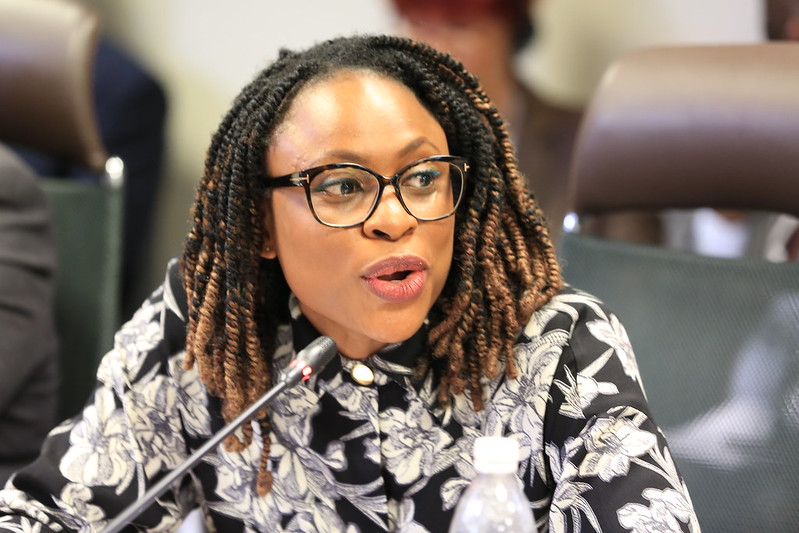
While commending the idea, PUTTRU’s founder and chief executive officer, Monica Maduekwe, however says the fast-growing population of the country would make the commendable projections insignificant.
Citing forecasts based on World Bank data, Maduekwe explains that Nigeria’s population in 2030 will be around 260 million. “While grid electricity provides a more cost-effective option for electrification, in some cases, decentralised energy solutions are the best options to reach remote communities, especially those communities with low population density and other factors that could make grid extension a more costly electrification option in the short term. However, this target from the Nigerian government if reached by 2030, as the government has set, will not change the energy access situation in Nigeria by 2030. This is mainly due to the population growth in Nigeria. Using World Bank’s data, by 2030 Nigeria’s population will grow to approximately 260 million people from 206 million today. This means Nigeria would have 54 million more people by then. According to the same World Bank data, only 55.4 % of the Nigerian population has access to electricity as of 2019, i.e. approximately 114 million people. By 2030, using simple forecasting tools, only 56% of the population may have access to electricity, i.e., 114 million people. This is exactly the same number of Nigerians having access to electricity today. With population growth, about 146 million, Nigerians may still not have access to electricity by 2030. What this implies is that, although commendable, this target of providing electricity to 25 million people by 2030 is not ambitious enough for what Nigeria needs, if the country is to have universal electricity access by 2030,”she explains.
Offering a respite, Maduekwe adds: “In PUTTRU’s COP26 Discussion Paper we stressed that African countries, like Nigeria, must choose the least costs options to improving energy access. Based on historical per customer costs of mini-grid projects implemented in Africa, as documented in the World Bank 2019 report titled, Mini Grid Costing and Innovation, Nigeria may spend up to US$ 12 billion to US$ 25 billion to provide electricity to 5 million households (or 25 million people) by 2030. This is the equivalent of US$ 1.3 billion to US$ 2.8 billion per annum from 2021 to 2030. Using the country’s 2021 budget of approximately US$ 36 billion, as the baseline, such a project will take about 4% to 8% of the annual budget. Thus, for this flagship program, we commend the ongoing efforts by the government of Nigeria to attract financing from the private sector towards realizing this agenda. The success of this will depend on if the government is able to provide incentives that will make such projects viable and investment worthy.
“More importantly, we recommend that Nigeria’s mini grid programs are implemented alongside economic development programs (specifically, one that relates to development of industries and commercials activities). This is because by increasing energy demand, and purchasing power, larger scale energy projects become more cost effective. Also, larger scale projects capitalize on economies of scale to provide more affordable electricity compared to smaller units. Such an economic development agenda should be organized alongside an aggressive grid expansion program. Industrialization and projects that increase economic activities should be seen as an indispensable strategy to support Nigeria in meeting the country’s universal electricity access goals based on least costs options.”
Related posts