
Sujimoto Revisits The Crude Miscalculation Experts Once Cemented Around Dangote Refinery
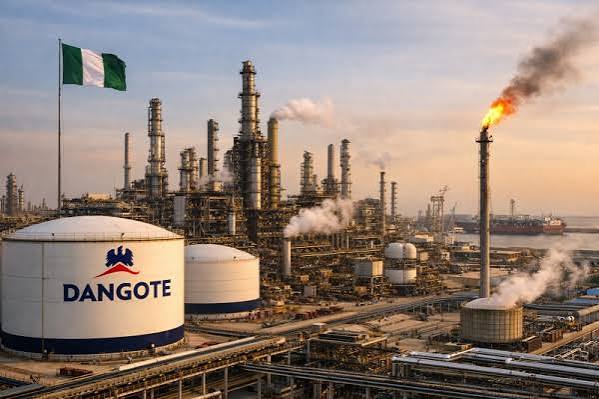
At 700,000 barrels a day, more than $13 billion in half-year revenue and a ₦2.15 trillion People’s IPO, the Dangote story has outgrown petroleum. For Sujimoto, its greatest dividend is the discipline of delivery, the economics of value addition, and the courage to turn African potential into African production.
In October 1997, Apple was going through one of the darkest periods in its history when Michael Dell, founder of rival computer giant Dell, was asked before several thousand technology executives in Orlando what he would do if Apple were his company. At a time when Apple was deep in losses and public confidence was fading, Dell said he would shut it down and return the money to shareholders. By then, Apple had been written off so publicly that Dell’s verdict reflected what much of the industry already believed.
More than a decade later, the same tension between experience and possibility would surface on an entirely different frontier: space. Elon Musk was betting that a private company could build rockets, reduce the cost of reaching orbit and eventually carry human beings into space, an arena long dominated by governments, NASA and giant aerospace contractors. Among those questioning that new era of commercial spaceflight were Neil Armstrong and Gene Cernan, the first and last men to walk on the moon, two men Musk deeply admired.
Yet history has repeatedly shown that *the most compelling criticisms are not always delivered by ignorant people*. They often come from accomplished professionals, respected mentors, successful businessmen and industry veterans whose experience gives their caution enormous authority. They may correctly identify the risks, the failures and every reason the destination appears impossible to reach, while still misjudging the capacity of the person determined to get there.
That contest between experience and possibility has always fascinated me because I have watched it unfold on one of the grandest stages of African enterprise, in the story of Africa’s richest man, Alhaji Aliko Dangote. He had already tasted both victory and disappointment. His textile venture suffered under the weight of smuggling and an unforgiving operating environment, while his move into telecommunications, despite licences and infrastructure investments, never became another cement-sized empire. So when petroleum came, Dangote was not venturing into another industry believing he possessed a Midas touch.
Nigeria had supplied enough history to make that pessimism seem entirely justified. We produced crude oil for decades yet became experts at fuel queues, yellow jerrycans, generator rationing and transport fares that moved with pump prices, while fuel subsidy remained a recurring national burden and political dilemma. Port Harcourt, Warri and Kaduna had become shorthand for our national frustration with refining. Different administrations changed policies and prices, but the contradiction endured: we had crude beneath our soil and still imported much of the petrol that powered our homes, cars and businesses.
Against that history, Dangote was attempting something many seasoned professionals considered almost reckless: a refinery whose eventual investment would approach *$20 billion*, built around a single train of extraordinary scale and dependent on crude supply, foreign exchange, financing, engineering and execution aligning over years. One serious miscalculation could turn industrial audacity into one of Africa’s most expensive business lessons.
I personally heard accomplished professionals make exactly that case at social gatherings. Once the drinks began to flow, ties loosened and business surrendered to banter, Alhaji Aliko Dangote’s refinery would eventually find its way into the conversation. Oil and gas experts, billionaires with downstream investments, professional bankers and wealth managers would dismantle the refinery before the ice had melted.
Around those tables were men with decades of experience in petroleum, professionals who knew downstream operations intimately. They pointed to failed refinery projects, foreign-exchange crises, governments, international operators and billions already lost, then asked: *what exactly did Dangote know that everybody else had missed?* Their verdict was simple: he had gone too far; the refinery would swallow him. Dangote should have remained in cement.
*“This refinery will never happen.”* More remarkably, Alhaji Dangote himself admitted that when he began the project, he had *“never, ever seen crude oil”* in his life. He therefore had to acquire the engineers, knowledge, technology, financing and execution capability the undertaking demanded. His advantage was not that he knew less; it was that what he did not know had not yet become an excuse for what could not be done.
Perhaps that is why my first encounter with the refinery at Ibeju-Lekki five years ago reshaped the way I thought about scale. *I went to see the enormity of a project and returned questioning the size of my own ambition.* That order of thinking quadrupled our vision at Sujimoto and sharpened another conviction: the painful privilege of learning from mistakes on our previous projects had shown us what we must never repeat.
Great entrepreneurs do not succeed by ignoring expertise; they build enough competence to answer it. The engineer must expose the structural weakness, the banker must interrogate the numbers and the operator must identify what experience says can fail. *The purpose of expertise is to strengthen a great vision, not automatically reduce it to the boundaries of precedent.*
I had been called and personally invited to attend the commissioning of the Dangote Refinery on 22 May 2023. I saw familiar faces, including men who had once given powerful professional reasons why the refinery could never succeed. Around us stood the pipes, tanks and industrial infrastructure that years earlier existed largely as an audacious proposition. Men who had dissected the dream over drinks were now witnessing its arrival.
That same professional resistance confronted us while delivering LucreziaBySujimoto in Banana Island, one of our most ambitious residential developments. At a time when the economy turned against us, with the naira depreciating, imported materials growing costlier and timelines stretching, professionals and investors questioned whether a project of that magnitude could still be delivered. Earlier mistakes had taught us what never to repeat. The warnings were understandable; allowing them to become our conclusion would have been the greater mistake.
Even commissioning was not the final answer. The refinery still had to prove itself through production, crude supply, pricing and the unforgiving economics of the market. By 2026, it was processing about *700,000 barrels a day*. In the first half of the year, it recorded *more than $13 billion in revenue and $1.82 billion in net profit*, reversing a $476 million loss in 2025, while plans were underway to expand capacity towards *1.4 million barrels per day by 2029*.
By September 2026, the same refinery once dismissed as impossible was inviting Nigerians to own a piece of it. Dangote Petroleum Refinery offered *4.1 billion shares at ₦525 each*, seeking about *₦2.15 trillion* in Africa’s largest IPO. The refinery many accomplished professionals once feared would consume Dangote’s fortune had become an asset everyday Nigerians were rushing to own.
Measured against the ending so confidently written for him, *Alhaji Aliko Dangote has failed woefully*. He failed to remain safely inside cement when cement had already given him extraordinary wealth. He failed to allow the bruises of textiles or an unrealised telecommunications ambition to make unfamiliar industries permanently forbidden territory. Most importantly, he failed to become the cautionary tale many accomplished professionals had already written for him.
His critics were often right about the risks, right about the cost and right about how difficult the journey could become. *Their error was not in seeing the mountain; it was in believing that seeing the mountain gave them the authority to pronounce the climber’s fate.* That is the crude miscalculation worth remembering whenever accomplished professionals, respected mentors or seasoned advisers tell an entrepreneur that an audacious destination cannot be reached.
Africa needs professionals who challenge weak assumptions, bankers who reject reckless financing, engineers who refuse bad structures and mentors courageous enough to confront entrepreneurs with uncomfortable truths. But entrepreneurs must also understand where advice ends and ownership begins. Listen carefully to expertise, learn aggressively from failure and allow criticism to improve the vision, but never surrender the boundaries of what is possible simply because precedent cannot yet explain what you are trying to build. *Experience should illuminate the road; it should never dictate the destination.*
Dr. Sijibomi Ogundele is the Group Managing Director of Sujimoto, the Czar of Luxury Real Estate Development, and the mastermind developer behind the renowned Giuliano. Our other audacious projects, such as the most sophisticated building in Banana Island, LucreziaBySujimoto, the grandiose Sujimoto Twin Tower, the tallest twin towers in Africa; the regal Queen Amina by Sujimoto, a monument to royal affluence; the magnificent high-rise LeonardoBySujimoto; the Sujimoto Farm; an advanced farm estate system that incorporates housing, farm hospitals, hotels, and markets within an ecosystem, creating opportunities for agro-tourism and affordable housing, among other projects that have etched an indelible imprint on Nigeria’s skylines, a testament to Sujimoto’s unrivalled mastery of modern-day engineering._
Related posts