

The Adelabu “Sack” Clamour: A Knee Jerk Reaction to a Deep Seated Structural Crisis
BY OLAWALE OMONIJO
In the theatre of Nigerian politics, there is a recurring script: whenever a national challenge persists, the public calls for the head of the man at the helm.
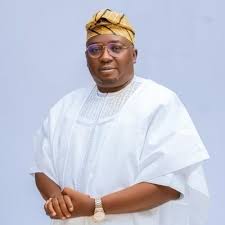
Today, the target is the Minister of Power, Chief Adebayo Adelabu. To many critics, the “epileptic” nature of our power supply is a personal failure of the Minister, and his removal, they believe, would magically result in 24/7 electricity.
However, a dispassionate look at the facts reveals that these calls are largely driven by a lack of understanding of the sector’s complexities. Asking for Adelabu’s sack because the lights are out is akin to blaming a doctor for a patient’s chronic illness while the patient refuses to buy the prescribed medicine.
The assumption that a change in leadership equals an immediate “boom” in power supply is a fallacy. Nigeria’s power problem is not one of personality; it is a trinity of structural decay: while installed capacity sits at approximately 14 GW, we often struggle to dispatch more than 5,000–6,000 MW due to gas supply constraints and ageing plants, the ‘National Grid’ remains a fragile, centralised bottleneck, and the DisCos are battling massive liquidity gaps, technical losses, and a staggering metering deficit.
If we were to appoint the “God of Thunder” himself as Minister, he would still be met with the same dilapidated substations and the $29 billion annual economic loss caused by decades of underinvestment.
Contrary to the “clownish” narrative, the sector under Adelabu has seen milestones that have eluded us for decades: In 2024, the sector’s revenue surged by 70% (an additional ₦700 billion), a historic leap toward making the industry financially viable and reducing the government’s subsidy burden by 35%.
Under this administration, Nigeria hit an all-time peak of 5,801.44 MW in early 2025. For the first time in 24 years, a National Integrated Electricity Policy has been developed to guide a post-centralised market, and through the Siemens Presidential Power Initiative (PPI), over 700 MW of transmission capacity has been added, and ₦700 billion has been mobilised for the Presidential Metering Initiative.
The most significant shift recently is the Electricity Act 2023, which effectively ended the federal monopoly. The sector is now decentralised. The “needful” that must be done now lies at the sub-national level.
While the Federal Government (through Adelabu) is fixing the transmission “superhighway”, the states are now legally empowered to build their own “internal roads” (generation and distribution).
Enugu, Lagos, and Edo have established functional State Electricity Regulatory Commissions (SERCs); Kogi, Ekiti, Ondo, Imo, and Osun have received regulatory autonomy from NERC to manage their markets; and many states are still “watching from the sidelines”, yet to pass enabling laws or attract independent power producers (IPPs).
The question critics should ask is, “Why hasn’t our State Governor built a 50 MW plant for our state?” instead of asking why a Minister in Abuja hasn’t flipped a switch for a decentralised grid.
Sacking Adelabu won’t fix a gas pipeline vandalised in the Delta, nor will it replace a 40 year old transformer in a local street. What Nigeria needs is continuity of reform and for state governments to stop being “tenants” on the national grid and start being “landlords” of their own power destiny.
Adebayo Adelabu is currently performing the “heavy lifting” of systemic surgery. To stop the operation midway because the patient still feels pain is not just uninformed; it is sabotaging
Related posts