

The First Lady’s Harmless Admonition And The Politics Of Content Creation
SEYE OLADEJO
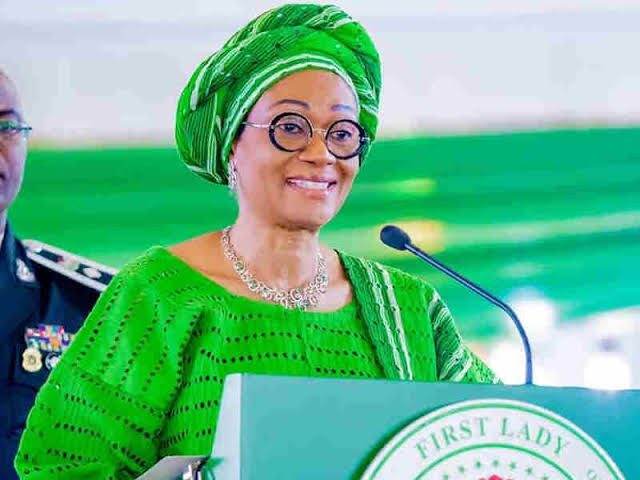
The recent frenzy over Senator Oluremi Tinubu’s remarks encouraging beneficiaries of the Renewed Hope Initiative to consider small businesses such as frying akara, roasting corn or producing kuli-kuli perfectly illustrates how Nigeria’s social media ecosystem has become a fertile ground for manufactured outrage rather than informed public discourse.
The First Lady was neither unveiling the economic blueprint of the Federal Government nor suggesting that street vending represents the sum total of the Renewed Hope Agenda. She was speaking within the context of a social intervention programme designed to empower vulnerable Nigerians with grants-not loans-to start income-generating ventures that require relatively modest capital. Yet, by the time the content merchants had finished with her remarks, an innocuous statement had been transformed into another opportunity to score cheap political points.
This is the unfortunate reality of our times. Nuance has become the first casualty of digital politics. Every sentence is stripped of context, compressed into a viral clip and weaponised to feed an insatiable appetite for outrage.
Those attacking the First Lady deliberately ignored the central message of her intervention. She was speaking about hope, self-reliance and the dignity of honest labour. Her examples were illustrative, not prescriptive. They were intended to demonstrate that even modest grants can become the foundation for sustainable livelihoods when combined with enterprise and determination.
There is nothing demeaning about selling akara, roasted corn or kuli-kuli. These are legitimate businesses that have sustained countless Nigerian families for decades. Many accomplished professionals proudly acknowledge that their education was financed by parents who traded in local food items and other small-scale enterprises. Honest labour has never been a source of shame in our culture.
Ironically, many of those ridiculing these occupations celebrate entrepreneurship whenever it is packaged in fashionable language. A food vendor is suddenly respected when described as a “food entrepreneur.” A roadside snack seller becomes admirable when operating from an upscale neighbourhood. The principle remains the same: creating value through enterprise.
The First Lady deserves commendation for encouraging beneficiaries of her initiative to invest grants in productive ventures rather than consume them. Financial empowerment without productive utilisation serves little purpose. Her emphasis on enterprise reflects a practical understanding that sustainable empowerment requires creating income streams, however modest they may begin.
What is even more disappointing is the increasing tendency to attribute every utterance by members of the First Family to official government policy. The First Lady occupies a unique position as a national advocate for social causes. Her comments during an empowerment programme cannot reasonably be construed as a substitute for the Federal Government’s economic reforms, industrial policies or employment strategies.
Unfortunately, the politics of content creation thrives on such distortions. The objective is no longer to inform but to inflame; no longer to educate but to provoke engagement. Facts are selectively edited, context discarded and balanced conversations sacrificed in pursuit of likes, reposts and monetised outrage.
Constructive criticism remains an indispensable ingredient of democracy. Citizens have every right to debate public comments by leaders. However, criticism loses its moral force when it is built upon deliberate misrepresentation. We should disagree on facts, not on caricatures deliberately created for political consumption.
Nigeria’s economic challenges are real, and citizens deserve empathy as government continues implementing reforms aimed at long-term prosperity. Equally true is the fact that millions of Nigerians have built respectable livelihoods through small and medium-scale enterprises. Recognising this reality does not trivialise economic hardship; it acknowledges the resilience and entrepreneurial spirit that have always defined our people.
Lagos APC Chieftain
Related posts