


The Godfather Syndrome
BY FESTUS ERIYE
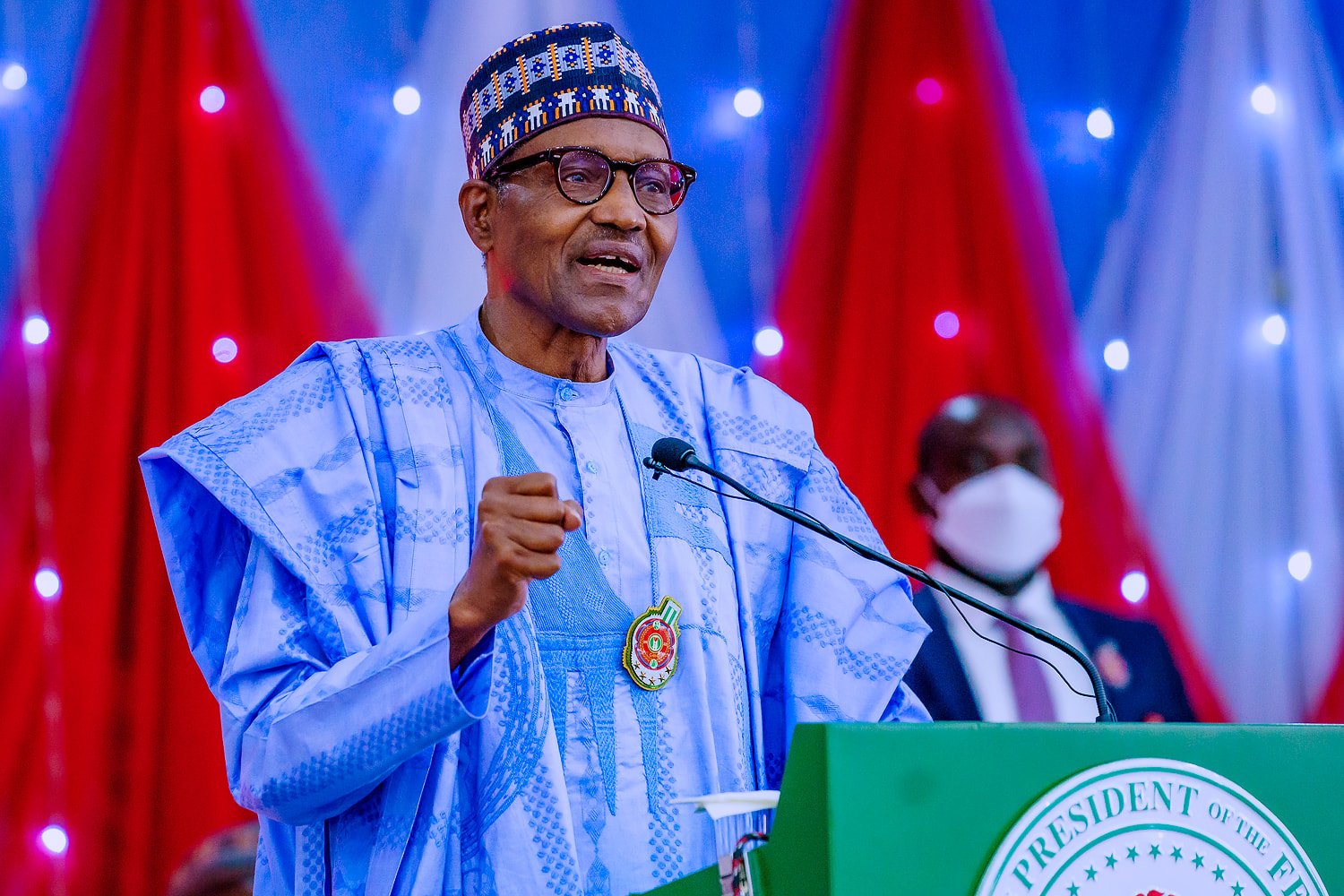
A promise is a powerful thing even in the mouths of politicians not famous for keeping them.
Nigerians enthusiastically embraced the All Progressives Congress (APC) in 2015 to a large extent because of the promise of ‘change.’ After 16 years of overfamiliarity with the Peoples Democratic Party’s (PDP) incompetence, corruption and power drunkenness, they were ready for a leap of faith – even if they weren’t sure how they would land.
Indeed, one of the most memorable lines from that electioneering campaign was the phrase ‘anything but Jonathan.’ But much more profound was the ability of the opposition to zero in on the prevailing sentiment – a hunger for change.
Change then was a simple but loaded word that meant different things to all manner of people. For some it implied their economic condition would be transformed for the better in short order. For others, it meant it would no longer be business as usual in politics and the public space; the PDP way was to be jettisoned for something much better.
But early in the life of President Muhammadu Buhari’s administration, Nigerians struggled to come to terms with the shock of the new. For those who were used to PDP governments cobbling their teams together in weeks, it was a rude shock when it took the new helmsman almost six months to constitute his cabinet – nonchalantly justifying his tardiness at some point with the throwaway comment about ministers being ‘noisemakers.’
Almost seven years after the APC government took over, the jury is still out as to how much change it has delivered. A few days ago the party’s senator representing Kano Central Senatorial District, Ibrahim Shekarau, a man who has dipped his feet in both waters, declared that there was no difference between the two largest parties. Whatever motivated his remarks it is difficult to disagree given the regularity with which their members switch allegiance, and the ease of adaption once they land in their new defection home.
It is actually naïve to expect that a party that had a healthy dose of PDP in its DNA would so easily purge itself of the ways of the old ruling party. After all, one of the legacy blocs of APC was a group of rebels rallying under the so-called nPDP banner.
Today, the ruling party finds itself in a quandary simply because it’s not only failed to unlearn the ways of those it supplanted, but is clearly unenthusiastic about doing so.
More than a year after Adams Oshiomhole was toppled in a judicial coup d’état, APC has been unable to install a substantive National Working Committee (NWC). No thanks to relentless intriguing, a caretaker committee that was to quickly organise a convention to elect new leaders, soon morphed into a permanent high command for the furtherance of the ambitions of its members.
Amazingly and without any sense of irony, it leading lights worked against their reason for being – only capitulating in the face of imminent revolt by party stakeholders.
Now, courtesy of the newly-minted Electoral Act it must hold a convention, elect a new national executive and conduct primaries to pick candidates for the next general elections within a narrow 90-day window. The opposition PDP which has its own issues has, at least, managed to enthrone a proper leadership under Dr. Iyorchia Ayu.
APC’s inability to choose its leaders is certainly not an advertisement of competence. It is down to the different tendencies scheming for advantage. Everyone has their preferred candidate to succeed Buhari and believe they can only deliver him by first seizing control of the party’s chairmanship. Nothing wrong with that as long as you acknowledge the right of other groups to hold the same aspiration.
Politics, after all, is a game of interests. Democracy, more specifically, allows for contestation. It recognises the right of people to have different views and present such to the electorate to make their choice. Strangely, we see a pattern emerging in APC that’s against free contest, ostensibly because that could generate rancour!
But it won’t be a democracy if contestation between different factions and tendencies doesn’t produce heat. Somehow, Nigerian politicians especially of the APC persuasion, think they have invented a novel political contrivance called ‘consensus’ that would leave all aspirants chirping happily like birds, after one is picked and several others dumped, using the most opaque of parameters.
In reality, people are more likely to give peace a chance when they are beaten fair and square in a transparent contest. They would accept their fate and move on, rather than continuing to moon about what could have been after being outmanoeuvred by some murky consensus arrangement.
TheNation
Related posts